About this artwork
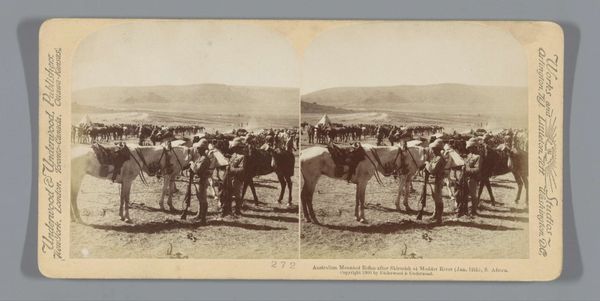
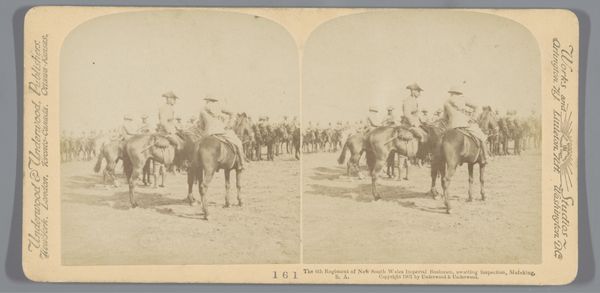
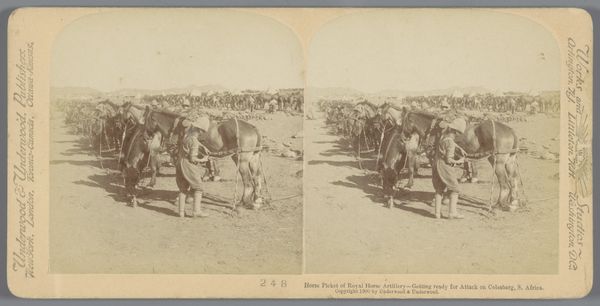
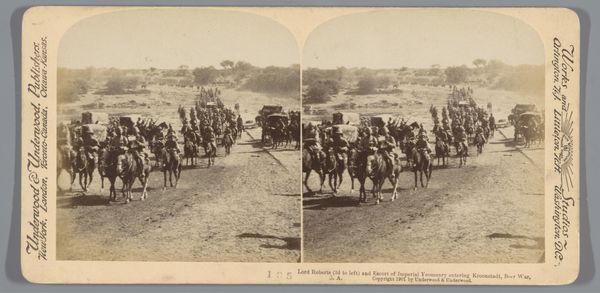
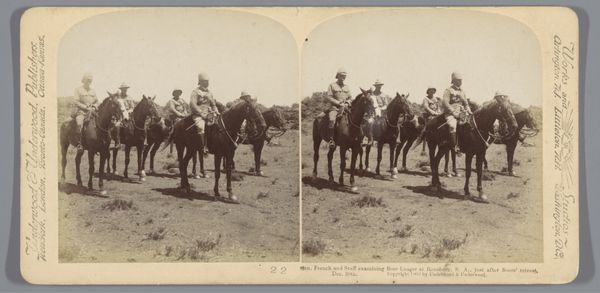
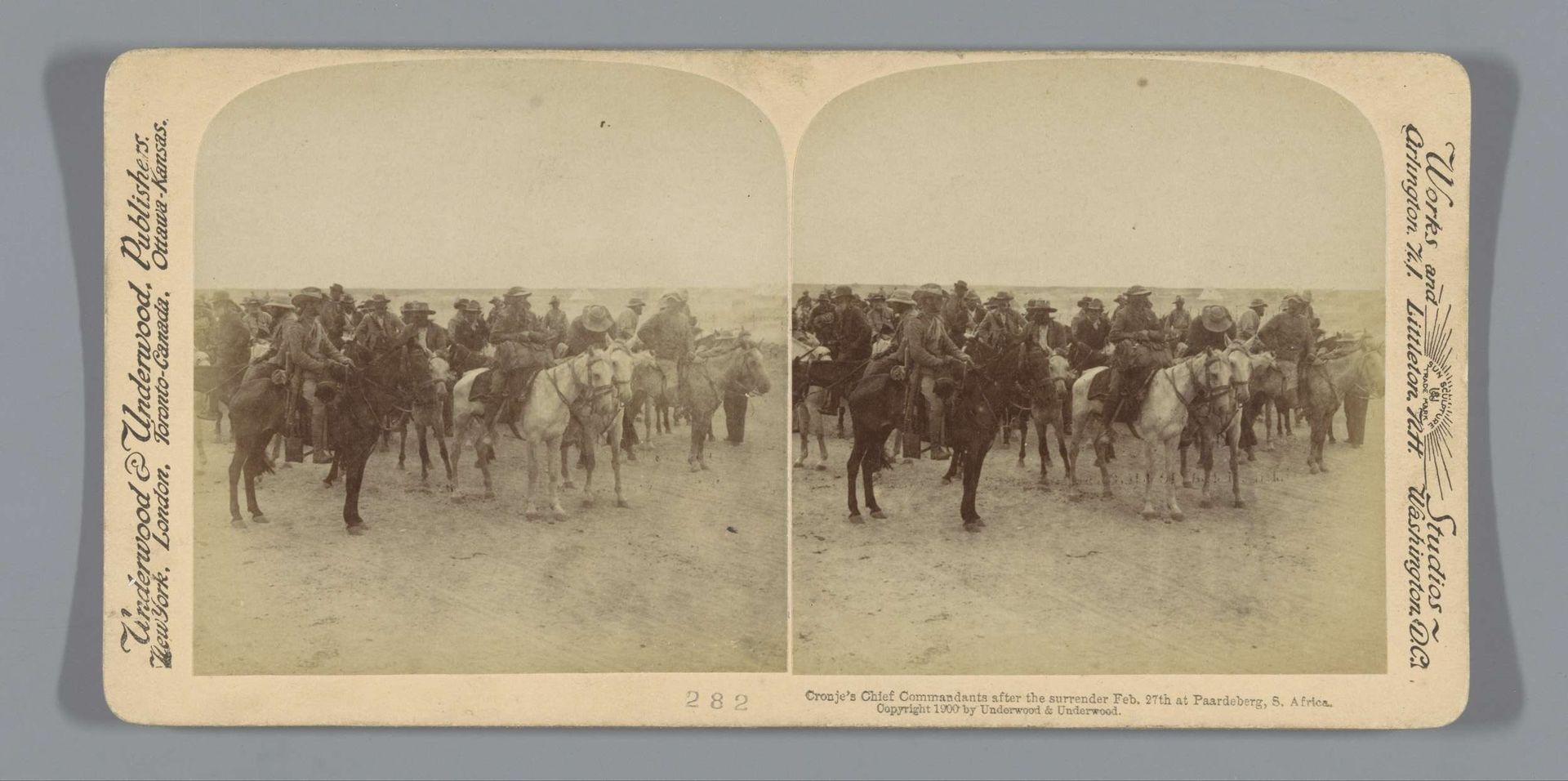
This photograph, showing Boer commanders after their surrender at Paardeberg, South Africa, was made by an anonymous photographer. The image itself is a mass-produced stereo card, printed by Underwood & Underwood, a company known for its extensive distribution network. Look closely, and you will notice the striking uniformity of the image, a hallmark of industrial production. The texture of the photographic paper, the precision of the printing, and the duplication of the image for stereoscopic viewing, all point to the industrialized processes that made such images widely available. The very act of capturing and disseminating this image speaks to broader social issues of colonialism, labor, and the consumption of visual media. The photograph is not just a representation of a historical event, but also a product of its time. It challenges our understanding of how art and craft intersect with mass production, blurring the lines between historical document and commodity.
Aanvoerders van de Boeren die zich hebben overgegeven na de slag van Paardeberg, Zuid-Afrika 1900
Artwork details
- Medium
- photography, gelatin-silver-print
- Dimensions
- height 88 mm, width 177 mm
- Copyright
- Rijks Museum: Open Domain
Tags
portrait
landscape
photography
gelatin-silver-print
history-painting
realism
Comments
No comments
About this artwork
This photograph, showing Boer commanders after their surrender at Paardeberg, South Africa, was made by an anonymous photographer. The image itself is a mass-produced stereo card, printed by Underwood & Underwood, a company known for its extensive distribution network. Look closely, and you will notice the striking uniformity of the image, a hallmark of industrial production. The texture of the photographic paper, the precision of the printing, and the duplication of the image for stereoscopic viewing, all point to the industrialized processes that made such images widely available. The very act of capturing and disseminating this image speaks to broader social issues of colonialism, labor, and the consumption of visual media. The photograph is not just a representation of a historical event, but also a product of its time. It challenges our understanding of how art and craft intersect with mass production, blurring the lines between historical document and commodity.
Comments
No comments