About this artwork
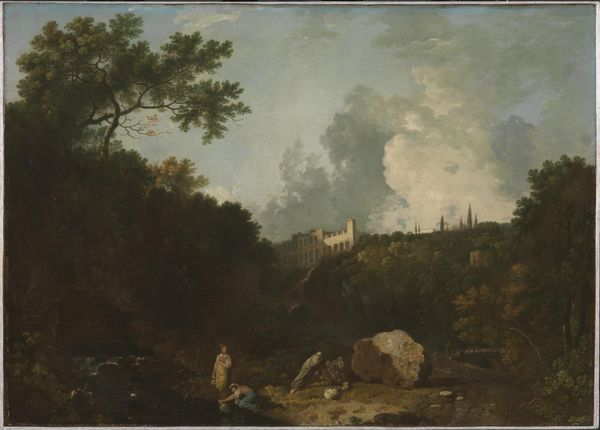
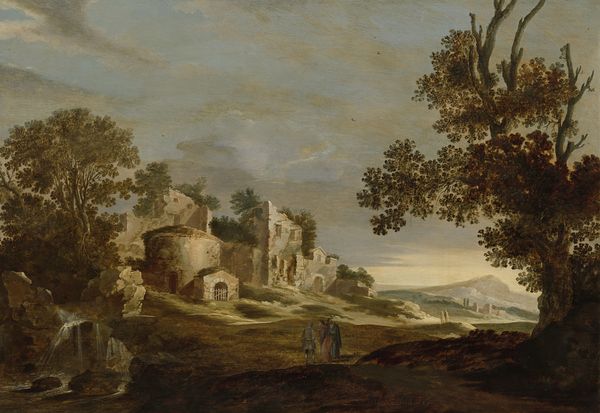
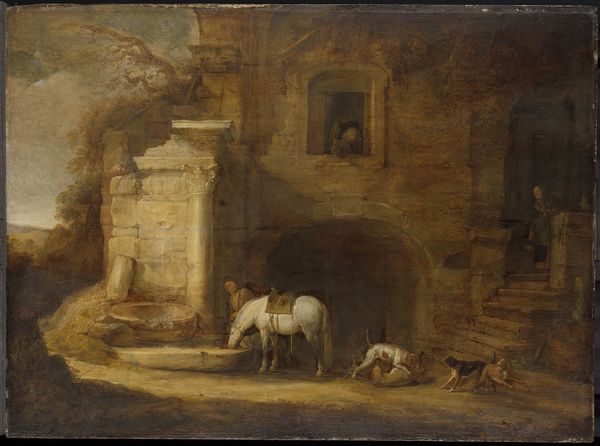
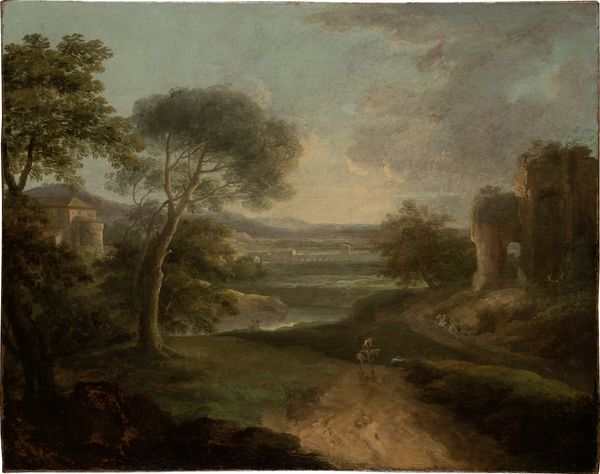
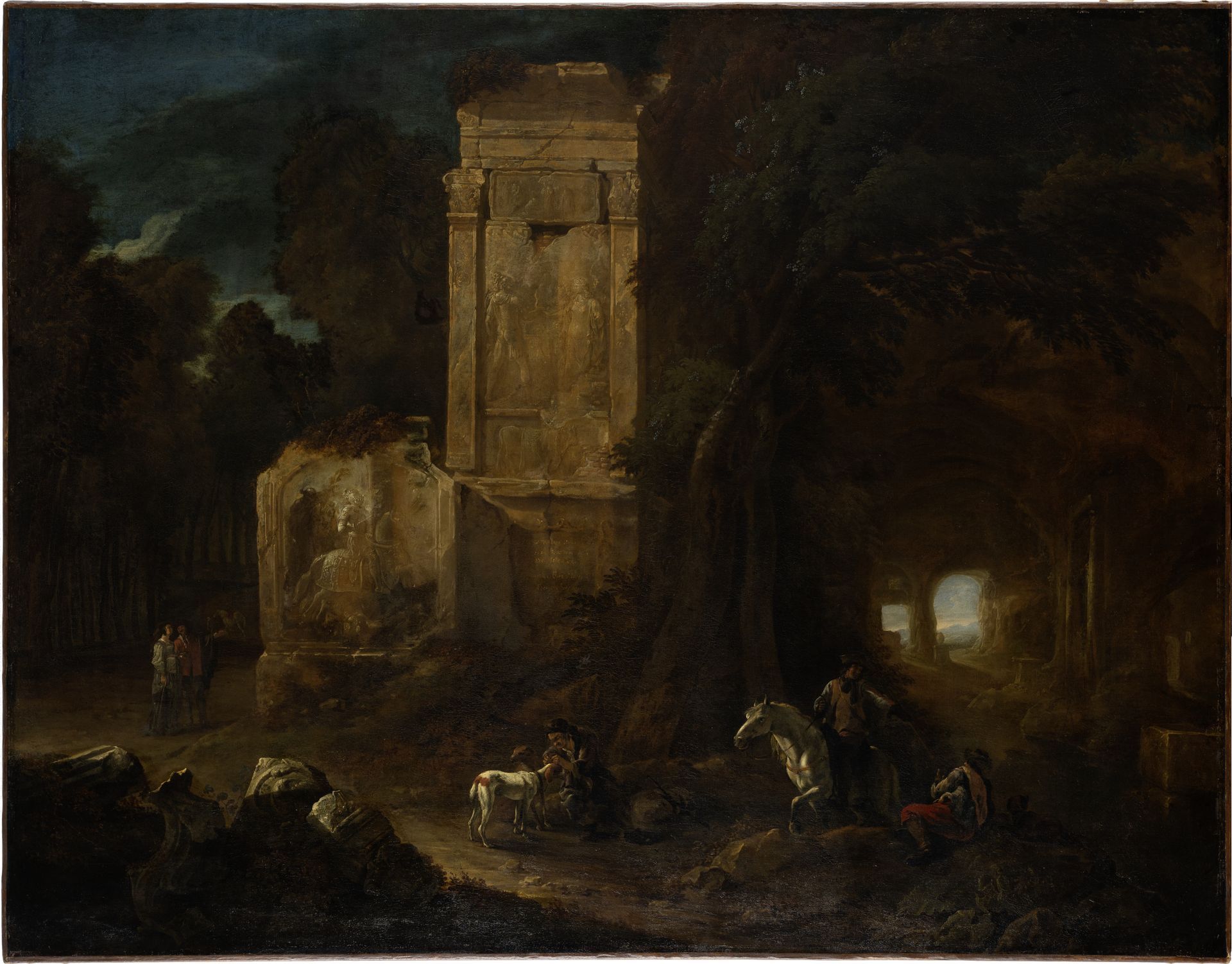
Editor: Here we have Abraham van Cuylenborch’s "Landscape with Ancient Ruins" from 1643, an oil painting. It feels quite theatrical, almost like a stage set, with these grand ruins contrasted against the ordinary figures. What do you see in this piece? Curator: I see a powerful statement about colonialism and the romanticized, yet ultimately destructive, gaze of the European elite. The painting presents the ruins as a backdrop to daily life, minimizing their historical significance and erasing the voices of those who built and inhabited them. These ruins aren’t simply remnants; they represent appropriated histories. What about the figures? Do they appear as active agents? Editor: I see what you mean. The figures seem almost oblivious, going about their business without acknowledging the weight of history around them. I hadn't considered the painting as a commentary on colonialism. Curator: Consider how artists of this time used landscape— it wasn't just about pretty scenery. Van Cuylenborch is placing these idealized ruins within a constructed reality. This idyllic scene normalizes a power dynamic, effectively silencing the cultural narratives of the people whose history is being commodified. Editor: So, the painting, while seemingly innocent, actually perpetuates a colonial ideology by aestheticizing the past and overlooking the human cost? Curator: Exactly. It invites us to reflect on how we interpret history, and whose stories are being told. How does it challenge your understanding of Baroque landscapes? Editor: I will now look differently at landscapes! It makes me consider the subtle, yet profound ways in which art can reinforce existing power structures. Thank you. Curator: And thank you, it’s been enlightening to explore its layers with you!
Landscape with Ancient Ruins 1643


Artwork details
- Medium
- painting, oil-paint, architecture
- Dimensions
- 90.3 x 116.5 cm
- Location
- Städel Museum
- Copyright
- Public Domain
Tags
baroque
painting
oil-paint
landscape
figuration
history-painting
architecture
realism
Comments
No comments
About this artwork
Editor: Here we have Abraham van Cuylenborch’s "Landscape with Ancient Ruins" from 1643, an oil painting. It feels quite theatrical, almost like a stage set, with these grand ruins contrasted against the ordinary figures. What do you see in this piece? Curator: I see a powerful statement about colonialism and the romanticized, yet ultimately destructive, gaze of the European elite. The painting presents the ruins as a backdrop to daily life, minimizing their historical significance and erasing the voices of those who built and inhabited them. These ruins aren’t simply remnants; they represent appropriated histories. What about the figures? Do they appear as active agents? Editor: I see what you mean. The figures seem almost oblivious, going about their business without acknowledging the weight of history around them. I hadn't considered the painting as a commentary on colonialism. Curator: Consider how artists of this time used landscape— it wasn't just about pretty scenery. Van Cuylenborch is placing these idealized ruins within a constructed reality. This idyllic scene normalizes a power dynamic, effectively silencing the cultural narratives of the people whose history is being commodified. Editor: So, the painting, while seemingly innocent, actually perpetuates a colonial ideology by aestheticizing the past and overlooking the human cost? Curator: Exactly. It invites us to reflect on how we interpret history, and whose stories are being told. How does it challenge your understanding of Baroque landscapes? Editor: I will now look differently at landscapes! It makes me consider the subtle, yet profound ways in which art can reinforce existing power structures. Thank you. Curator: And thank you, it’s been enlightening to explore its layers with you!
Comments
No comments