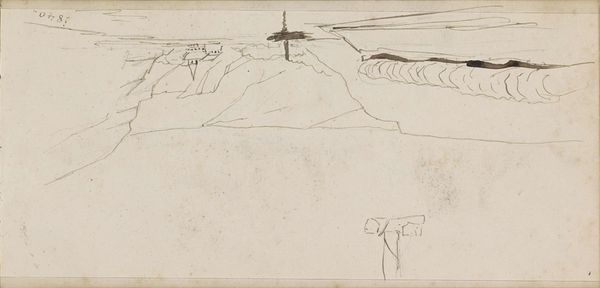
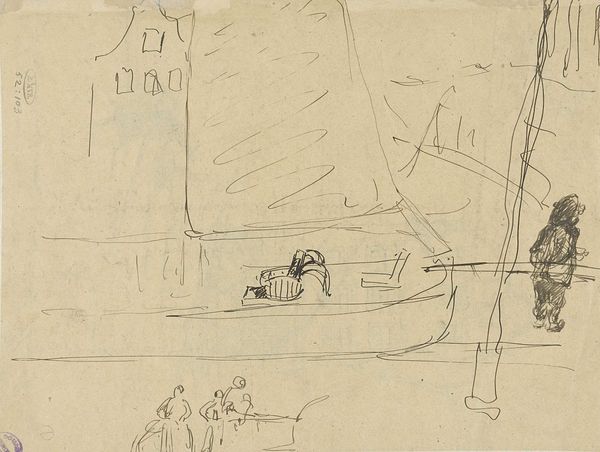
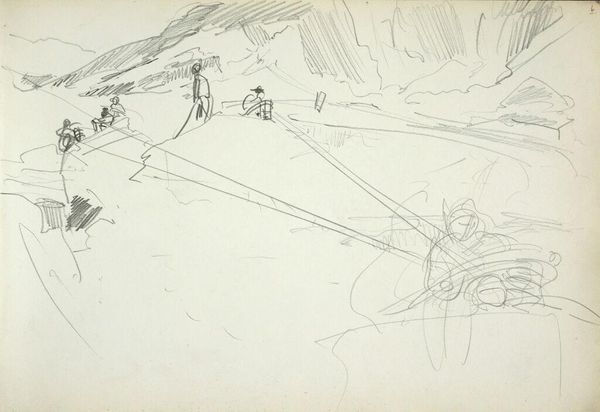
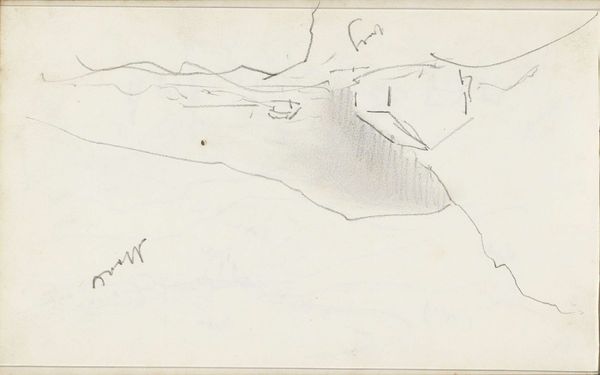
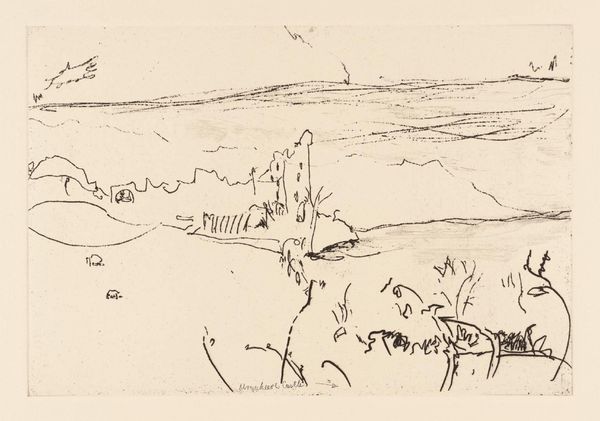
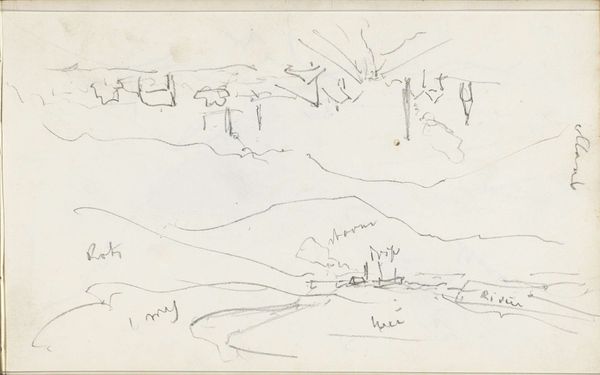
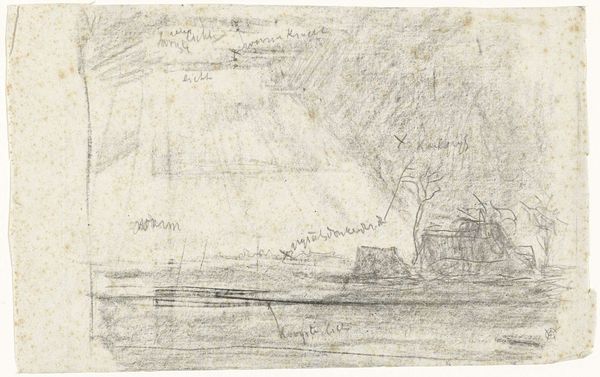
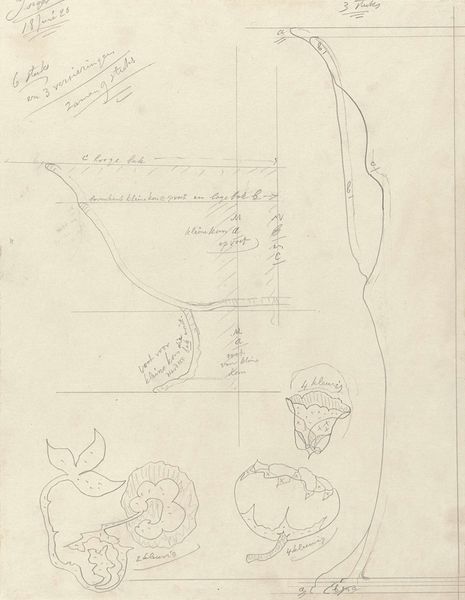
Gezicht op de zee vanaf de heuvels met op de voorgrond een familie op een terrasje 1868 - 1928
0:00
0:00

jantoorop
Rijksmuseum
Dimensions: height 195 mm, width 265 mm
Copyright: Rijks Museum: Open Domain
Curator: Jan Toorop created this ink drawing on paper, "View of the Sea from the Hills with a Family on a Terrace in the Foreground," sometime between 1868 and 1928. It's part of the Rijksmuseum collection. Editor: The scene feels suspended in time, almost dreamlike. The line work is so simple, yet it captures a vast landscape. It’s like a memory being sketched onto the page. Curator: Toorop, a key figure in Dutch Symbolism and later Modernism, often explored themes of landscape and social change in his art. You can see some impressionist influences here, but it’s primarily the linearity, with heavy line work which stands out as part of his later style. The social conditions of families like this might be telling of some emerging middle class developments. Editor: The family is interesting; they're almost a miniature stage set at the edge of the grand vista. Are those implements the father and son are holding? Rods, or are they for something more active? There's something quietly allegorical about it. To me, the figures seem archetypal, as if representing every family contemplating the vastness of the world. Curator: You're right; there is a stillness and symbolic weight to their placement, especially against that backdrop. What’s significant is that such scenes began appearing more in visual culture during the late 19th century, partly from artists trying to show the public celebrating leisure activity afforded by the growing capitalist culture. The ability of people to see these coastal regions as not for military utility or industrial means reflects a certain normalization of new middle class, especially by the interwar period. Editor: I think what lingers for me is the duality: the immense, impersonal sea and the small, contained drama of a family. That juxtaposition speaks to the human condition, this tension between our personal lives and the broader world around us. Curator: I agree, and it suggests a lot about how public roles of such drawings came to shift with the evolving art markets of the time. What strikes me most is this artist's capacity to portray the quiet monumental moments like a family's time at the sea.
Comments
No comments
Be the first to comment and join the conversation on the ultimate creative platform.
 Collect
 React
React Comment
More like this