About this artwork
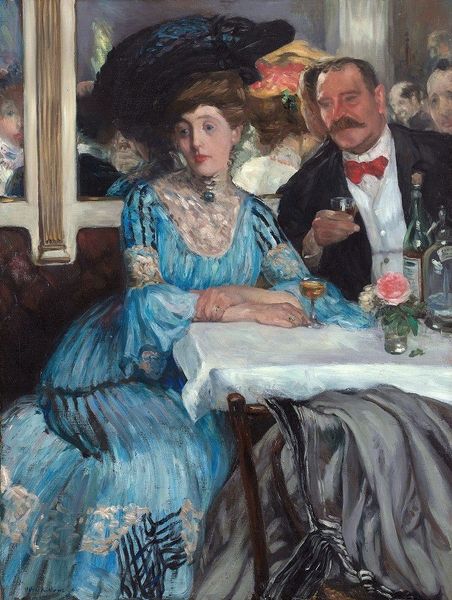
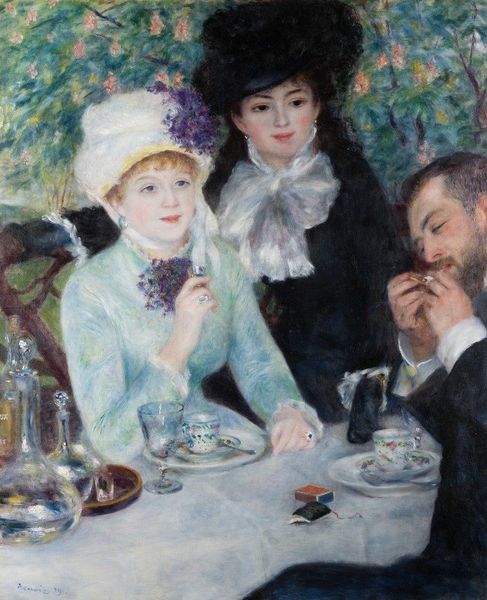
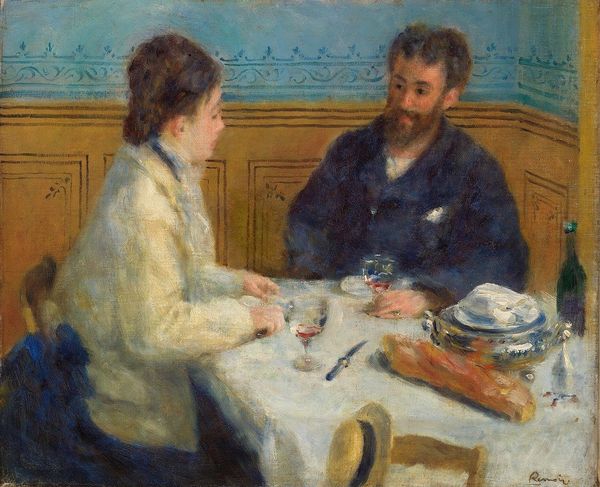
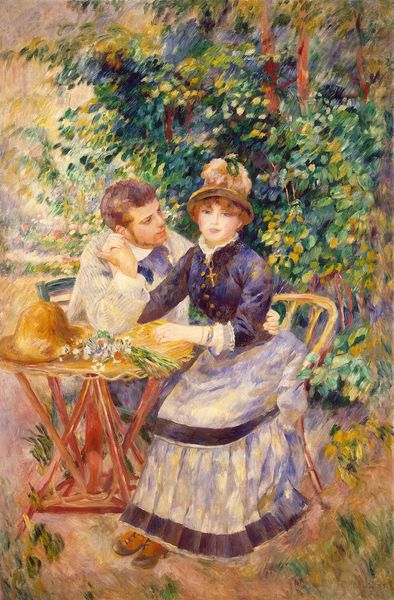
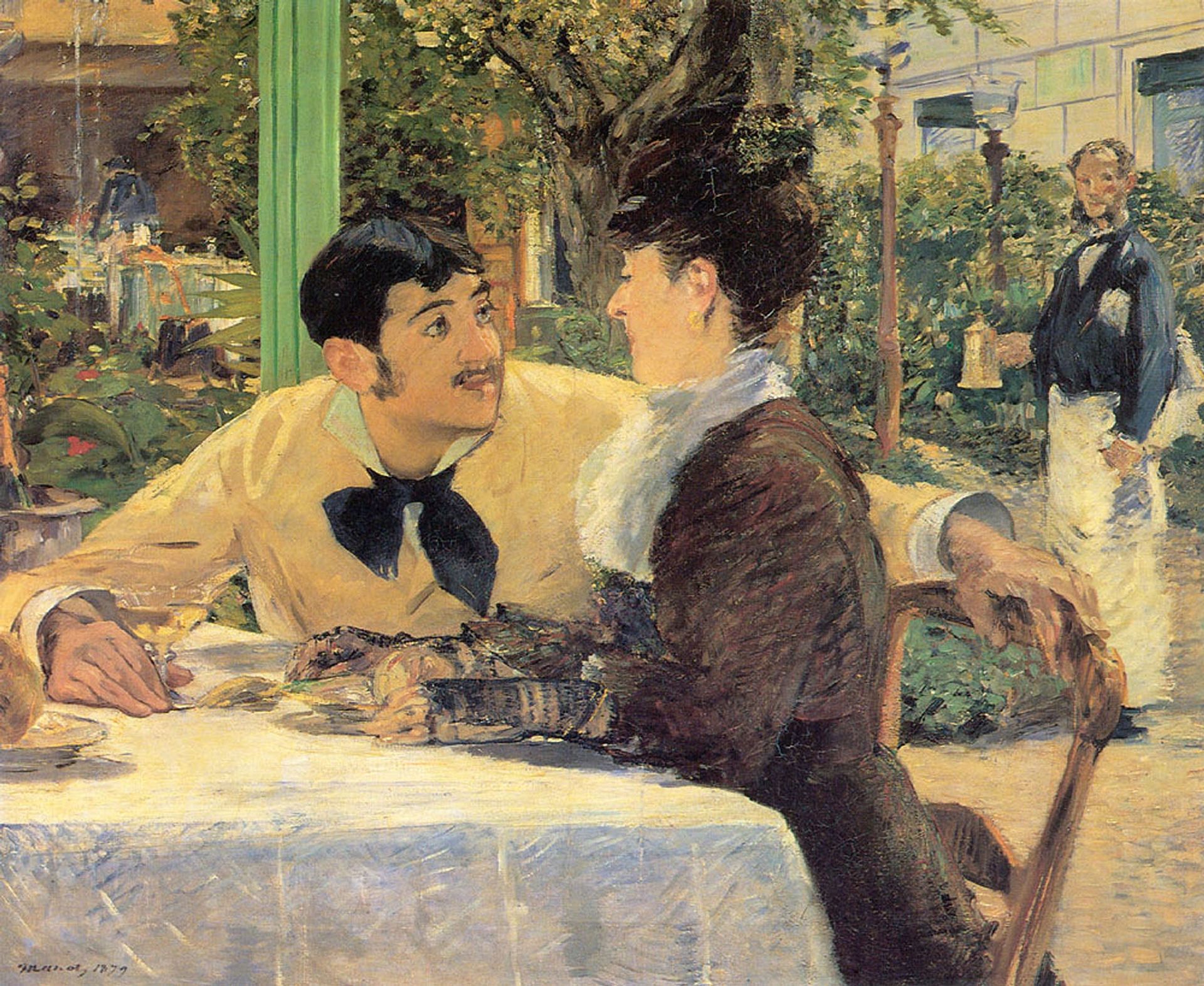
Edouard Manet painted ‘At Father Lathuille's’ in 1879 with oil on canvas, capturing a scene of Parisian leisure. In this painting, Manet depicts a couple seated at a table in the garden of a popular restaurant. It provides a glimpse into the social life of 19th-century Paris, a time of significant change and cultural ferment. The artist was deeply engaged with representing modern life and here we see the rise of a leisure culture among the Parisian bourgeoisie. The brushwork and composition reflect the influence of Impressionism, with its emphasis on capturing the fleeting moments of everyday life. Manet's choice of subject matter, focusing on contemporary urban life, challenged the traditional hierarchy of academic painting, which favored historical or mythological themes. To understand this work, we can look at the illustrated journals of the time, early photography, and also the records of the new commercial galleries that sprang up to show art that was excluded from the official Salon system. Ultimately, the meaning of art lies not just in the image itself but in the cultural and institutional context in which it was created and viewed.
At Father Lathuille's
1879

Edouard Manet
1832 - 1883Location
Musée des Beaux-Arts Tournai, Tournai, BelgiumArtwork details
- Dimensions
- 92 x 112 cm
- Location
- Musée des Beaux-Arts Tournai, Tournai, Belgium
- Copyright
- Public domain
Comments
Share your thoughts
About this artwork
Edouard Manet painted ‘At Father Lathuille's’ in 1879 with oil on canvas, capturing a scene of Parisian leisure. In this painting, Manet depicts a couple seated at a table in the garden of a popular restaurant. It provides a glimpse into the social life of 19th-century Paris, a time of significant change and cultural ferment. The artist was deeply engaged with representing modern life and here we see the rise of a leisure culture among the Parisian bourgeoisie. The brushwork and composition reflect the influence of Impressionism, with its emphasis on capturing the fleeting moments of everyday life. Manet's choice of subject matter, focusing on contemporary urban life, challenged the traditional hierarchy of academic painting, which favored historical or mythological themes. To understand this work, we can look at the illustrated journals of the time, early photography, and also the records of the new commercial galleries that sprang up to show art that was excluded from the official Salon system. Ultimately, the meaning of art lies not just in the image itself but in the cultural and institutional context in which it was created and viewed.
Comments
Share your thoughts