About this artwork
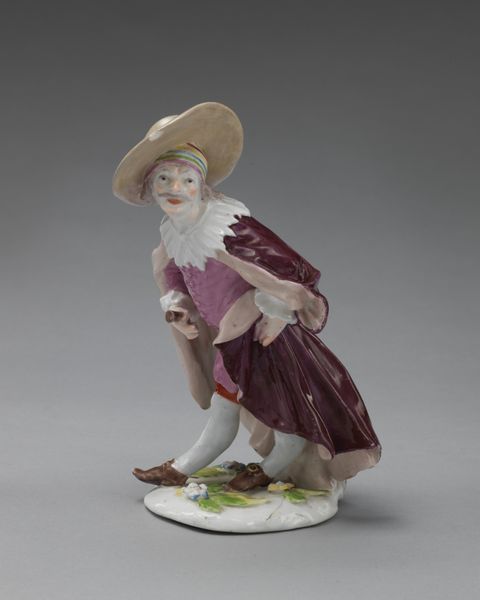
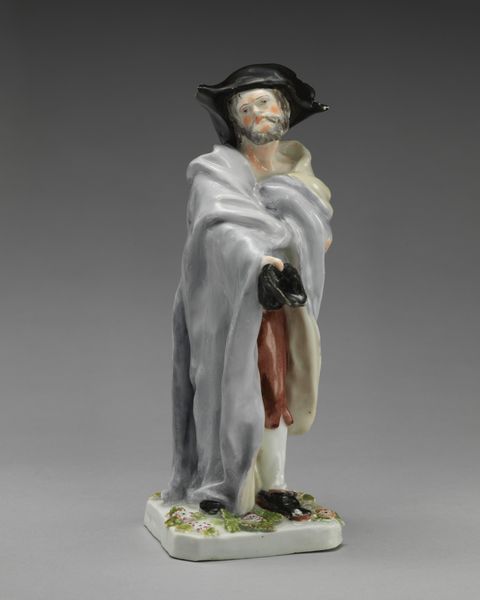
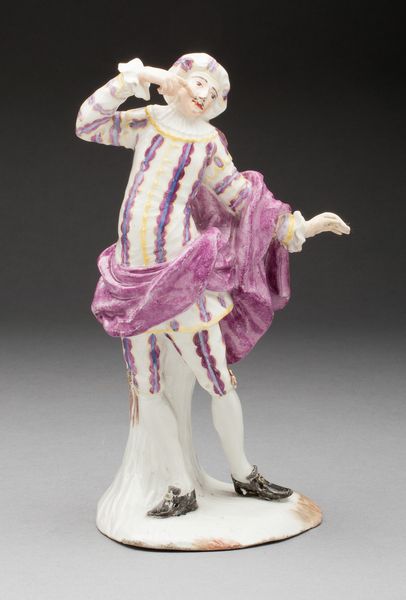
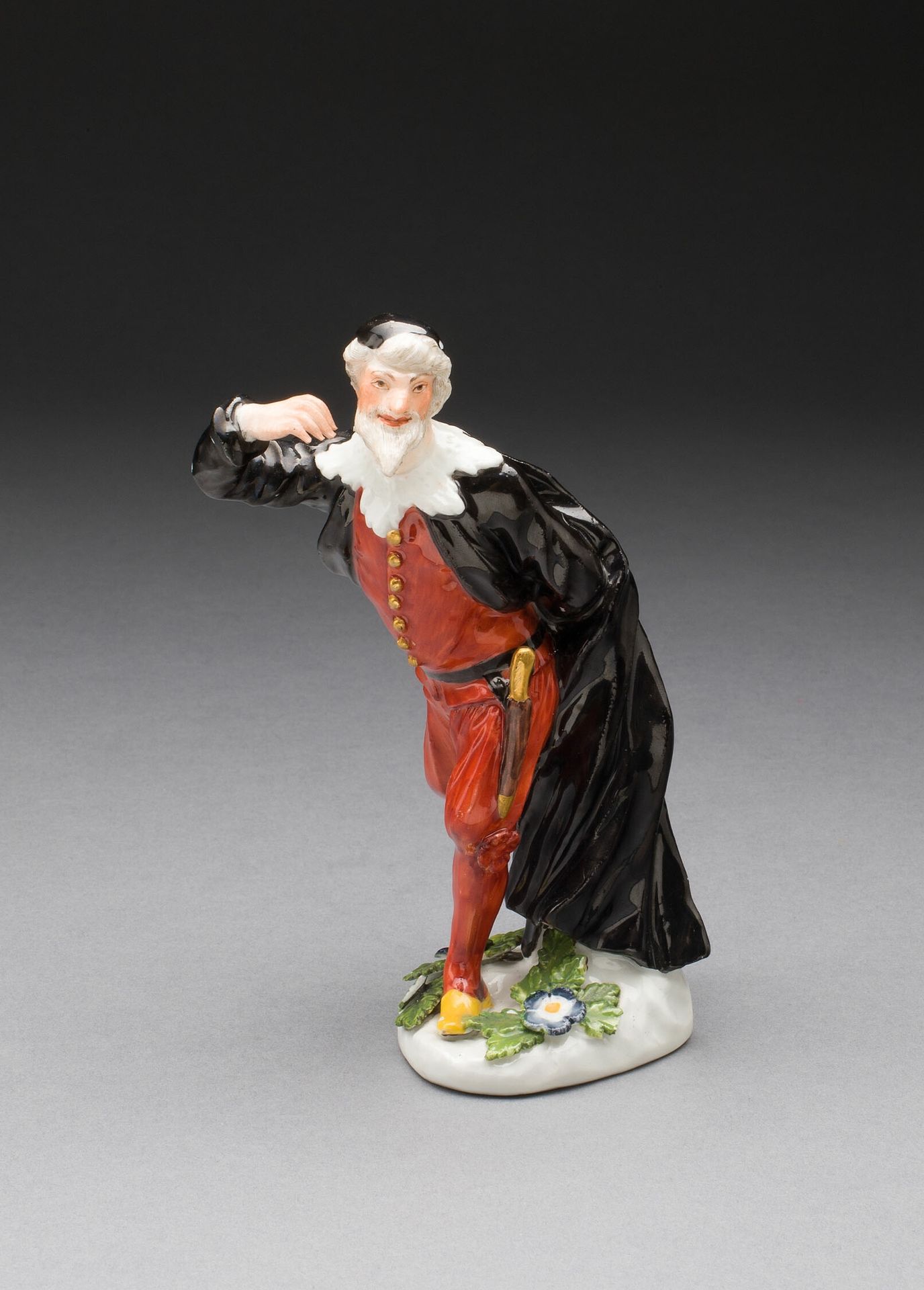
This is a porcelain figure called “Pantaloon” made by the Meissen Porcelain Manufactory. Pantaloon is a character from the commedia dell’arte. It was a popular form of improvisational theatre that originated in Italy in the 16th century and soon spread across Europe, including the German-speaking lands. Pantaloon is usually represented as a stock character: an elderly, often foolish, merchant from Venice. Here we see Pantaloon in his conventional costume, which includes a black robe, a red jacket, and yellow slippers. The figure is designed to satirize the elderly merchant, who is typically portrayed as being both lecherous and greedy. The figure gives us insight into the cultural world of the European courts during this period and the ways they saw other groups of people. If you want to know more about the commedia dell’arte, you can consult academic databases, theatre histories, and books specializing in the decorative arts.
Pantaloon
1740 - 1745

Meissen Porcelain Manufactory
@meissenporcelainmanufactory
The Art Institute of Chicago
The Art Institute of ChicagoArtwork details
- Medium
- ceramic, porcelain, inorganic-material, sculpture
- Dimensions
- H. 13.3 cm (5 1/4 in.)
- Location
- The Art Institute of Chicago
- Copyright
- Public Domain
Tags
Comments
Share your thoughts
About this artwork
This is a porcelain figure called “Pantaloon” made by the Meissen Porcelain Manufactory. Pantaloon is a character from the commedia dell’arte. It was a popular form of improvisational theatre that originated in Italy in the 16th century and soon spread across Europe, including the German-speaking lands. Pantaloon is usually represented as a stock character: an elderly, often foolish, merchant from Venice. Here we see Pantaloon in his conventional costume, which includes a black robe, a red jacket, and yellow slippers. The figure is designed to satirize the elderly merchant, who is typically portrayed as being both lecherous and greedy. The figure gives us insight into the cultural world of the European courts during this period and the ways they saw other groups of people. If you want to know more about the commedia dell’arte, you can consult academic databases, theatre histories, and books specializing in the decorative arts.
Comments
Share your thoughts