About this artwork
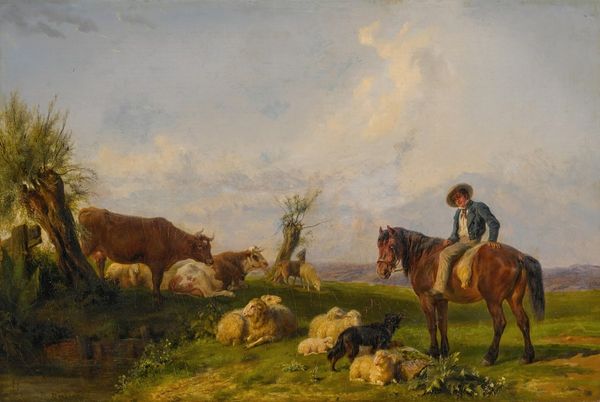
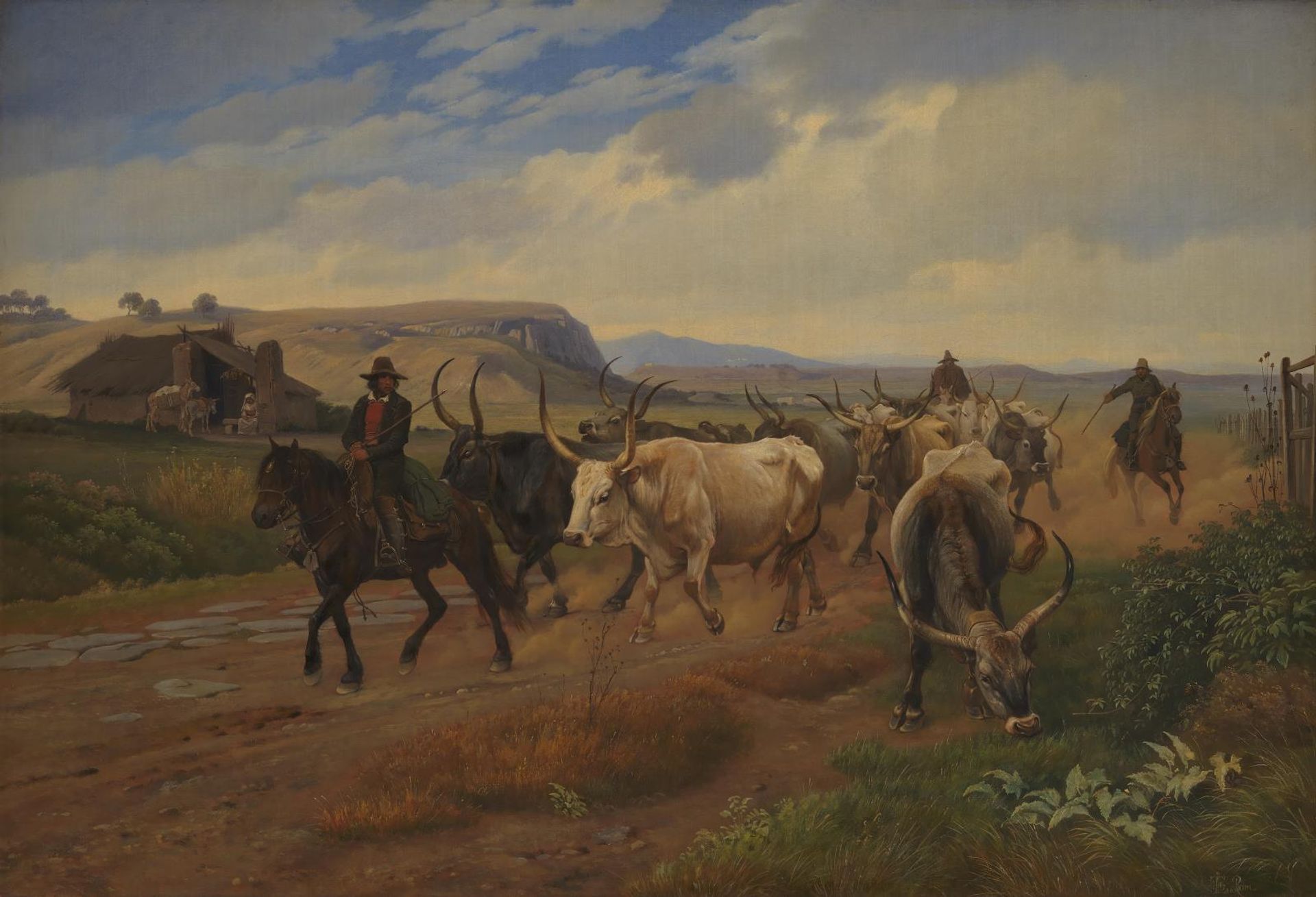
Johan Thomas Lundbye created this painting of oxen in the Roman Campagna using oil on canvas. The work’s material influence is visible in its subdued palette. It shows the dry, dusty landscape and the heavy forms of the animals and the riders that guide them. In the 19th century, many artists travelled to Italy. Lundbye, like others, made studies in oil paint on small canvases. Note the close attention to the appearance of the working animals and the clothing of the cattlemen. The artist has used visible brushstrokes to give a sense of the weight and presence of the oxen. Paintings like these allow us to consider the social context of agricultural labor. Lundbye elevates the everyday, making it worthy of aesthetic contemplation. By looking closely at the materiality and the making of this artwork, we can move beyond traditional ideas about fine art, and appreciate the cultural significance of this scene of rural labor.
A Drove of Oxen in the Roman Campagna
1845


Artwork details
- Medium
- painting, oil-paint
- Dimensions
- 68 cm (height) x 100 cm (width) (Netto), 86.9 cm (height) x 118.4 cm (width) x 8.8 cm (depth) (Brutto)
- Location
- SMK - Statens Museum for Kunst
Tags
Comments
Share your thoughts
About this artwork
Johan Thomas Lundbye created this painting of oxen in the Roman Campagna using oil on canvas. The work’s material influence is visible in its subdued palette. It shows the dry, dusty landscape and the heavy forms of the animals and the riders that guide them. In the 19th century, many artists travelled to Italy. Lundbye, like others, made studies in oil paint on small canvases. Note the close attention to the appearance of the working animals and the clothing of the cattlemen. The artist has used visible brushstrokes to give a sense of the weight and presence of the oxen. Paintings like these allow us to consider the social context of agricultural labor. Lundbye elevates the everyday, making it worthy of aesthetic contemplation. By looking closely at the materiality and the making of this artwork, we can move beyond traditional ideas about fine art, and appreciate the cultural significance of this scene of rural labor.
Comments
Share your thoughts