drawing, print, etching, paper, engraving
#
drawing
#
baroque
# print
#
etching
#
landscape
#
paper
#
cityscape
#
engraving
Dimensions: height 80 mm, width 115 mm
Copyright: Rijks Museum: Open Domain
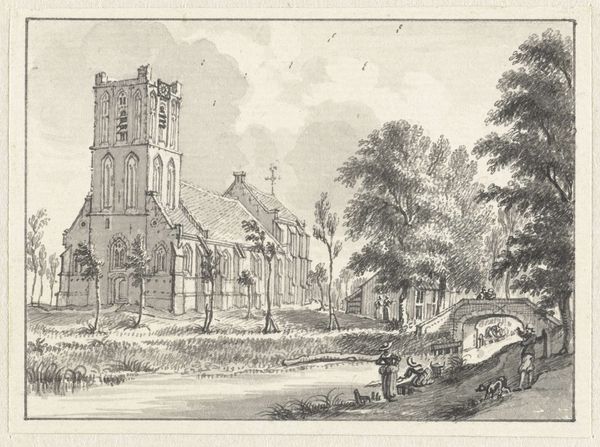
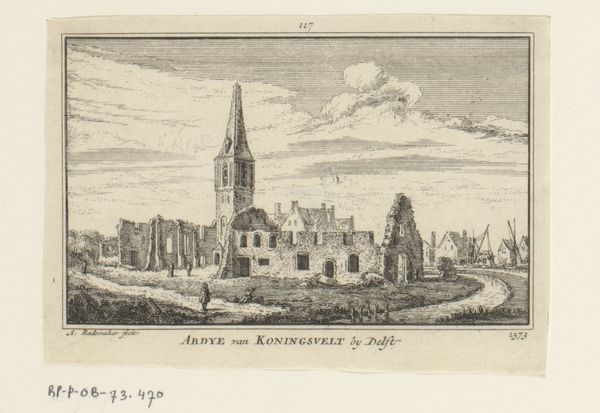
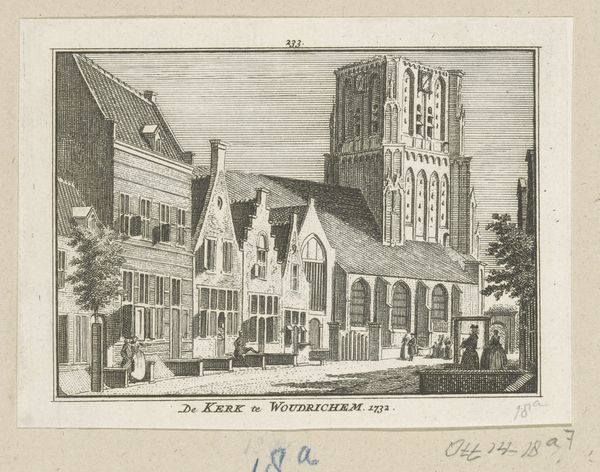
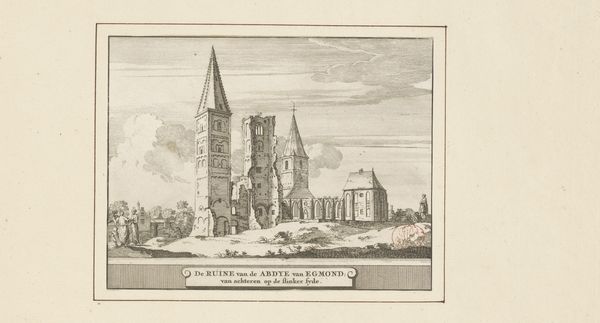
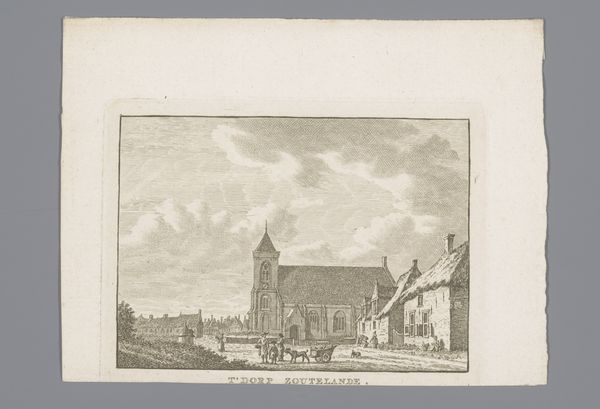
Curator: This is Abraham Rademaker's "Gezicht op de Sint-Martinuskerk te Woudrichem," made between 1727 and 1733. It’s currently housed in the Rijksmuseum. Editor: It has this calm, almost melancholic quality, don't you think? That looming church juxtaposed with the smallness of everything around it. Curator: Rademaker was clearly interested in depicting this cityscape in a very specific way. He employed etching and engraving techniques on paper. The marks themselves—the lines, the hatching—are meticulously done. What kind of paper was readily available? How did he learn the trade? What workshop did he utilize for making it? It feels significant to examine the very hands involved in creating it, the accessibility of printmaking to the rising merchant class... Editor: From my perspective, it also signifies the Church’s social position in that community. See how the church is in the back—a silent sentinel overlooking the daily lives unfolding. Religious iconography slowly gave way to more civic or secular structures, with cityscapes like this showing that shift in power and attention. Curator: Right. And think about who was commissioning these cityscapes, who could afford to own them. How did images like this reflect and shape civic pride and identity in the Dutch Republic? How was art consumed? The image then wasn’t for all and about representing social hierarchies? Editor: The etching allows Rademaker to reach a broader audience and engage in early forms of visual social documentation, capturing urban transformation as mercantile activity flourished in Woudrichem. What do you think is interesting in these themes or messages when disseminated via print? Curator: Absolutely, it brings forth considerations about the economics of art production. How do things change as images become available for an increased base of customers or patrons? We have so many questions to think about for Rademaker’s audience and how he may have felt navigating his new patron. Editor: Yes, a shift away from traditional patronage. In that sense, observing these prints today opens the conversation and historical understanding regarding the function and influence of visual arts across time. Curator: Precisely. Each line holds so much about the means and the messages the artist intended to send. Editor: It's like excavating the past, layer by layer.
Comments
No comments
Be the first to comment and join the conversation on the ultimate creative platform.
 Collect
 React
React Comment
More like this