
Curatorial notes
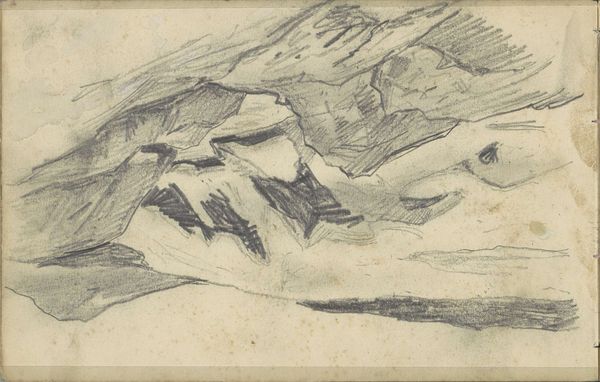
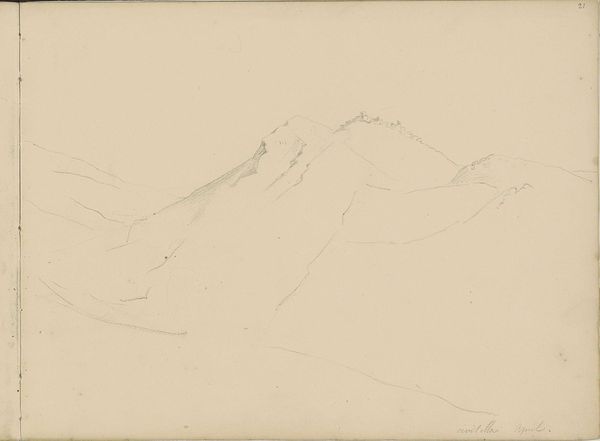
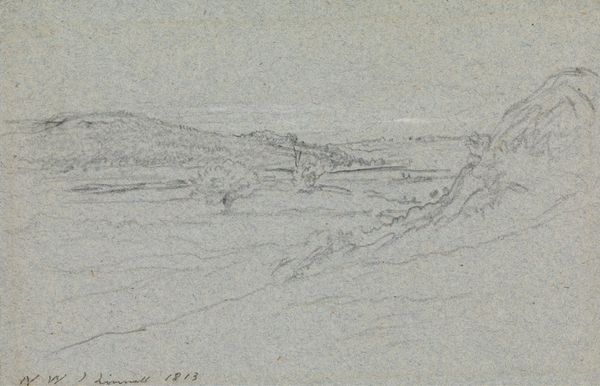
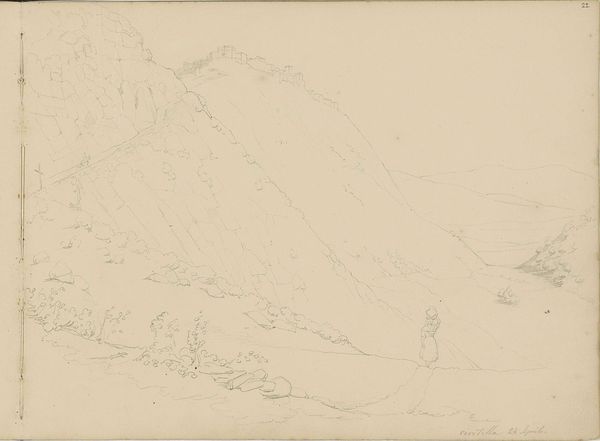
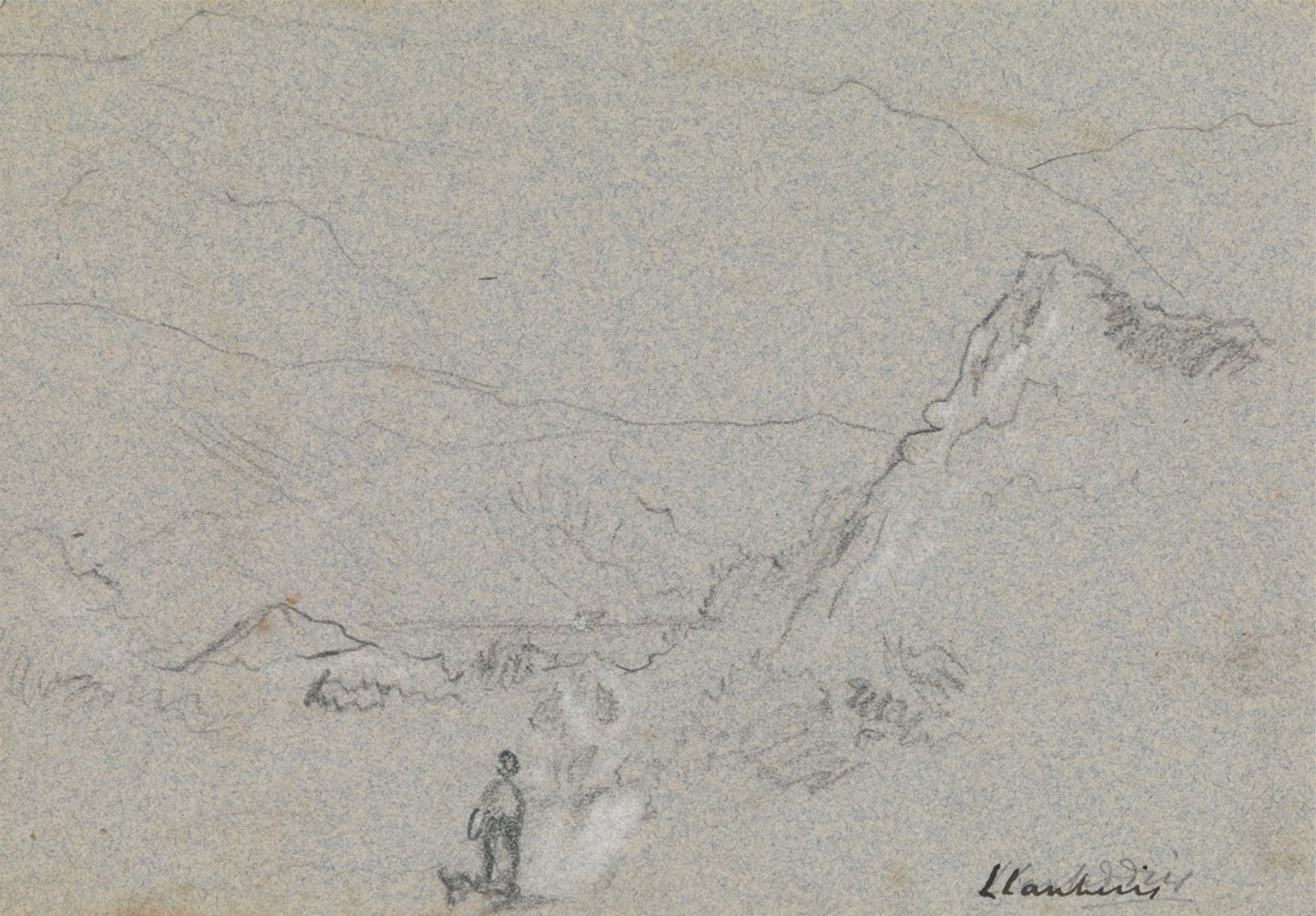
Editor: This is "Llanberis," a pencil drawing made en plein-air by John Linnell in 1813. There’s a real sense of depth despite the simplicity of the sketch; the lone figure adds to this feeling, a human presence amidst something immense and enduring. What symbols or interpretations stand out to you in this work? Curator: This drawing really captures something of the sublime—that feeling of awe mixed with fear when confronted with the vastness of nature. Consider the Romantic period context; artists were turning to nature for spiritual and emotional resonance. Llanberis itself, with its mountains, holds a potent symbolism. Editor: In what way? Curator: Mountains often represent the unyielding power of nature, the trials and tribulations of life, even spiritual aspiration. They’re enduring symbols found across cultures. Linnell places a tiny figure in this landscape, underscoring the relative insignificance of humankind. Does that evoke a specific feeling for you? Editor: A sense of vulnerability, maybe? But also a sense of wonder, as though the figure is drawn to the immensity despite the risk. Curator: Exactly! And note the sketchiness itself—it's unfinished, fleeting. Capturing a specific moment in time. This contributes to the feeling. There's an urgency here. It's more than just a landscape; it is an emotional and psychological state rendered in visual form. Editor: That's a different perspective than I initially had. Now, I can appreciate how much the imagery reveals those emotions. Curator: Art allows us to project these symbols, giving context to nature and cultural memory in various art styles. Ultimately, we internalize these shared values and understandings through visual forms.