About this artwork
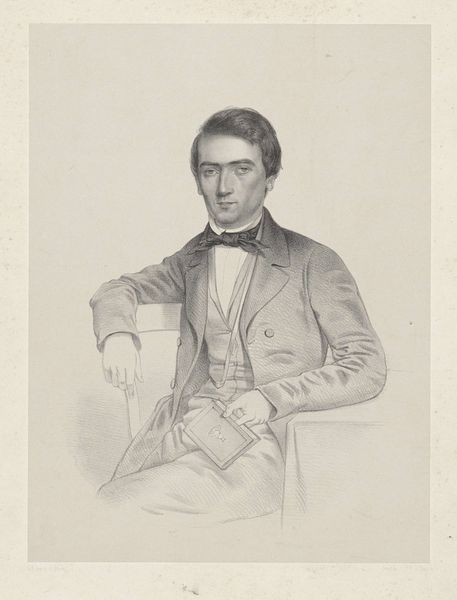
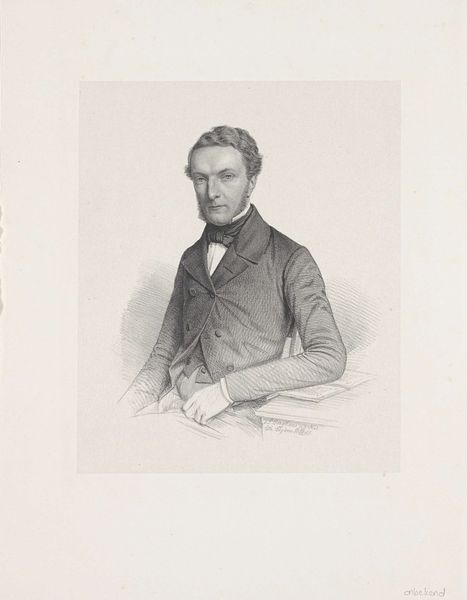
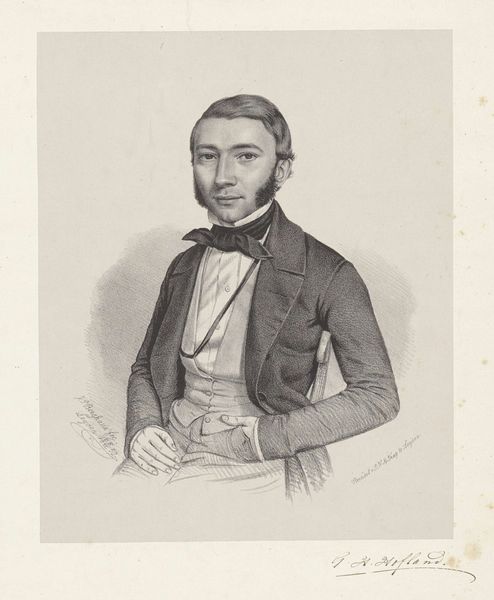
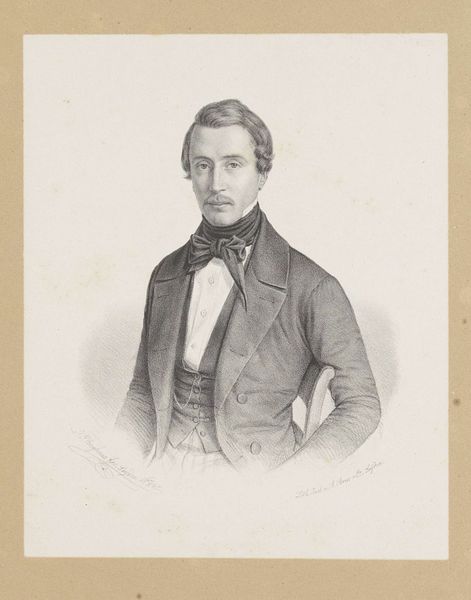
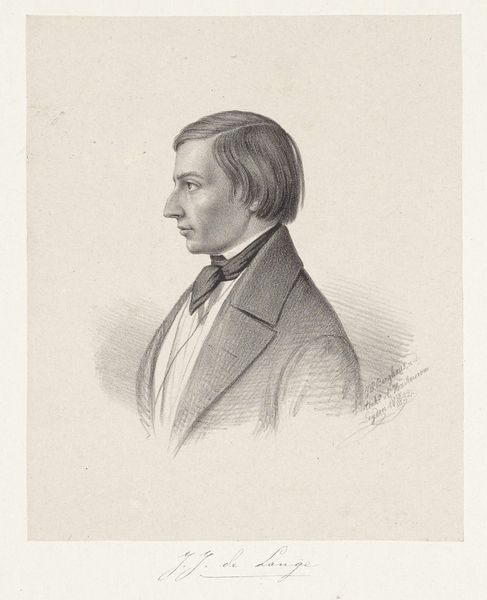
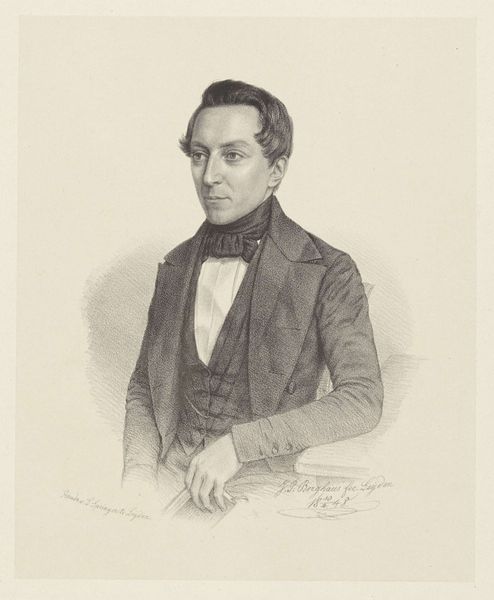
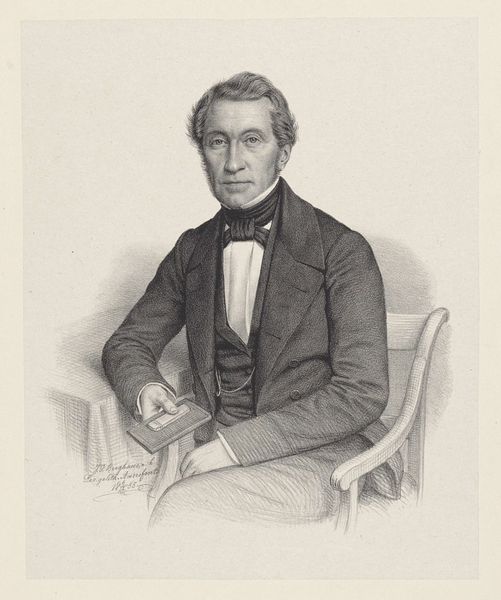
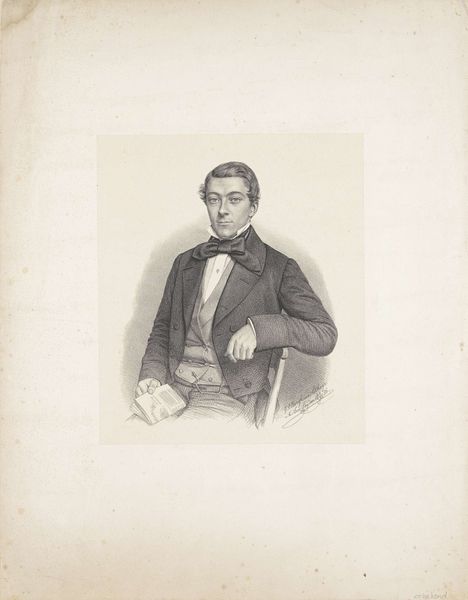
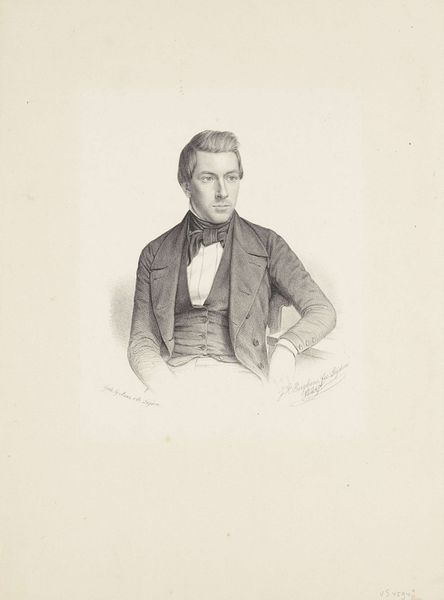
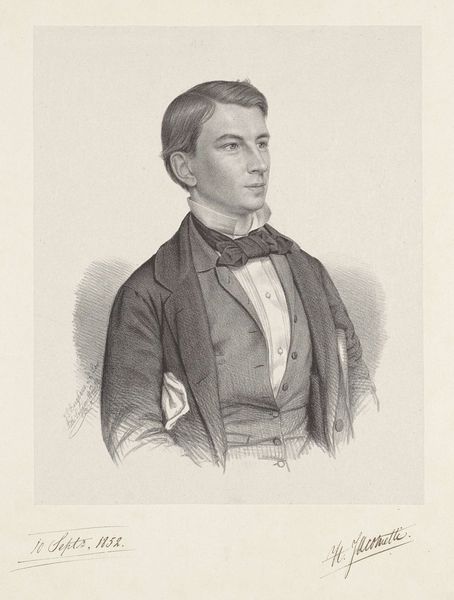
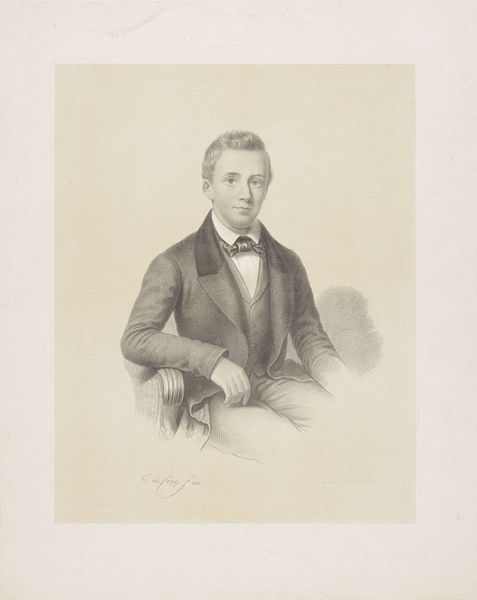
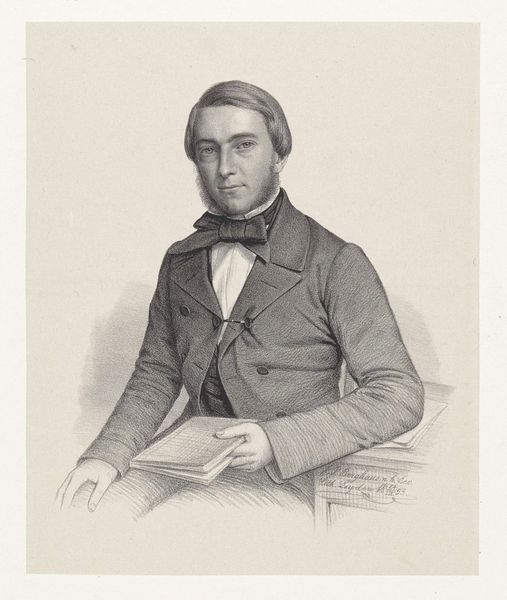
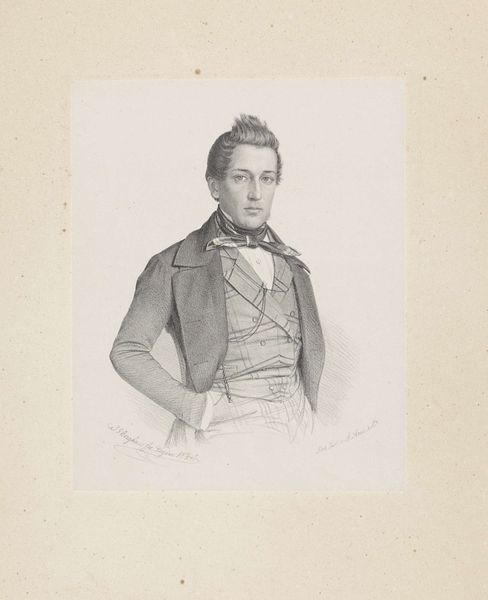
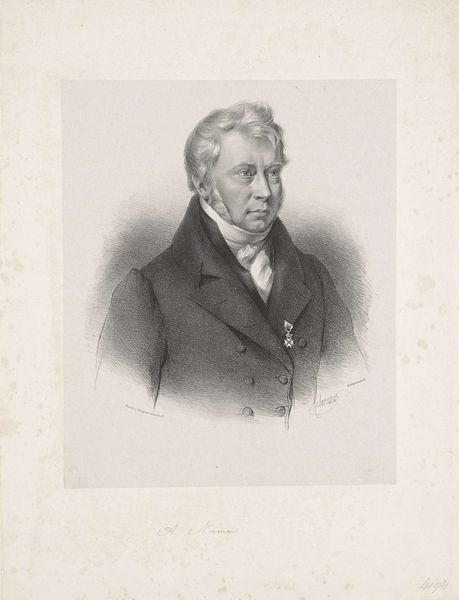
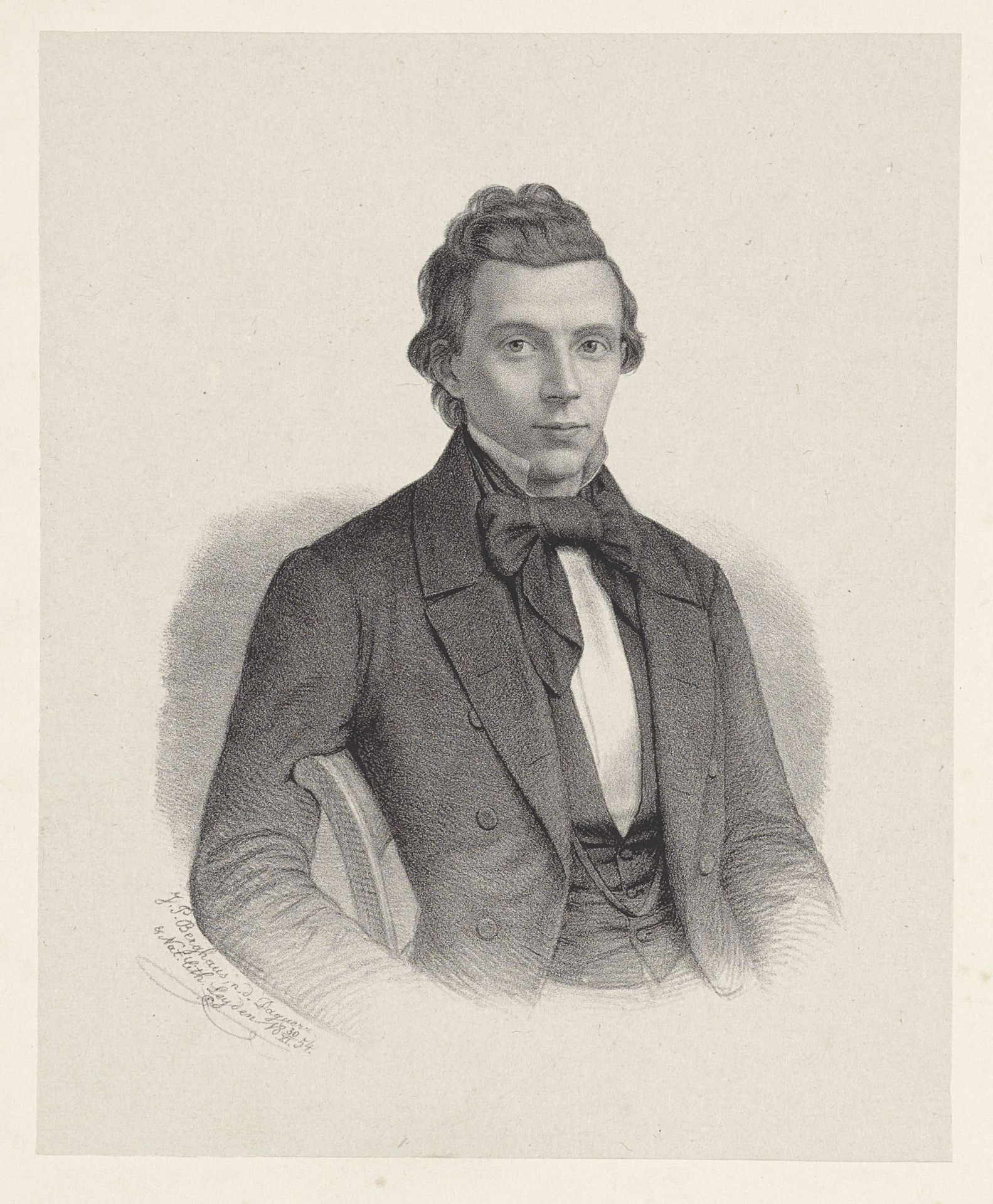
This is a portrait of H. van Hall by Johann Peter Berghaus, made using lithography, a printmaking process. The image is rendered through the careful application of ink to a prepared stone matrix, then transferred to paper. Lithography was a relatively new technology in the 19th century, enabling the reproduction of images on a scale never before possible. Unlike painting or sculpture, which were unique to the artist, lithography allowed for a democratization of imagery. The subtle gradations of tone, achieved through skilled manipulation of the lithographic stone, give the portrait a lifelike quality. The artist's skillful control of the medium, and the mechanical reproduction of the image, are key to understanding its significance. Lithography was not only a means of artistic expression, but also a reflection of the industrial age, mirroring the era’s changing dynamics of labor, production, and consumption. It raises questions about the value of the handmade versus the mechanically produced image, challenging conventional notions of artistic skill and originality.

Artwork details
- Medium
- drawing, graphite
- Dimensions
- height 303 mm, width 233 mm, height 473 mm, width 333 mm
- Location
- Rijksmuseum
- Copyright
- Rijks Museum: Open Domain
Tags
portrait
pencil drawn
drawing
pencil sketch
pencil drawing
graphite
portrait drawing
academic-art
fine art portrait
realism
Comments
Be the first to share your thoughts about this work.
About this artwork
This is a portrait of H. van Hall by Johann Peter Berghaus, made using lithography, a printmaking process. The image is rendered through the careful application of ink to a prepared stone matrix, then transferred to paper. Lithography was a relatively new technology in the 19th century, enabling the reproduction of images on a scale never before possible. Unlike painting or sculpture, which were unique to the artist, lithography allowed for a democratization of imagery. The subtle gradations of tone, achieved through skilled manipulation of the lithographic stone, give the portrait a lifelike quality. The artist's skillful control of the medium, and the mechanical reproduction of the image, are key to understanding its significance. Lithography was not only a means of artistic expression, but also a reflection of the industrial age, mirroring the era’s changing dynamics of labor, production, and consumption. It raises questions about the value of the handmade versus the mechanically produced image, challenging conventional notions of artistic skill and originality.
Comments
Be the first to share your thoughts about this work.