About this artwork
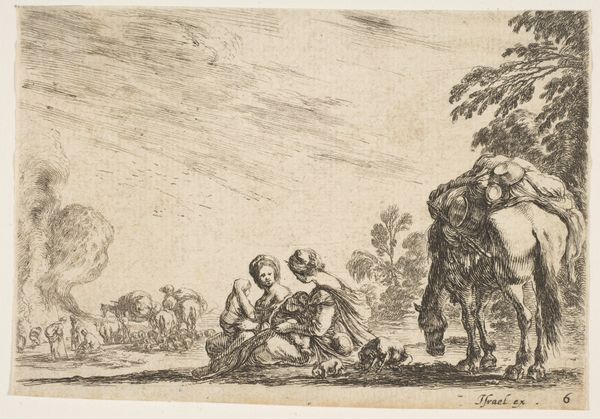
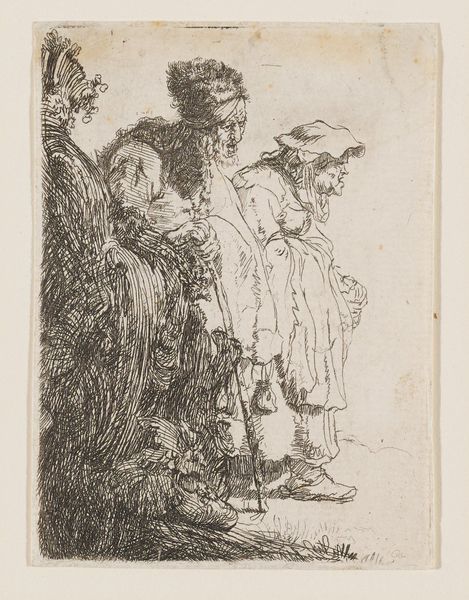
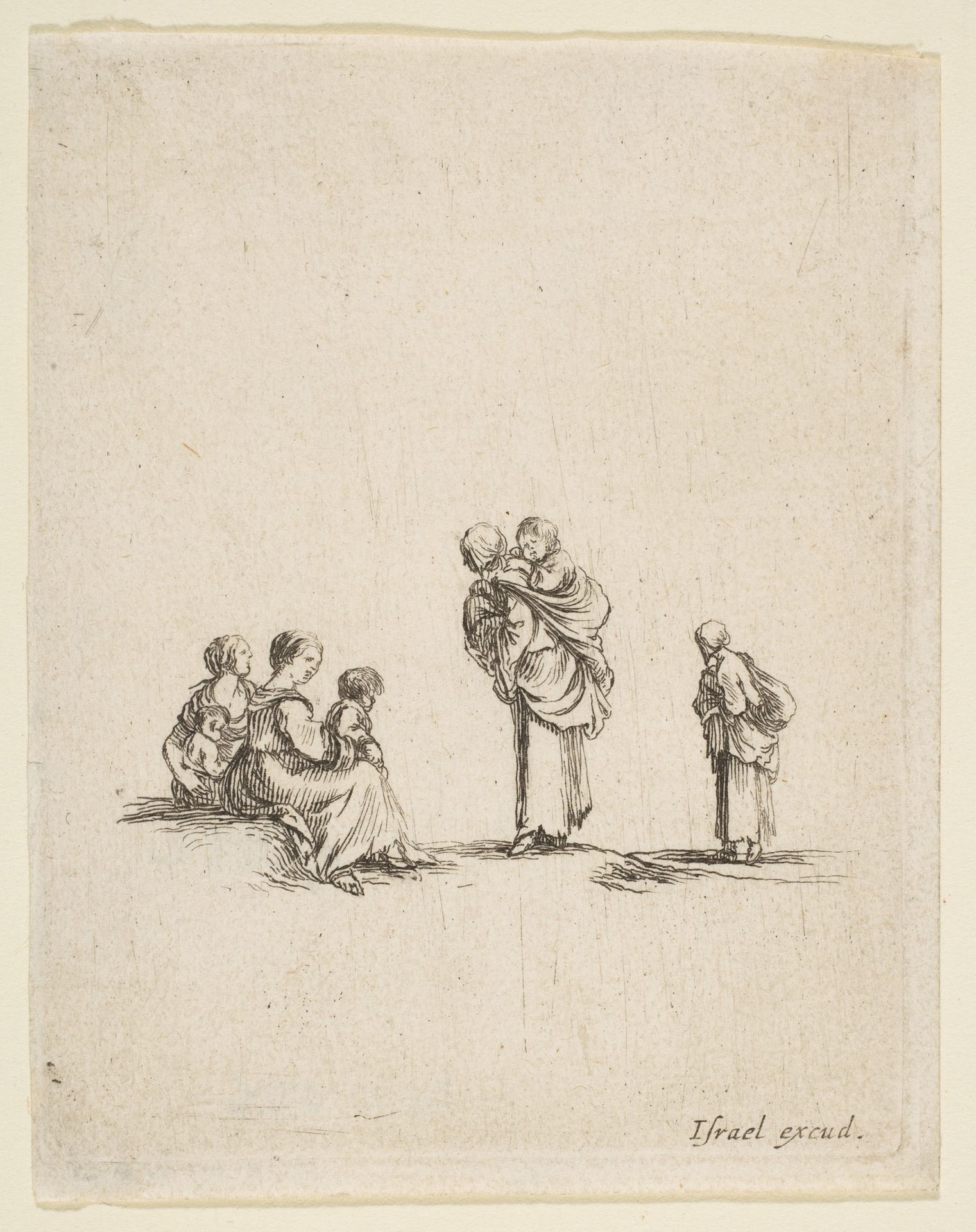
Stefano della Bella created this etching, Four Beggar Women, sometime in the 17th century. The print depicts a marginalized sector of society and raises questions about the social order of the time. The image of impoverished women with children reflects the economic and social realities of 17th-century Europe, a period marked by stark class divisions and frequent economic hardship. Della Bella was working in Florence, a city with its own distinct political structures and patronage systems. His work may reflect or critique the prevailing attitudes towards poverty and charity within that specific cultural context. To understand this image fully, one could research the social welfare systems of the time, the role of the Catholic Church in assisting the poor, and the prevailing attitudes towards women and children in Florentine society. Historical archives, religious documents, and studies of economic conditions during this era could shed light on the print's significance as a social commentary.
Four Beggar Women 1636 - 1646

Stefano della Bella
1610 - 1664
The Metropolitan Museum of Art
Metropolitan Museum of Art, New York, NYArtwork details
- Medium
- drawing, print, etching
- Dimensions
- Sheet (trimmed): 3 9/16 × 2 3/4 in. (9 × 7 cm)
- Location
- Metropolitan Museum of Art, New York, NY
- Copyright
- Public Domain
Tags
portrait
drawing
narrative-art
baroque
etching
figuration
child
line
genre-painting
Comments
No comments
About this artwork
Stefano della Bella created this etching, Four Beggar Women, sometime in the 17th century. The print depicts a marginalized sector of society and raises questions about the social order of the time. The image of impoverished women with children reflects the economic and social realities of 17th-century Europe, a period marked by stark class divisions and frequent economic hardship. Della Bella was working in Florence, a city with its own distinct political structures and patronage systems. His work may reflect or critique the prevailing attitudes towards poverty and charity within that specific cultural context. To understand this image fully, one could research the social welfare systems of the time, the role of the Catholic Church in assisting the poor, and the prevailing attitudes towards women and children in Florentine society. Historical archives, religious documents, and studies of economic conditions during this era could shed light on the print's significance as a social commentary.
Comments
No comments