1677 - 1755
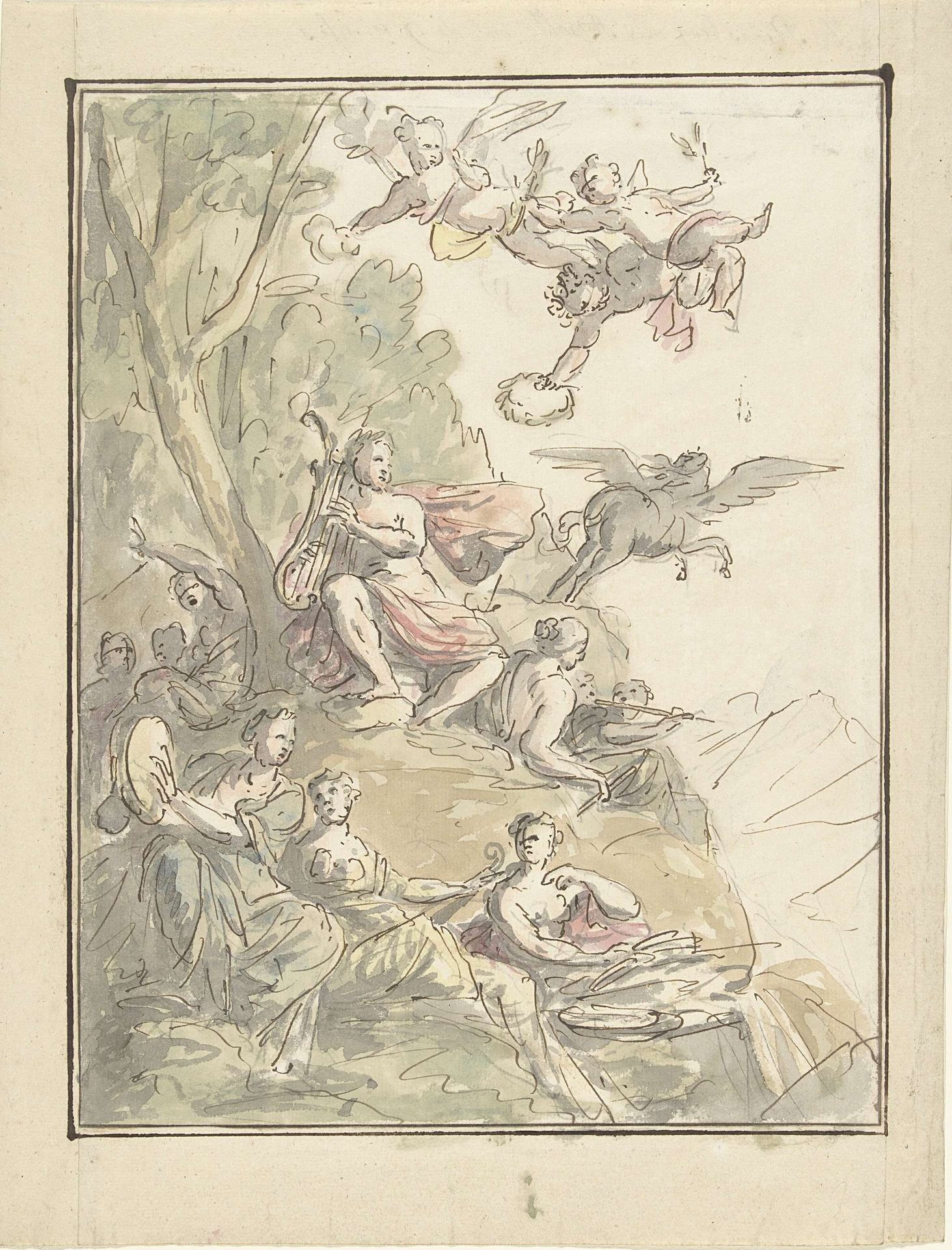
Apollo en de muzen op de Parnassus

Listen to curator's interpretation
Curatorial notes
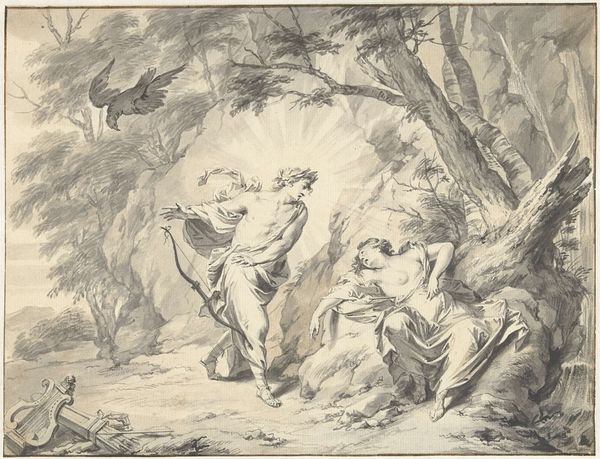
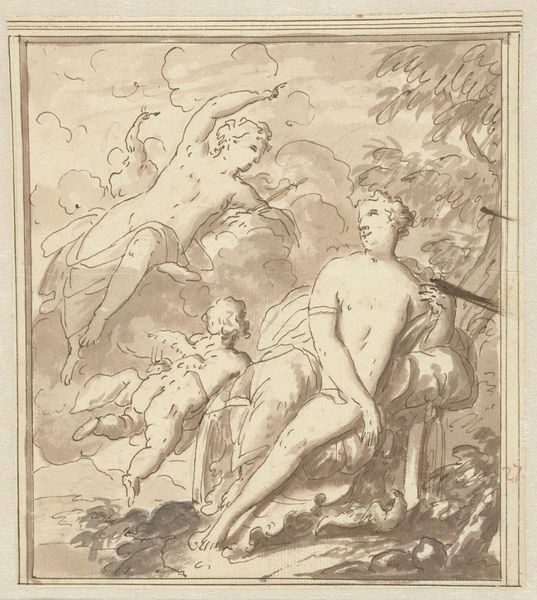
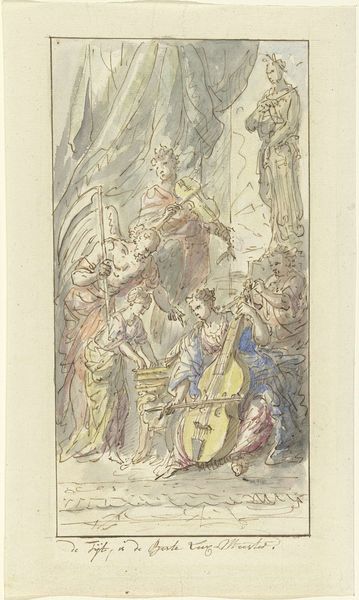
Elias van Nijmegen created this drawing of Apollo and the Muses on Mount Parnassus with pen in brown and gray ink and watercolor. Apollo, god of music, sits amongst the nine muses, goddesses of the arts and sciences. The Pegasus of Poetry flies in the sky with putti overhead holding laurel wreaths. The depiction of Apollo with his lyre is steeped in classical tradition. Think of the ancient Greek sculptures where Apollo is often depicted in a similar pose, embodying harmony, order, and reason. Yet, observe how in contrast to the cold marble of antiquity, Nijmegen infuses a warmth, a human touch. The idea of a divine musician resonates across cultures. In ancient Egypt, we find similar figures associated with music and divine knowledge. The lyre itself transcends time, appearing in Mesopotamian art as a symbol of civilization. Isn’t it remarkable how these symbols resurface and evolve? The image engages on a deep, subconscious level, evoking a longing for harmony and inspiration. It reminds us that artistic expression and creative inspiration are eternally intertwined.