About this artwork
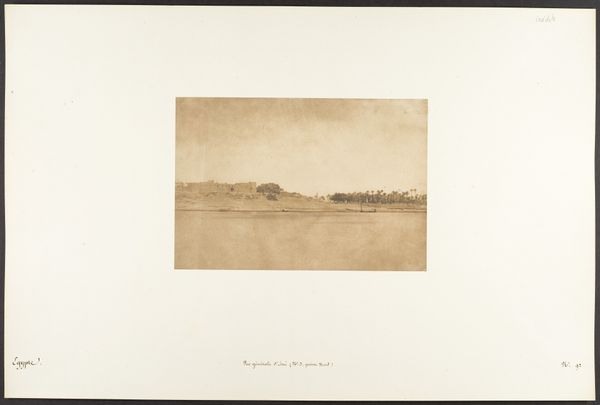
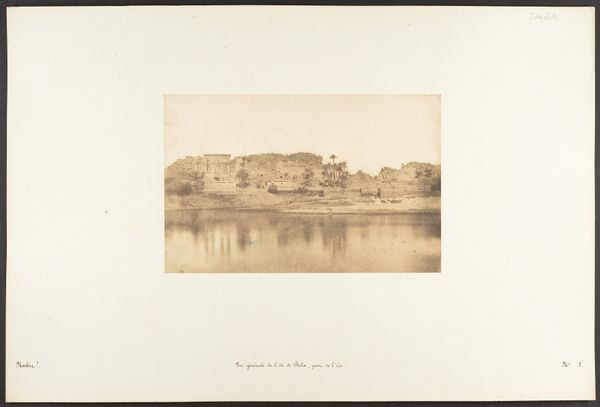
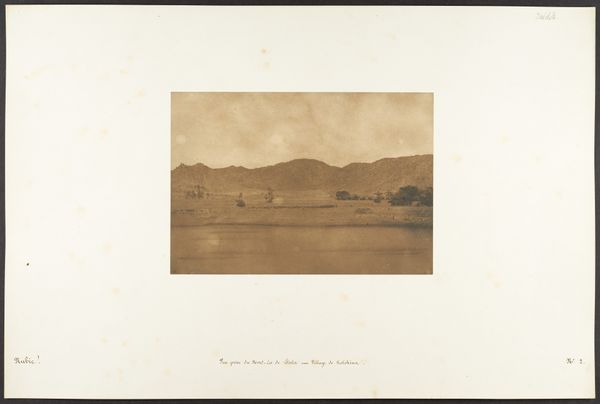
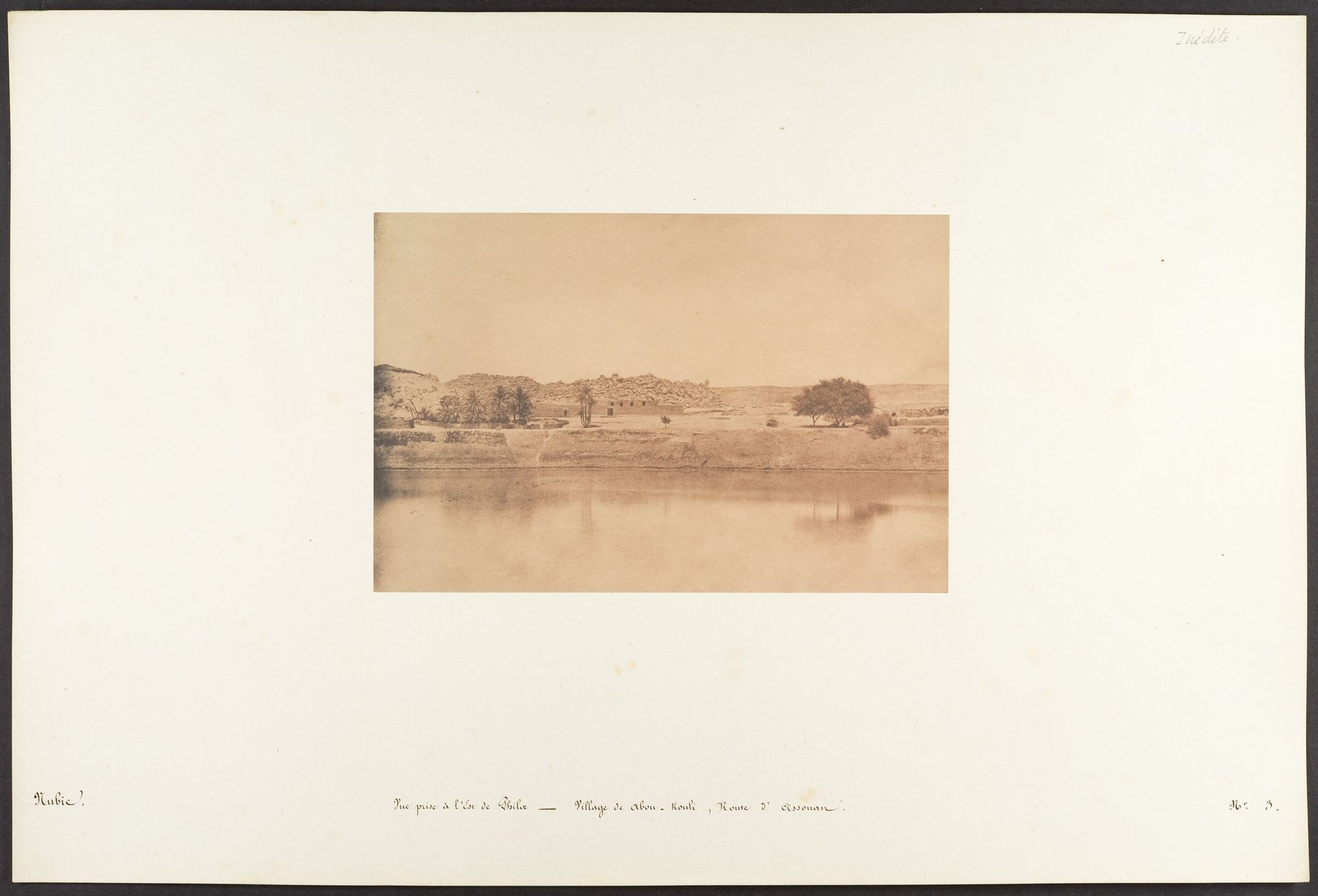
Captured by Maxime Du Camp, this photograph shows a view east of Philae and the village of Abou-Kouli along the route to Aswan. The body of water dominating the foreground acts as a mirror. Consider the image of the river: in ancient Egypt, the Nile was not merely a geographical feature but a symbol of life, fertility, and the cyclical nature of existence. In a broader sense, the symbolism of rivers appears in countless cultures. Think of the rivers Styx, Jordan, or Ganges, each representing transitions, purification, or the flow of life. Here, the mirrored river engages our subconscious, reflecting not just the physical landscape, but also our own transient existence. It's a silent invitation to contemplate the ever-changing, cyclical nature of time, and the emotional weight we attach to the places that hold our memories. As we gaze upon this seemingly simple view, we are drawn into a deeper meditation on life, memory, and the ceaseless passage of time.
Vue prise à l'Est de Philae - Village de Abou-Kouli; Route d'Assouan
1849 - 1850


Artwork details
- Medium
- photography, albumen-print
- Dimensions
- Image: 5 3/8 × 8 3/16 in. (13.6 × 20.8 cm) Mount: 12 5/16 × 18 11/16 in. (31.2 × 47.5 cm)
- Location
- Metropolitan Museum of Art, New York, NY
- Copyright
- Public Domain
Tags
Comments
Share your thoughts
About this artwork
Captured by Maxime Du Camp, this photograph shows a view east of Philae and the village of Abou-Kouli along the route to Aswan. The body of water dominating the foreground acts as a mirror. Consider the image of the river: in ancient Egypt, the Nile was not merely a geographical feature but a symbol of life, fertility, and the cyclical nature of existence. In a broader sense, the symbolism of rivers appears in countless cultures. Think of the rivers Styx, Jordan, or Ganges, each representing transitions, purification, or the flow of life. Here, the mirrored river engages our subconscious, reflecting not just the physical landscape, but also our own transient existence. It's a silent invitation to contemplate the ever-changing, cyclical nature of time, and the emotional weight we attach to the places that hold our memories. As we gaze upon this seemingly simple view, we are drawn into a deeper meditation on life, memory, and the ceaseless passage of time.
Comments
Share your thoughts