About this artwork
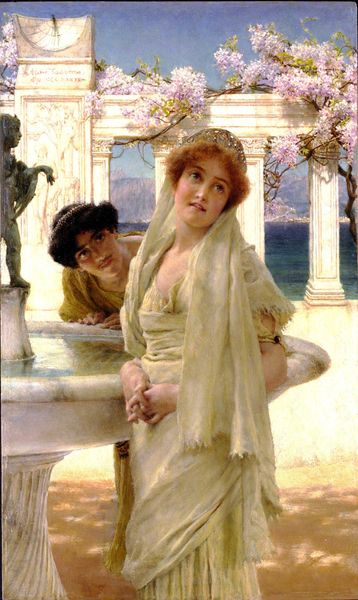
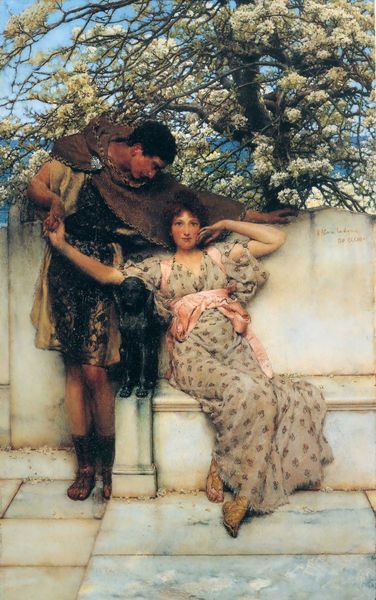
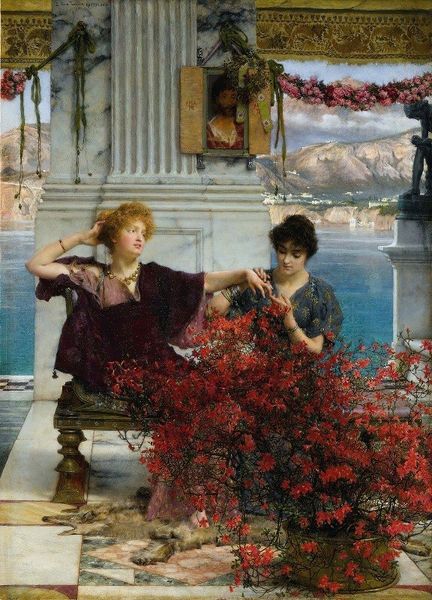
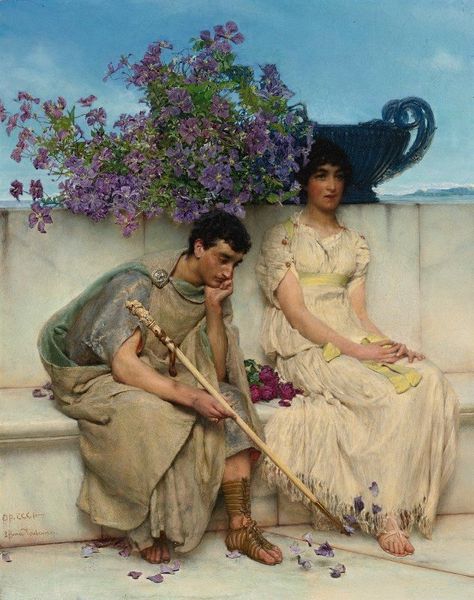
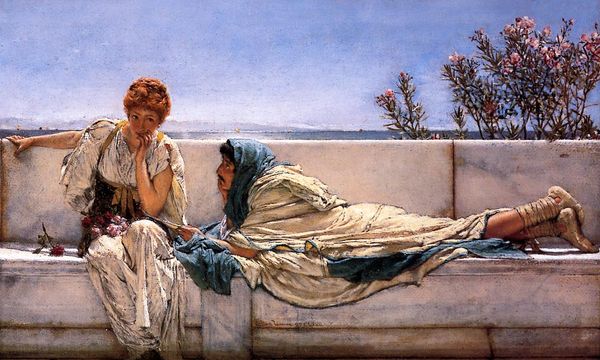
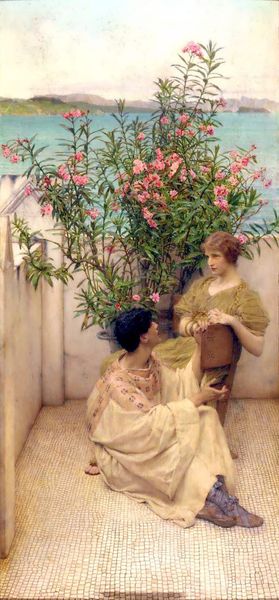
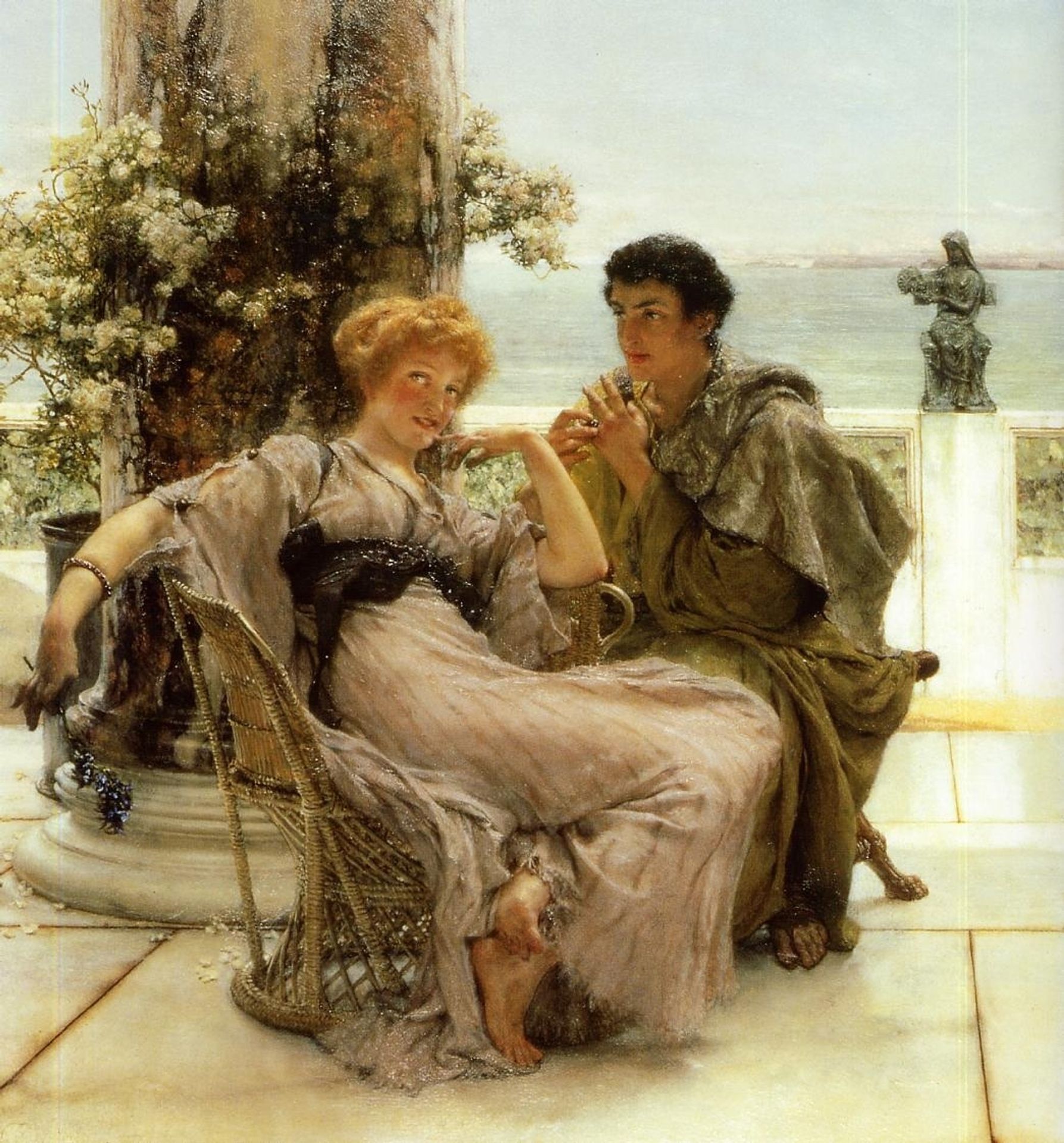
Lawrence Alma-Tadema painted “Courtship the Proposal”, a scene where love and societal expectations intertwine, with oil. The Roman setting is rich with symbols. Note the idyllic scene on the balcony with a young man proposing marriage to a woman. But look closer at her expression: it's a mix of contemplation and perhaps a hint of skepticism. This hesitation is a motif we see echoed through time, from ancient Greek dramas to Renaissance paintings. Consider the statue of the muse in the background overlooking the ocean and the landscape. The gesture of contemplation recurs, a reminder that love and marriage are not merely personal decisions but are laden with cultural expectations. This motif of the hand to the chin can be traced back to antiquity where philosophers were depicted in this posture as they pondered the mysteries of existence. The cyclical nature of human experience is evident. Even in modern times, the emotional and societal complexities of courtship continue to resonate, revealing how the past is always present, informing our understanding of love and relationships across generations.
Courtship the Proposal
1892

Lawrence Alma-Tadema
1836 - 1912Location
Royal Pavilion, Brighton, UKArtwork details
- Medium
- painting, oil-paint
- Location
- Royal Pavilion, Brighton, UK
- Copyright
- Public domain
Tags
portrait
painting
oil-paint
romanesque
oil painting
genre-painting
academic-art
Comments
Be the first to share your thoughts about this work.
About this artwork
Lawrence Alma-Tadema painted “Courtship the Proposal”, a scene where love and societal expectations intertwine, with oil. The Roman setting is rich with symbols. Note the idyllic scene on the balcony with a young man proposing marriage to a woman. But look closer at her expression: it's a mix of contemplation and perhaps a hint of skepticism. This hesitation is a motif we see echoed through time, from ancient Greek dramas to Renaissance paintings. Consider the statue of the muse in the background overlooking the ocean and the landscape. The gesture of contemplation recurs, a reminder that love and marriage are not merely personal decisions but are laden with cultural expectations. This motif of the hand to the chin can be traced back to antiquity where philosophers were depicted in this posture as they pondered the mysteries of existence. The cyclical nature of human experience is evident. Even in modern times, the emotional and societal complexities of courtship continue to resonate, revealing how the past is always present, informing our understanding of love and relationships across generations.
Comments
Be the first to share your thoughts about this work.