About this artwork
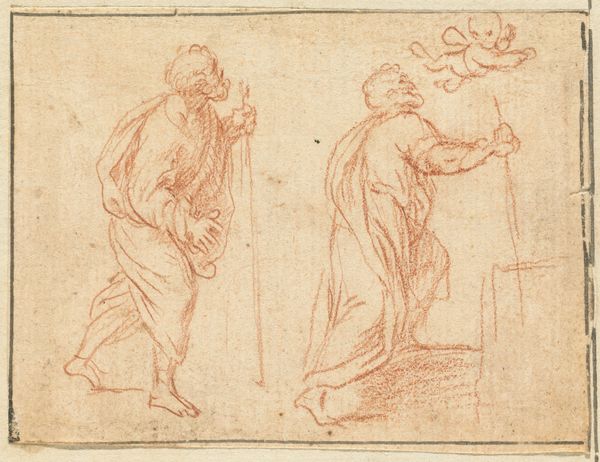
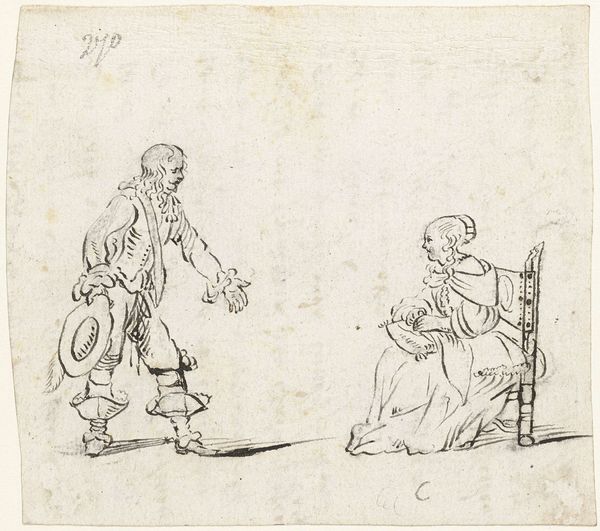
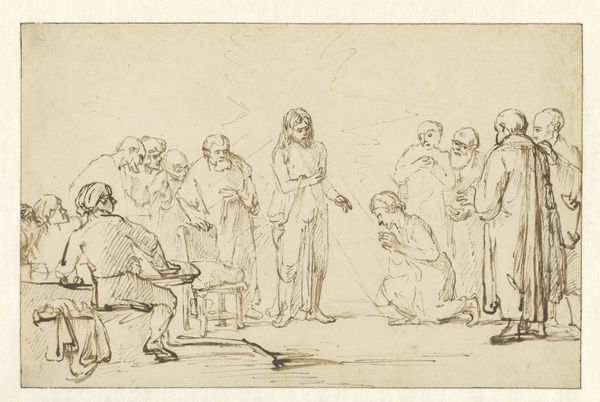
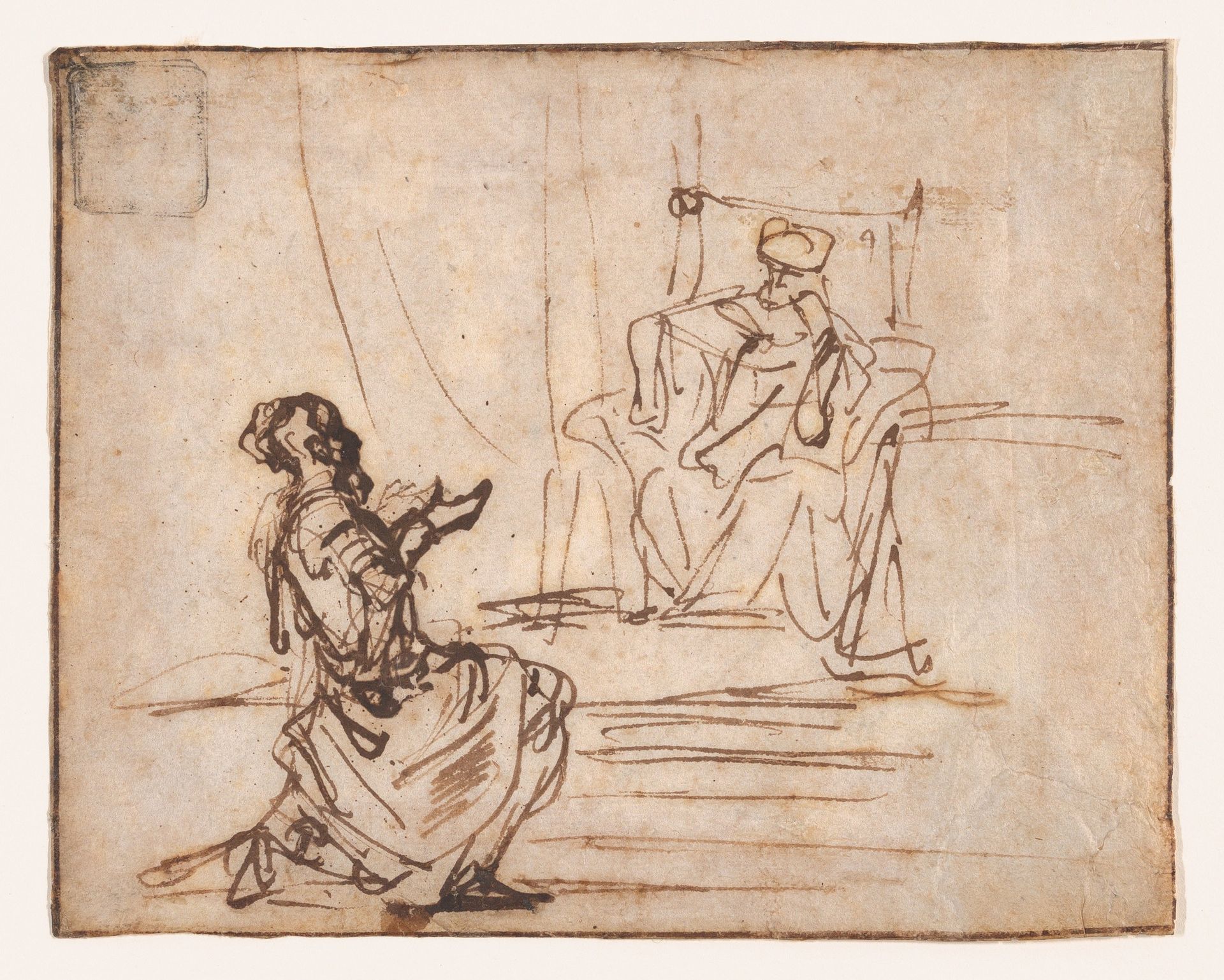
Gerbrand van den Eeckhout’s pen and brown ink drawing captures a biblical scene with stark simplicity. The composition immediately directs our eye to the contrast between the supplicant Uriah and the seated King David. Eeckhout masterfully uses line to convey not just form, but also the emotional weight of the encounter. Uriah’s kneeling posture, delineated with meticulous strokes, contrasts with David’s more relaxed, almost languid pose. The negative space around them amplifies the tension. This stark juxtaposition raises questions about power and morality. The sketch employs a semiotic system where posture and placement signify the characters' roles and moral standings. The artist, through the formal elements of line and space, invites us to reflect on the complexities of biblical narratives. It is an invitation to contemplate the ways in which art can engage with questions of ethics, power, and interpretation.
Uriah before King David
1630 - 1674

Gerbrand van den Eeckhout
1621 - 1674
The Metropolitan Museum of Art
Metropolitan Museum of Art, New York, NYArtwork details
- Medium
- drawing, print, paper, ink
- Dimensions
- sheet: 5 1/4 x 6 15/16 in. (13.3 x 17.7 cm)
- Location
- Metropolitan Museum of Art, New York, NY
- Copyright
- Public Domain
Tags
Comments
Share your thoughts
About this artwork
Gerbrand van den Eeckhout’s pen and brown ink drawing captures a biblical scene with stark simplicity. The composition immediately directs our eye to the contrast between the supplicant Uriah and the seated King David. Eeckhout masterfully uses line to convey not just form, but also the emotional weight of the encounter. Uriah’s kneeling posture, delineated with meticulous strokes, contrasts with David’s more relaxed, almost languid pose. The negative space around them amplifies the tension. This stark juxtaposition raises questions about power and morality. The sketch employs a semiotic system where posture and placement signify the characters' roles and moral standings. The artist, through the formal elements of line and space, invites us to reflect on the complexities of biblical narratives. It is an invitation to contemplate the ways in which art can engage with questions of ethics, power, and interpretation.
Comments
Share your thoughts