About this artwork
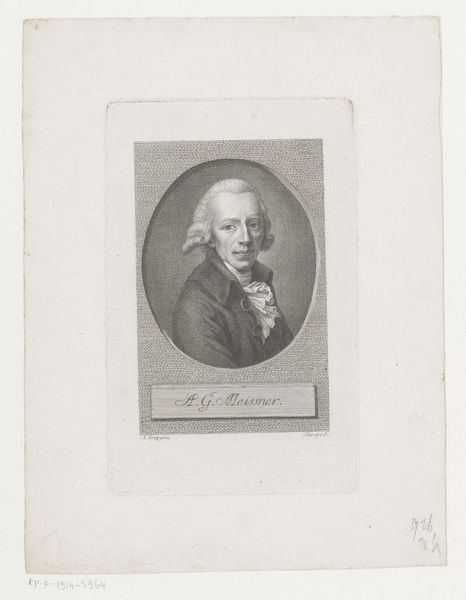
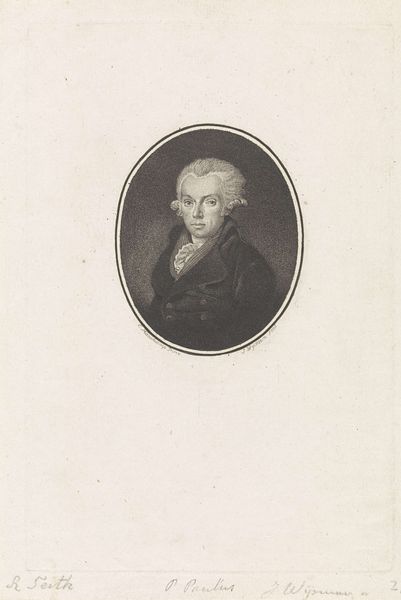
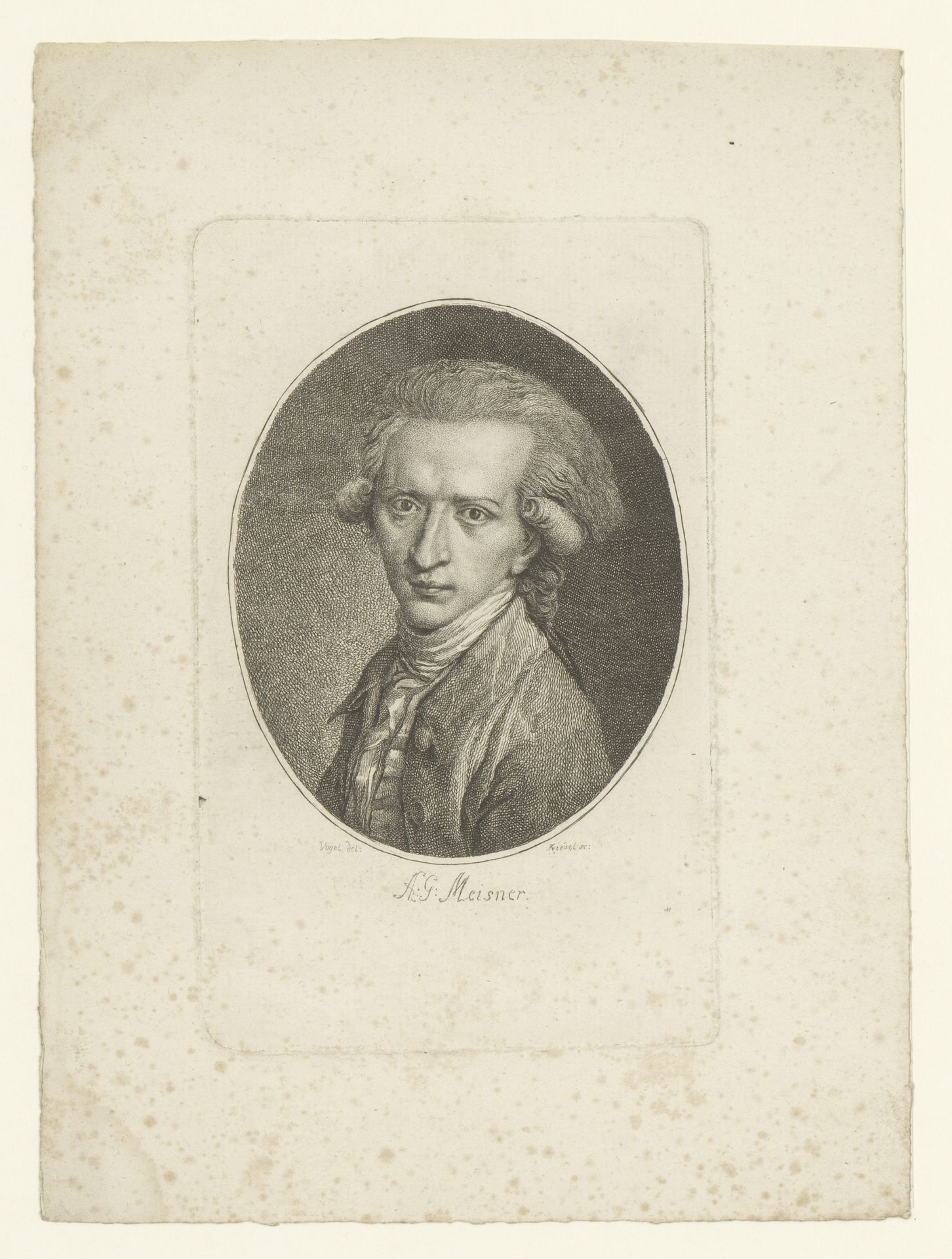
Karl Traugott Riedel made this print of August Gottlieb Meissner, though the date remains unknown. Prints like this one served an important public role, circulating images and ideas through a growing reading public. Meissner was a popular writer and educator in late 18th-century Germany, and his portrait reflects the cultural values of the Enlightenment. Encased in an oval, the composition draws on the traditions of portraiture that were closely associated with the European aristocracy and political power. The image, however, presents Meissner as an intellectual and a man of letters. Details such as his powdered wig and fashionable jacket place him firmly within a specific time and place, while subtly challenging traditional hierarchies. Through the distribution of printed materials, figures like Meissner gained influence in German society beyond courtly and aristocratic circles. By researching the printmaker, the sitter, and the institutions that showcased their work, we can begin to understand how art actively participated in the transformation of European culture and society.
Portret van August Gottlieb Meissner
1779 - 1850

Karl Traugott Riedel
1769 - 1832Location
RijksmuseumArtwork details
- Medium
- paper, engraving
- Dimensions
- height 160 mm, height 100 mm
- Location
- Rijksmuseum
- Copyright
- Rijks Museum: Open Domain
Tags
Comments
Share your thoughts
About this artwork
Karl Traugott Riedel made this print of August Gottlieb Meissner, though the date remains unknown. Prints like this one served an important public role, circulating images and ideas through a growing reading public. Meissner was a popular writer and educator in late 18th-century Germany, and his portrait reflects the cultural values of the Enlightenment. Encased in an oval, the composition draws on the traditions of portraiture that were closely associated with the European aristocracy and political power. The image, however, presents Meissner as an intellectual and a man of letters. Details such as his powdered wig and fashionable jacket place him firmly within a specific time and place, while subtly challenging traditional hierarchies. Through the distribution of printed materials, figures like Meissner gained influence in German society beyond courtly and aristocratic circles. By researching the printmaker, the sitter, and the institutions that showcased their work, we can begin to understand how art actively participated in the transformation of European culture and society.
Comments
Share your thoughts