photography, gelatin-silver-print
#
16_19th-century
#
pictorialism
#
landscape
#
photography
#
gelatin-silver-print
#
19th century
#
cityscape
#
watercolor
Dimensions: height 90 mm, width 115 mm
Copyright: Rijks Museum: Open Domain
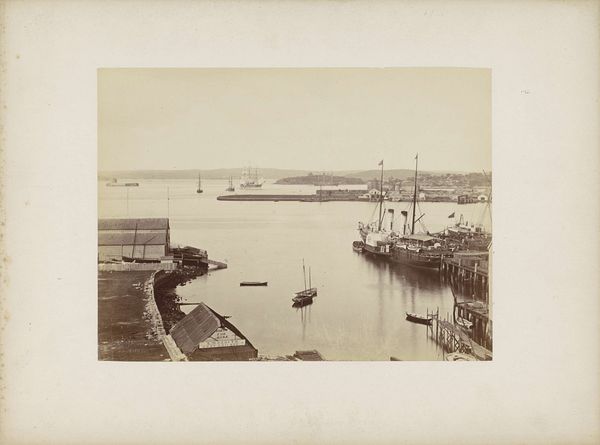
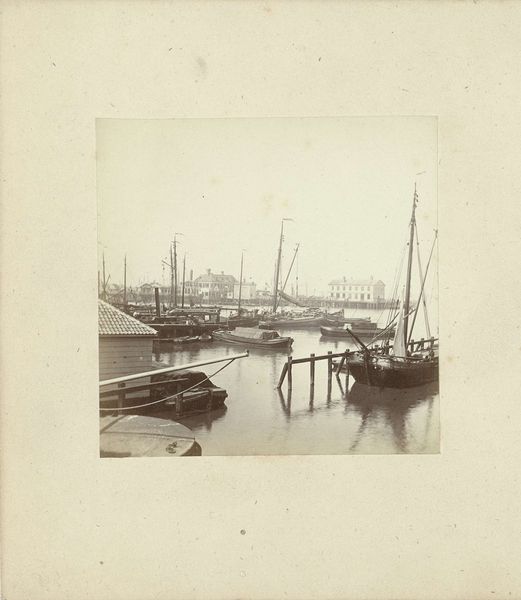
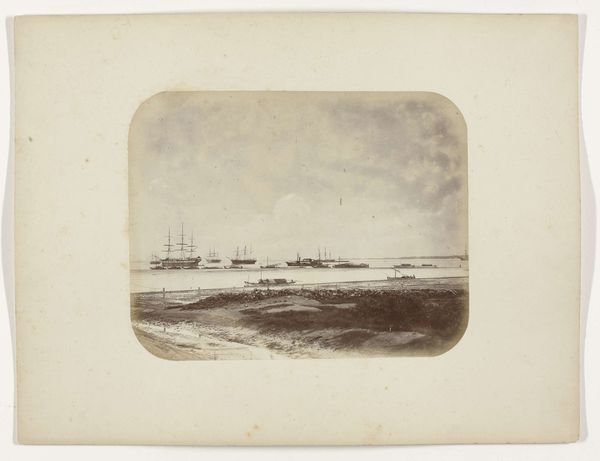
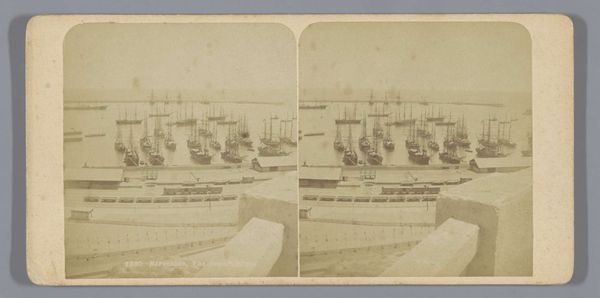
Editor: So, here we have Johanna Margaretha Piek's "View of the IJ during the Emperor's Celebrations in Amsterdam," taken in 1891, a gelatin silver print. The circular composition really struck me, like looking through a spyglass onto this historical scene. What draws your eye to it? Curator: That circular frame, you see, focuses our gaze, but it's also deeply symbolic. It evokes not just a window to the past, but also a sense of totality, of capturing a fleeting moment for eternity. Consider the boats clustered there. What might those festive boats represent in the collective memory of Amsterdam? Editor: Hmm, prosperity, maybe? Or national pride? Curator: Exactly! The river, a lifeline for trade and connection, is filled with signs of celebration. Note the soft focus and ethereal quality—this wasn't just documentation; Piek sought to evoke feeling, to romanticize the moment. Think about how celebratory occasions are pictured now versus then - what does the pictorialist style lend that differs so greatly? Editor: That makes sense. It definitely feels more… nostalgic. Like a cherished memory. You almost miss a time you've never known. I'd say this differs with our approach to the image with the internet because we aim to see, to believe what the medium portrays to us; however, images like this cause pause. Curator: Nostalgia is a powerful force, indeed! Piek uses symbolism to create not just an image but a cultural artifact, something that continues to resonate with ideas of national identity and a bygone era of grand celebration. How does this shift your initial understanding? Editor: I see it now as less of a straightforward snapshot and more of a deliberate attempt to shape how future generations would remember this event and period of time. Thank you! Curator: And you, for bringing your fresh perspective. It's in these conversations that the cultural weight of an image truly comes to life.
Comments
No comments
Be the first to comment and join the conversation on the ultimate creative platform.
 Collect
 React
React Comment
More like this