About this artwork
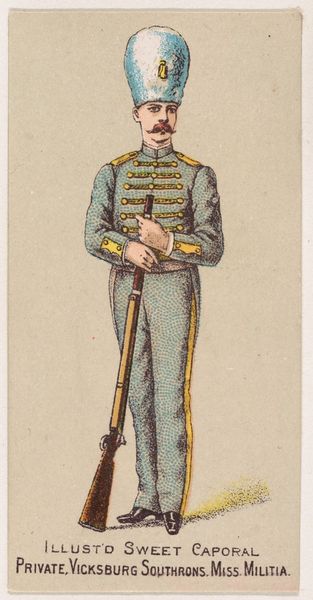
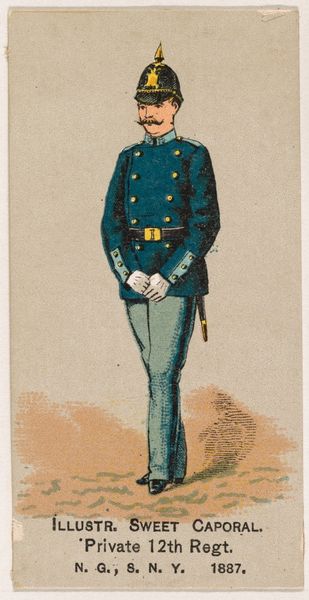
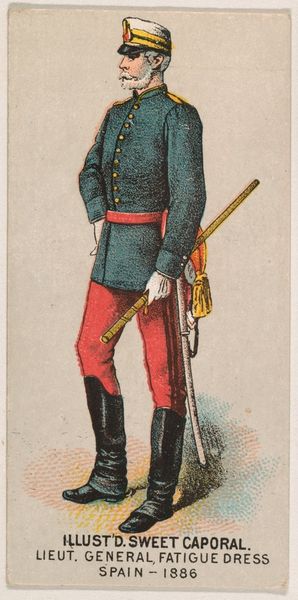
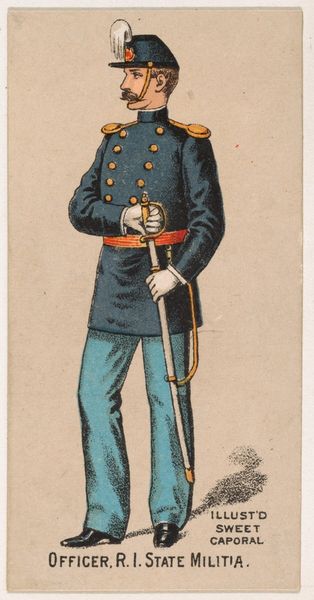
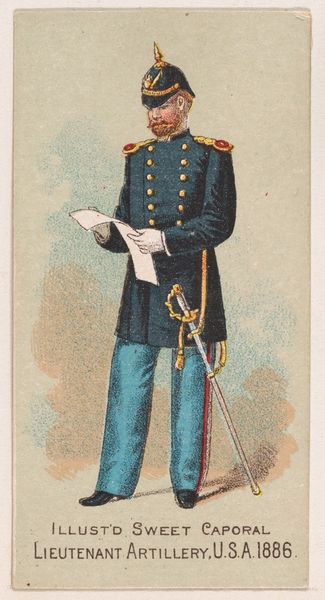
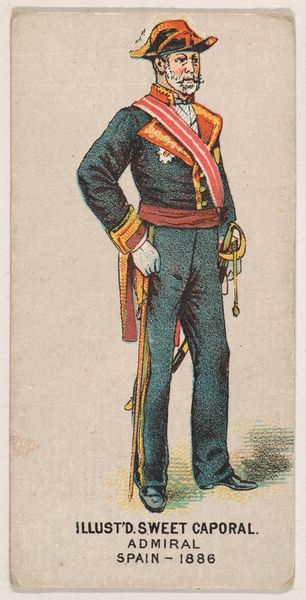
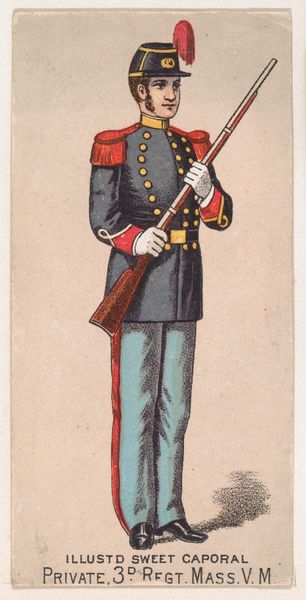
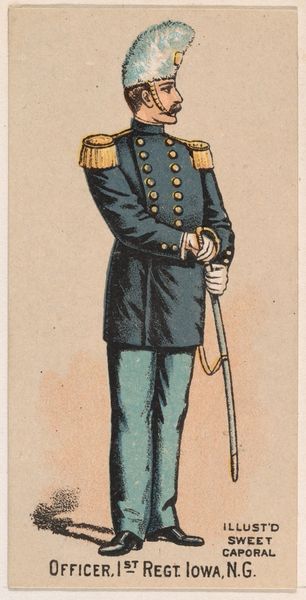
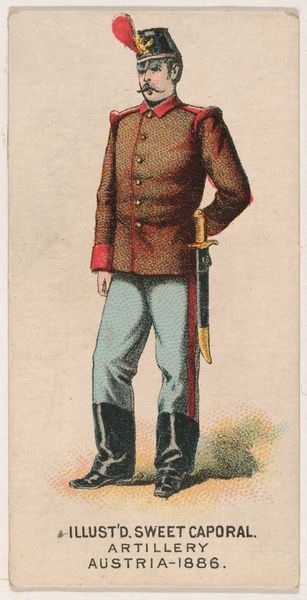
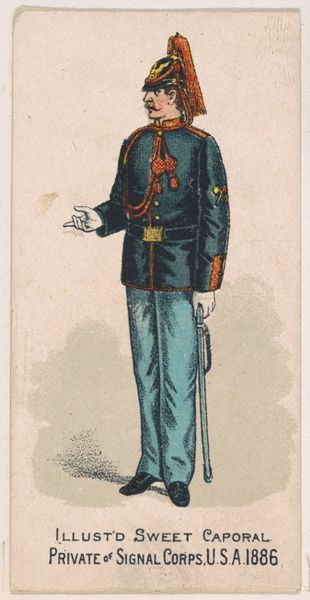
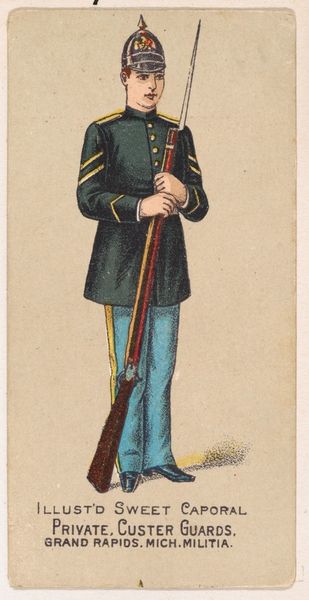
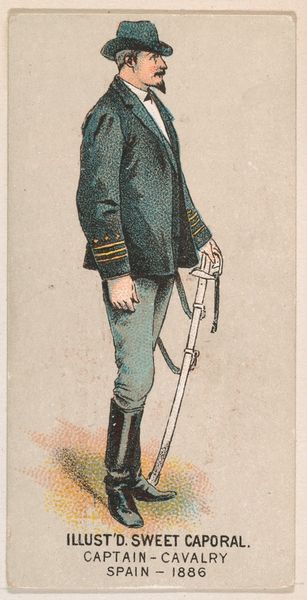
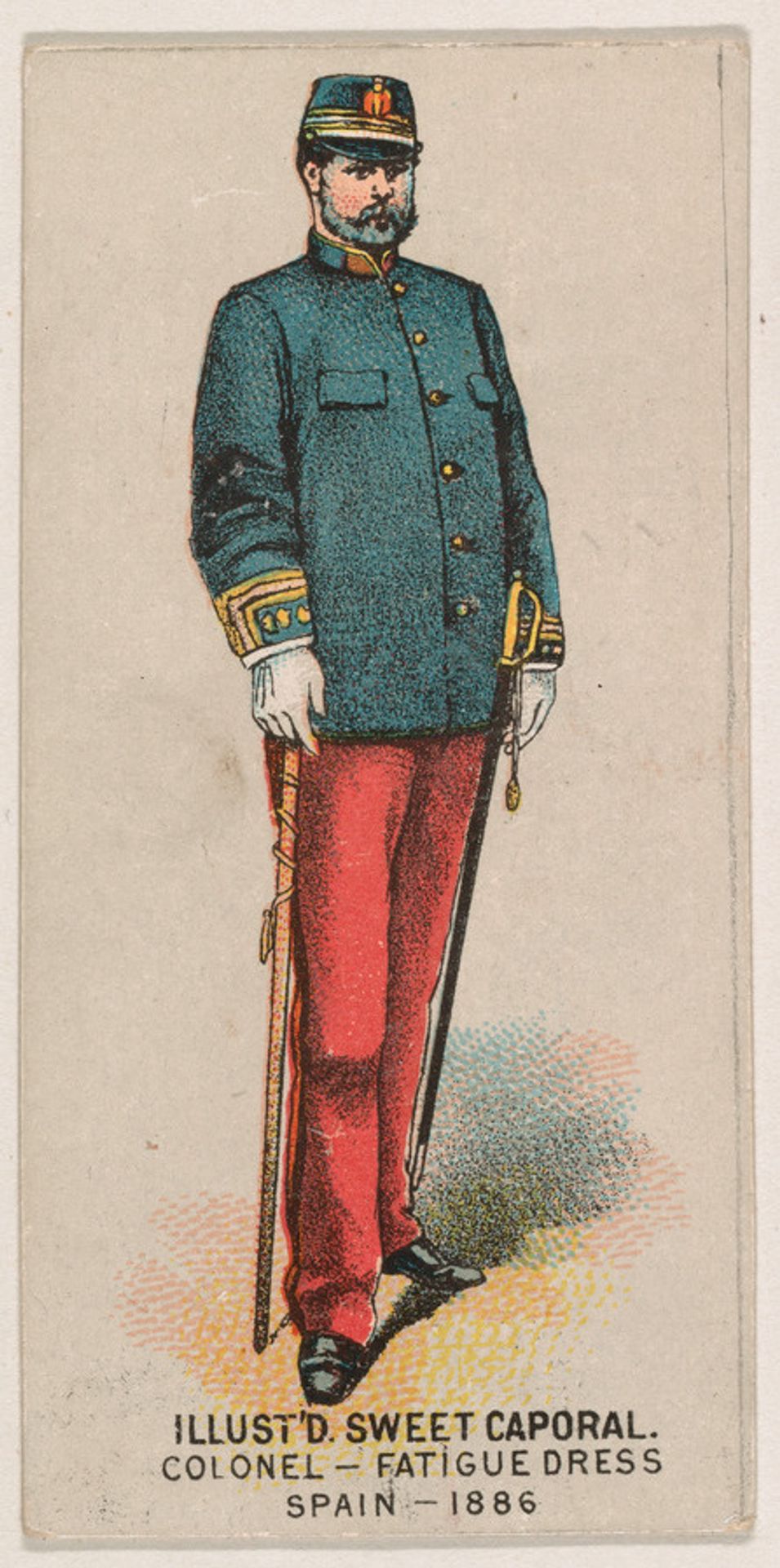
This is an advertising card for Sweet Caporal Cigarettes, made in 1886 by the Kinney Brothers Tobacco Company. These cards were chromolithographs, a then-popular printing technique which allowed for the mass production of colorful images. Note how this Colonel’s uniform is presented. Every detail is carefully reproduced, from the gold braid on his sleeves to the buttons on his tunic. Yet, the reality of military life – the labor, the hierarchy, the potential for violence – is entirely absent. Instead, we see a romanticized vision of service, carefully crafted to appeal to consumers. Consider the labor involved in producing both the cigarettes and the cards themselves. Tobacco farming, manufacturing, and printing were all industries reliant on a large, often exploited workforce. This card, like many advertisements, obscures those realities, presenting instead a world of effortless consumption and idealized imagery. It asks us to consider how mass production and consumer culture can shape our perceptions of labor, class, and even national identity.
Fatigue Dress, Colonel, Spain, 1886, from the Military Series (N224) issued by Kinney Tobacco Company to promote Sweet Caporal Cigarettes
1888

Kinney Brothers Tobacco Company
1869 - 2011
The Metropolitan Museum of Art
Metropolitan Museum of Art, New York, NYArtwork details
- Medium
- drawing, lithograph, print
- Dimensions
- Sheet: 2 3/4 × 1 1/2 in. (7 × 3.8 cm)
- Location
- Metropolitan Museum of Art, New York, NY
- Copyright
- Public Domain
Tags
portrait
drawing
lithograph
orientalism
genre-painting
academic-art
Comments
Be the first to share your thoughts about this work.
About this artwork
This is an advertising card for Sweet Caporal Cigarettes, made in 1886 by the Kinney Brothers Tobacco Company. These cards were chromolithographs, a then-popular printing technique which allowed for the mass production of colorful images. Note how this Colonel’s uniform is presented. Every detail is carefully reproduced, from the gold braid on his sleeves to the buttons on his tunic. Yet, the reality of military life – the labor, the hierarchy, the potential for violence – is entirely absent. Instead, we see a romanticized vision of service, carefully crafted to appeal to consumers. Consider the labor involved in producing both the cigarettes and the cards themselves. Tobacco farming, manufacturing, and printing were all industries reliant on a large, often exploited workforce. This card, like many advertisements, obscures those realities, presenting instead a world of effortless consumption and idealized imagery. It asks us to consider how mass production and consumer culture can shape our perceptions of labor, class, and even national identity.
Comments
Be the first to share your thoughts about this work.