About this artwork
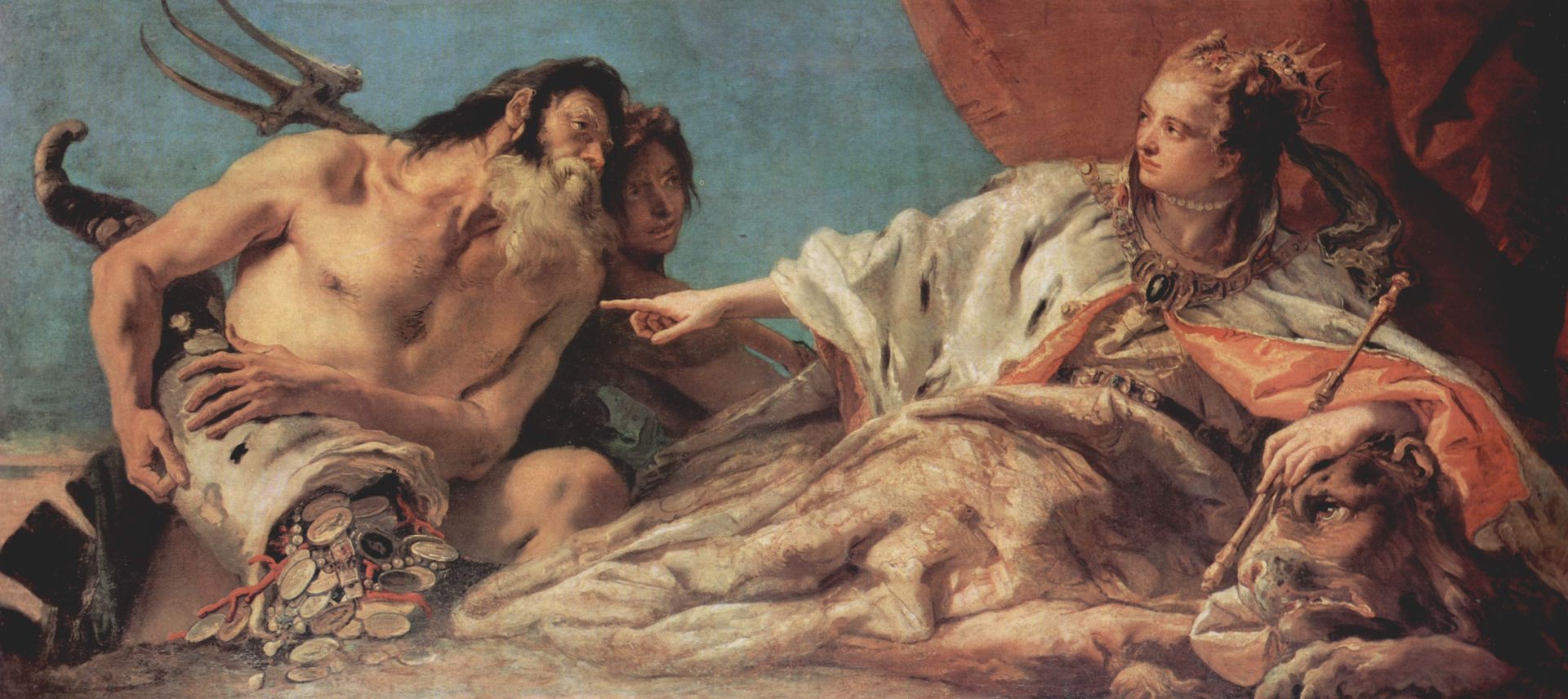
Giovanni Battista Tiepolo created *Neptune Offering Gifts to Venice* with oil on canvas. The eye is immediately drawn to the contrast between the dark, muscular Neptune and the opulence surrounding Venice. Tiepolo uses diagonal lines to guide our gaze, starting with the overflowing cornucopia of coins, up through Neptune’s trident, and across to Venice, who sits bathed in light. Her serene expression and regal attire sharply contrast with Neptune’s raw, almost wild appearance. This contrast isn't just aesthetic; it speaks to the complex relationship between Venice and the sea. The composition’s asymmetry creates a dynamic tension, reflecting Venice's precarious yet powerful position as a maritime republic. The use of light and shadow enhances the drama, emphasizing the textures of fabric, skin, and water. Ultimately, Tiepolo’s work transcends mere representation. It’s a commentary on power, wealth, and the enduring dialogue between humanity and nature. The painting's enduring appeal lies in its ability to invite us into a space of continuous interpretation.
Neptune Offering Gifts to Venice 1750

Giovanni Battista Tiepolo
1696 - 1770Location
Palazzo Ducale, Venice, ItalyArtwork details
- Medium
- oil-paint
- Dimensions
- 135 x 275 cm
- Location
- Palazzo Ducale, Venice, Italy
- Copyright
- Public domain
Tags
venetian-painting
allegory
baroque
oil-paint
landscape
figuration
oil painting
roman-mythology
mythology
history-painting
Comments
No comments
About this artwork
Giovanni Battista Tiepolo created *Neptune Offering Gifts to Venice* with oil on canvas. The eye is immediately drawn to the contrast between the dark, muscular Neptune and the opulence surrounding Venice. Tiepolo uses diagonal lines to guide our gaze, starting with the overflowing cornucopia of coins, up through Neptune’s trident, and across to Venice, who sits bathed in light. Her serene expression and regal attire sharply contrast with Neptune’s raw, almost wild appearance. This contrast isn't just aesthetic; it speaks to the complex relationship between Venice and the sea. The composition’s asymmetry creates a dynamic tension, reflecting Venice's precarious yet powerful position as a maritime republic. The use of light and shadow enhances the drama, emphasizing the textures of fabric, skin, and water. Ultimately, Tiepolo’s work transcends mere representation. It’s a commentary on power, wealth, and the enduring dialogue between humanity and nature. The painting's enduring appeal lies in its ability to invite us into a space of continuous interpretation.
Comments
No comments