About this artwork
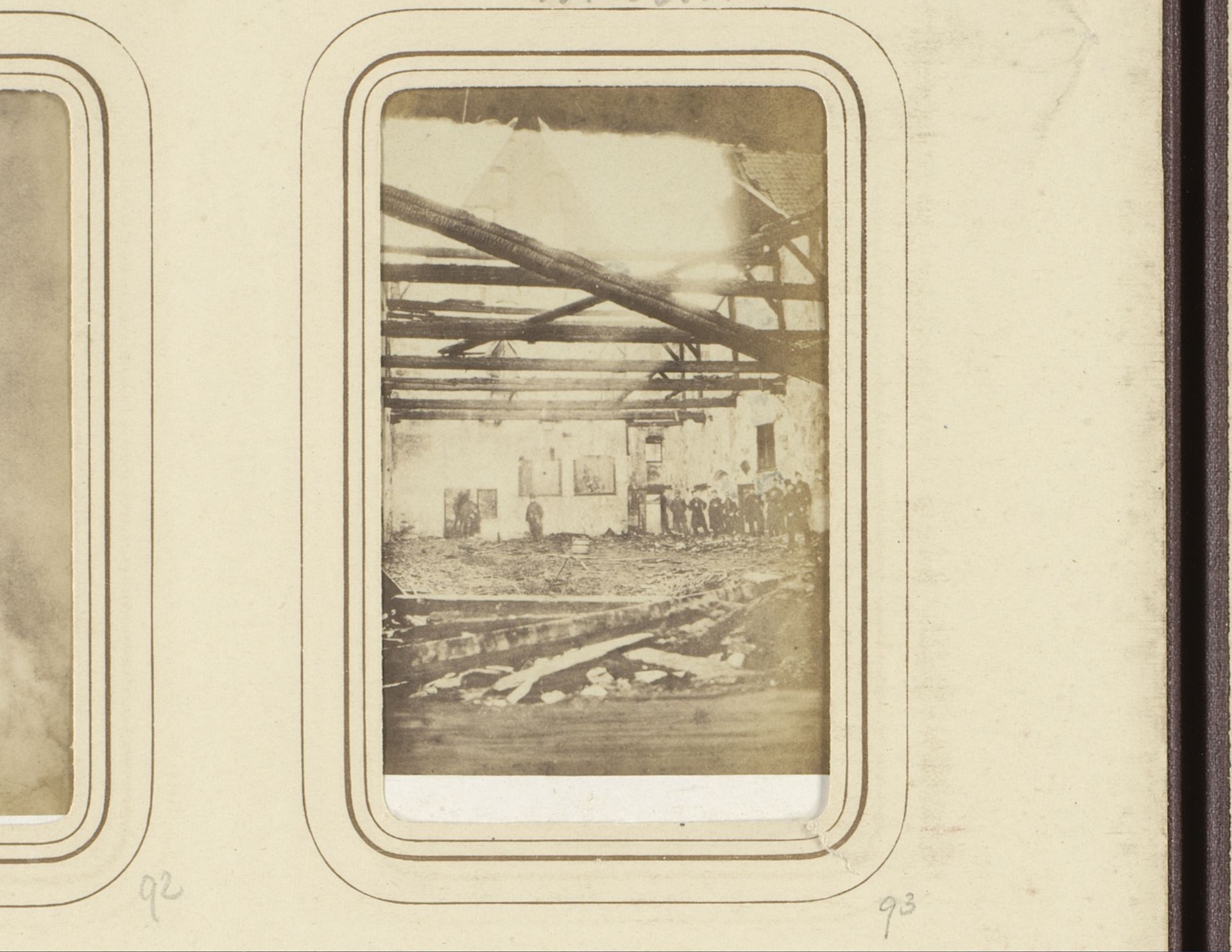
This photograph, by Willem Cornelis van Dijk, shows the aftermath of a building fire. The image is an albumen print, a process popular in the mid-19th century that used egg whites to bind the photographic chemicals to the paper. Looking at the image, one can see a destroyed building, its wooden beams charred and broken. In the foreground, debris litters the ground, while a group of men stand amidst the wreckage, surveying the damage. The albumen process gives the image a warm, sepia tone and a slightly soft focus, which adds to the sense of history and distance. The creation of such a photograph required careful handling of chemicals and precise timing, representing a shift toward the industrialization of image-making, as well as social documentation. Considering the socio-economic context, the photograph highlights the vulnerability of communities to unforeseen disasters and prompts reflection on labor, insurance, and safety standards during the early industrial era. By examining the materiality and process of this photograph, we gain a deeper understanding of its cultural and historical significance.
Mannen bekijken de schade van een gebouw na een brand
c. 1865 - 1885

Artwork details
- Medium
- photography, gelatin-silver-print
- Dimensions
- height 84 mm, width 51 mm
- Copyright
- Rijks Museum: Open Domain
Tags
Comments
Share your thoughts
About this artwork
This photograph, by Willem Cornelis van Dijk, shows the aftermath of a building fire. The image is an albumen print, a process popular in the mid-19th century that used egg whites to bind the photographic chemicals to the paper. Looking at the image, one can see a destroyed building, its wooden beams charred and broken. In the foreground, debris litters the ground, while a group of men stand amidst the wreckage, surveying the damage. The albumen process gives the image a warm, sepia tone and a slightly soft focus, which adds to the sense of history and distance. The creation of such a photograph required careful handling of chemicals and precise timing, representing a shift toward the industrialization of image-making, as well as social documentation. Considering the socio-economic context, the photograph highlights the vulnerability of communities to unforeseen disasters and prompts reflection on labor, insurance, and safety standards during the early industrial era. By examining the materiality and process of this photograph, we gain a deeper understanding of its cultural and historical significance.
Comments
Share your thoughts