![Deze vogels die gy op hier ziet / En zingen nog en kray[en niet] by Johannes (II) Kannewet](https://d2w8kbdekdi1gv.cloudfront.net/eyJidWNrZXQiOiAiYXJ0ZXJhLWltYWdlcy1idWNrZXQiLCAia2V5IjogImFydHdvcmtzLzM4ZDEyZjcwLWI2YzYtNGIwOC1iMGUxLTIwYWNmMGVmZmQyMC8zOGQxMmY3MC1iNmM2LTRiMDgtYjBlMS0yMGFjZjBlZmZkMjBfZnVsbC5qcGciLCAiZWRpdHMiOiB7InJlc2l6ZSI6IHsid2lkdGgiOiAxOTIwLCAiaGVpZ2h0IjogMTkyMCwgImZpdCI6ICJpbnNpZGUifX19)
1725 - 1780
Deze vogels die gy op hier ziet / En zingen nog en kray[en niet]

Johannes (II) Kannewet
@johannesiikannewetLocation
RijksmuseumListen to curator's interpretation
Curatorial notes
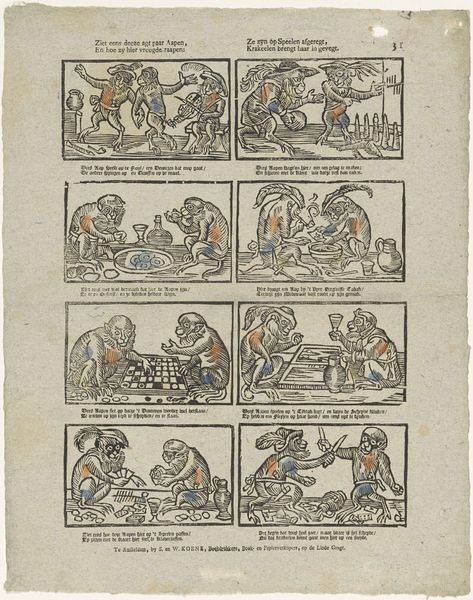
Curator: This piece, housed here at the Rijksmuseum, is titled "Deze vogels die gy op hier ziet / En zingen nog en kray[en niet]". It’s attributed to Johannes Kannewet, dating from between 1725 and 1780, and made using woodcut and pen with ink. Editor: Nine little windows into… bird souls? They look like tarot cards for ornithologists. Slightly melancholic, though there's a whimsical energy to them, a sort of earthy humor. Curator: Kannewet was a book vendor in Amsterdam, so we can imagine this work having been created in a milieu of popular print culture and visual storytelling for a broad audience. It's interesting how it straddles art and commerce. Editor: Absolutely! Each bird is paired with a little poem; I bet each carried a moral, or a joke. The stark lines of the woodcut, the rough-hewn texture, it’s not about fineness, but a directness that's endearing. Is that hand-tinting? Curator: Yes, some details are hand-colored. That speaks to a personalization, a human touch adding value to the printed image. The depictions aren't scientifically accurate, and these birds likely carry cultural or symbolic significance rooted in 18th-century Dutch society. Editor: Makes me wonder, which one’s me? I’m definitely drawn to the "Distelvinck", that thistle-finch has such a thoughtful expression. But look at the "PAPE GAY"– a comical and queer owl perched precariously– who wouldn't love him? Curator: It invites contemplation about the lives of these common birds in the Dutch landscape. I also notice a playful folk-art sensibility and hints about their interaction with the human sphere through symbols such as the cage. Editor: You know, for a brief, humble little print, this opens up such a wide field of associations. I love when a piece feels like an entryway and gives your imagination room to really stretch. Curator: Precisely. By examining "Deze vogels," we're not just seeing birds, but glimpses into a bygone era of Dutch life, values, and visual culture, reminding us how deeply intertwined art and society always are.