About this artwork
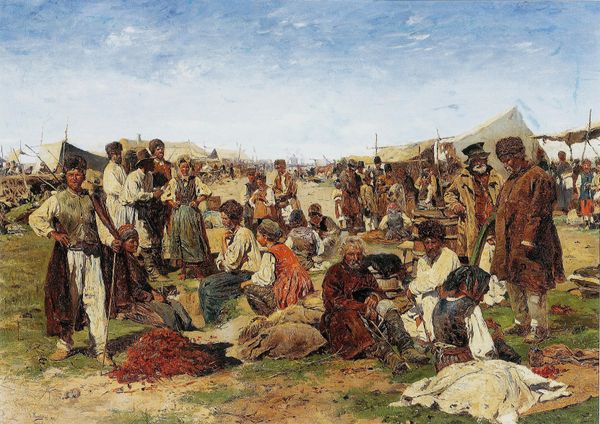
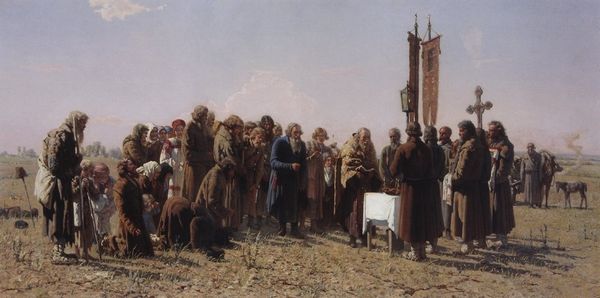
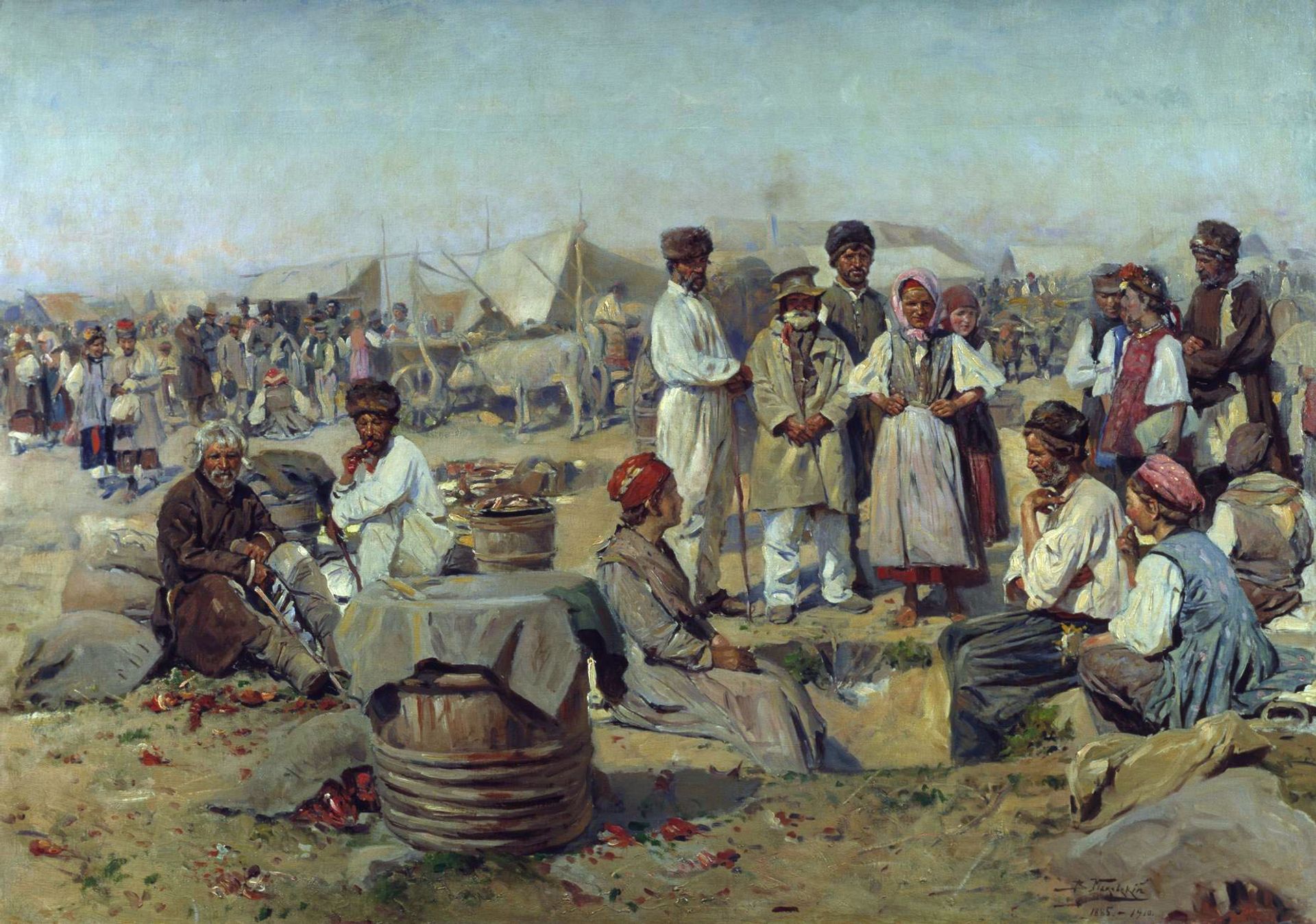
Vladimir Makovsky's "Market fair in Poltava" is a painting that captures a fleeting moment with an expressive, almost casual approach to mark making. The colors are muted, mostly browns and grays, giving a sense of the everyday, like a faded memory. Looking closely, the surface has a visible texture. The paint isn't smoothed out; you can see the strokes, the speed of the brush, especially in the sky. It's like he's not trying to hide the process but is showing it off. See how the figures are suggested with just a few strokes, leaving much to our imagination. The way he renders the crowd is kind of like Cy Twombly, just a mess of marks that come together to create something more significant. There’s a looseness here, a refusal to be overly precious that I find appealing. It reminds me that art is often about seeing, feeling, and then letting your hand do the talking without too much fuss. Ultimately, this approach embraces the idea that art is always a conversation, not a declaration.
Market fair in Poltava 1910

Vladimir Makovsky
1846 - 1920Location
Dnipropetrovsk Museum of Fine Arts, Dnipro, UkraineArtwork details
- Location
- Dnipropetrovsk Museum of Fine Arts, Dnipro, Ukraine
- Copyright
- Public domain
Comments
No comments
About this artwork
Vladimir Makovsky's "Market fair in Poltava" is a painting that captures a fleeting moment with an expressive, almost casual approach to mark making. The colors are muted, mostly browns and grays, giving a sense of the everyday, like a faded memory. Looking closely, the surface has a visible texture. The paint isn't smoothed out; you can see the strokes, the speed of the brush, especially in the sky. It's like he's not trying to hide the process but is showing it off. See how the figures are suggested with just a few strokes, leaving much to our imagination. The way he renders the crowd is kind of like Cy Twombly, just a mess of marks that come together to create something more significant. There’s a looseness here, a refusal to be overly precious that I find appealing. It reminds me that art is often about seeing, feeling, and then letting your hand do the talking without too much fuss. Ultimately, this approach embraces the idea that art is always a conversation, not a declaration.
Comments
No comments