About this artwork
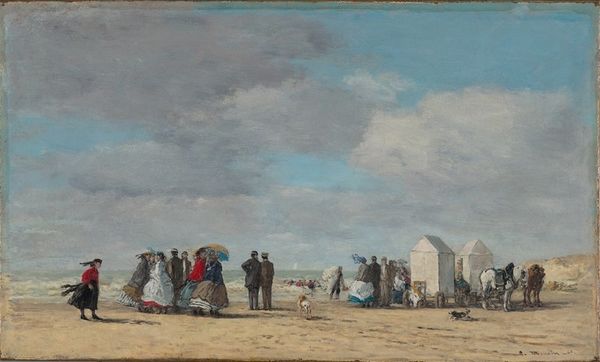
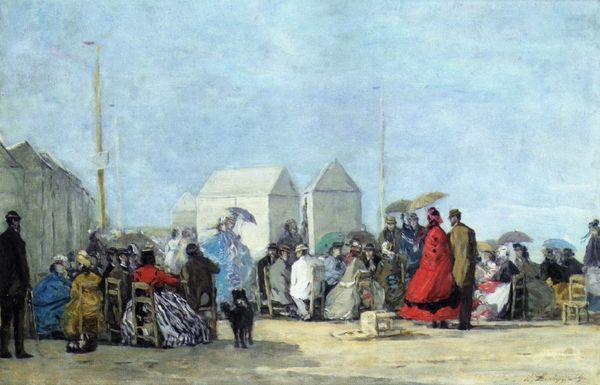
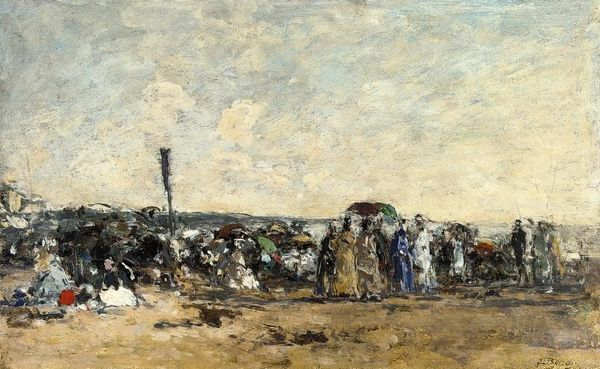
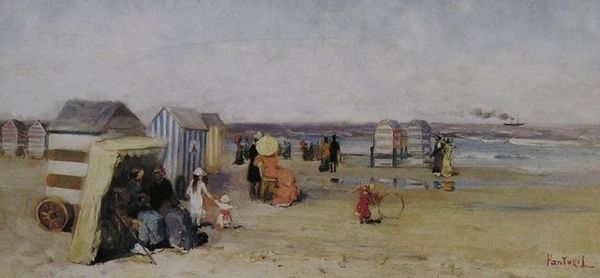
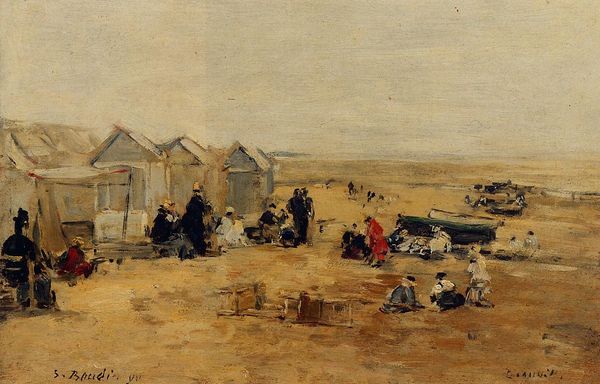
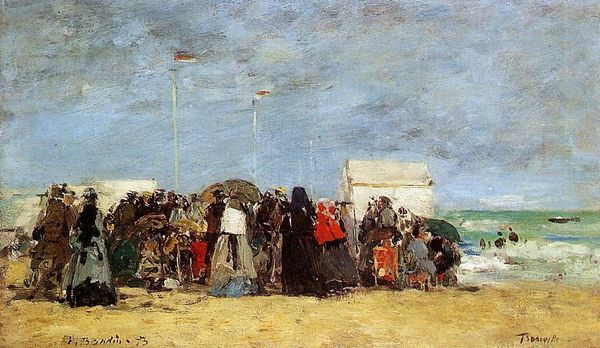
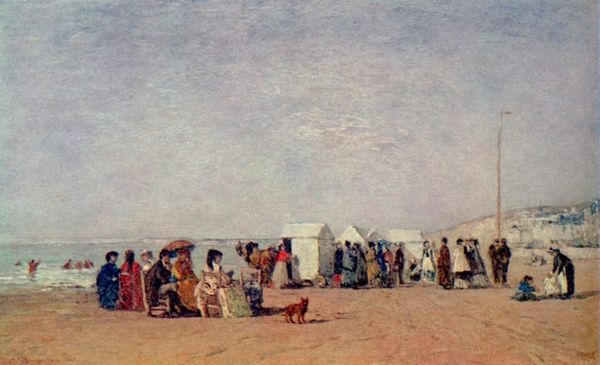
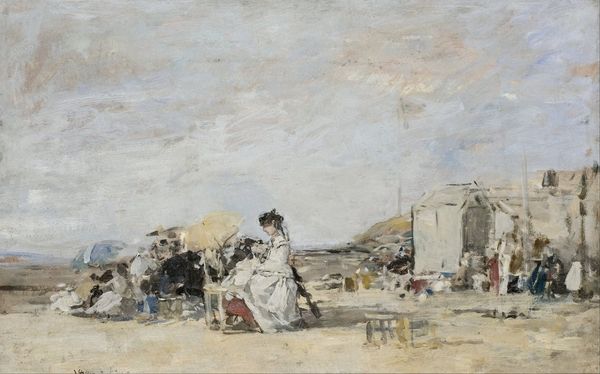
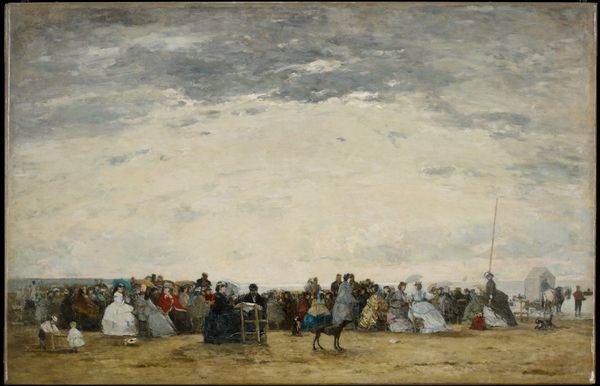
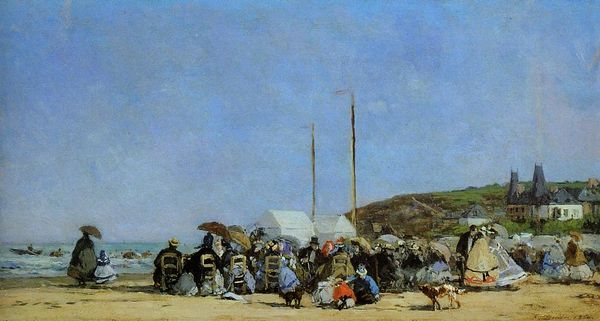
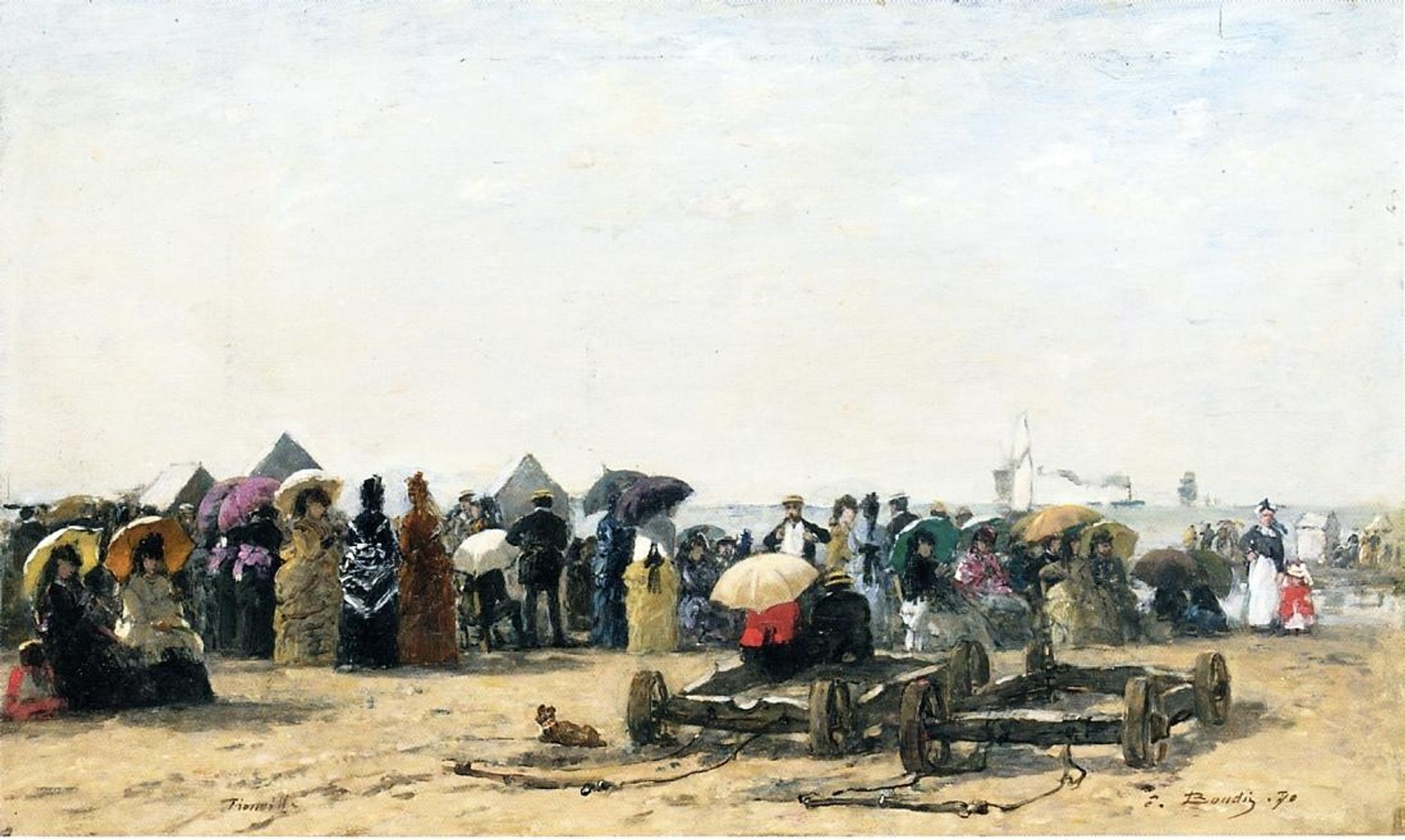
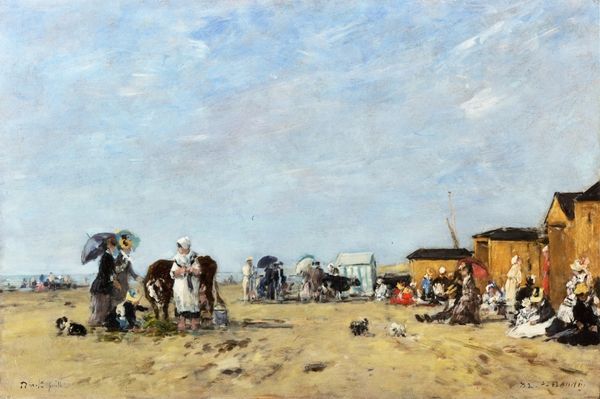
Eugène Boudin painted this beach scene at Trouville, capturing a moment in time in the lives of the bourgeoisie. During the mid-19th century, sea bathing became fashionable, transforming the social dynamics of coastal towns. Boudin’s work offers a glimpse into the leisure activities of the upper class, a world defined by social codes and performances of respectability. The beach, once a space defined by labor, became a stage for displays of wealth and status. Consider how gender roles are reinforced here: women, shielded by parasols and elaborate dresses, were expected to maintain an image of delicate femininity. Boudin once said his mission was "to capture the fleeting beauty of a moment." His paintings invite us to reflect on the ephemeral nature of social rituals, and the ways in which individuals navigate the complex currents of identity, class, and leisure.
Artwork details
- Medium
- plein-air, oil-paint
- Copyright
- Public domain
Tags
Comments
Share your thoughts
About this artwork
Eugène Boudin painted this beach scene at Trouville, capturing a moment in time in the lives of the bourgeoisie. During the mid-19th century, sea bathing became fashionable, transforming the social dynamics of coastal towns. Boudin’s work offers a glimpse into the leisure activities of the upper class, a world defined by social codes and performances of respectability. The beach, once a space defined by labor, became a stage for displays of wealth and status. Consider how gender roles are reinforced here: women, shielded by parasols and elaborate dresses, were expected to maintain an image of delicate femininity. Boudin once said his mission was "to capture the fleeting beauty of a moment." His paintings invite us to reflect on the ephemeral nature of social rituals, and the ways in which individuals navigate the complex currents of identity, class, and leisure.
Comments
Share your thoughts