About this artwork
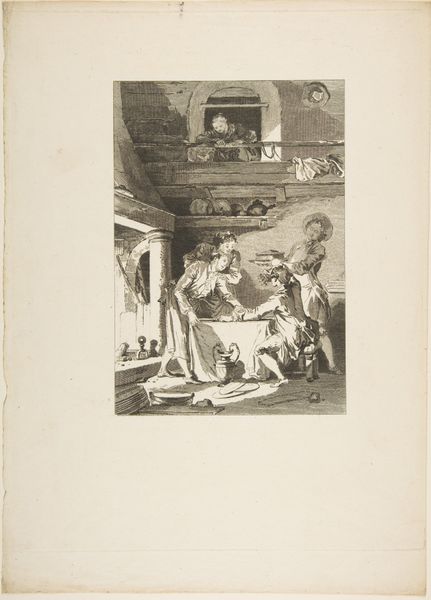
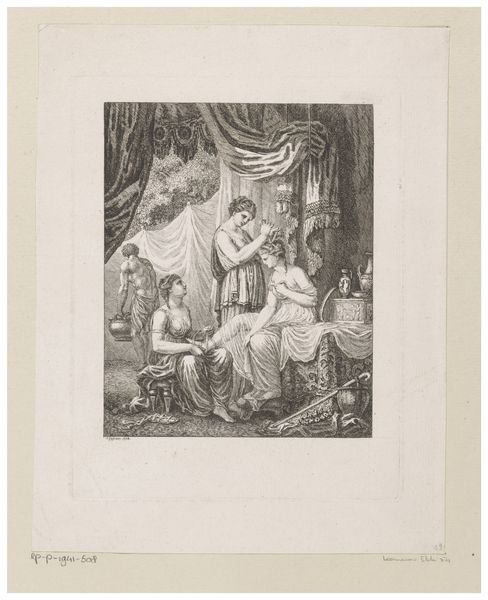
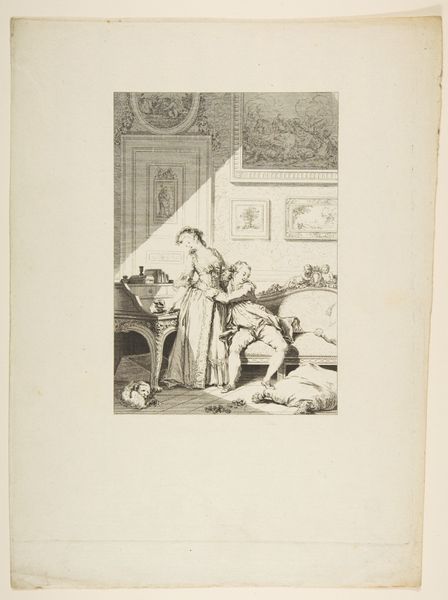
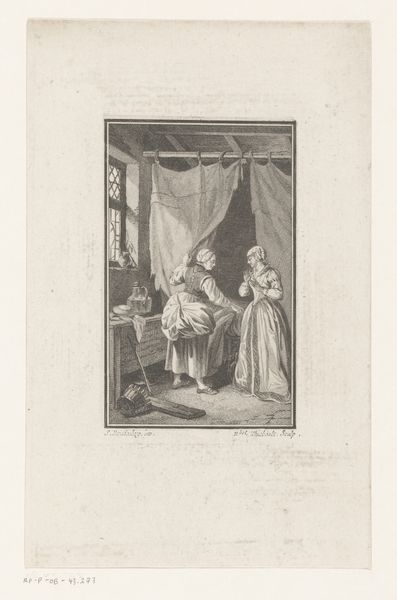
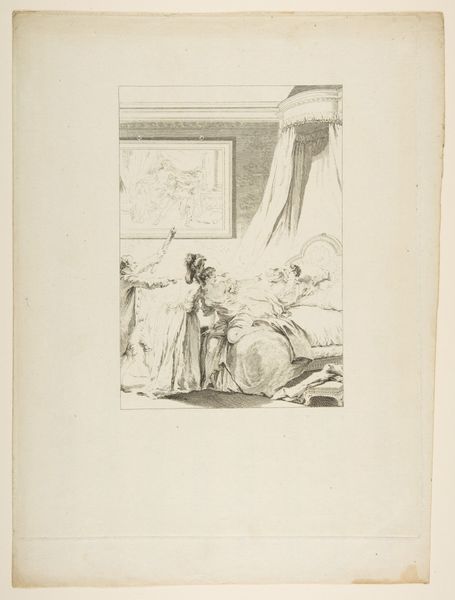
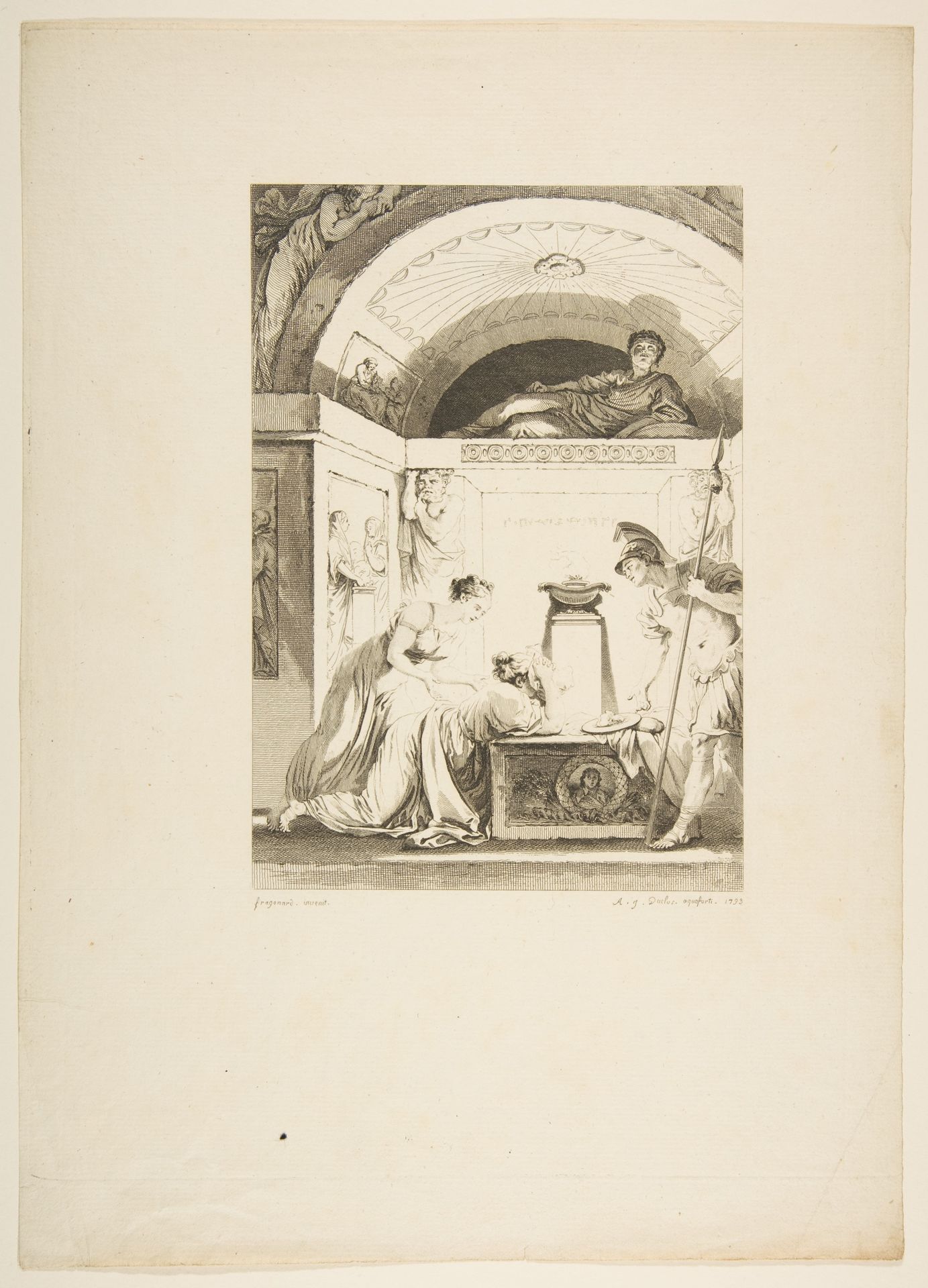
Jean-Louis Delignon created this etching, “La Matrone d'Ephese,” in Paris in 1795, as part of an illustrated edition of La Fontaine’s stories. The printmaking process allows for the creation of multiple identical images, a technology that democratized art in the late 18th century, moving it beyond unique paintings or sculptures commissioned by the wealthy. Here, Delignon used etching to render a scene of classical antiquity. The stark lines create dramatic contrasts of light and shadow, giving a sense of depth and volume to the figures and architecture. Close inspection reveals a network of fine lines incised into the metal plate. Acid would have been applied to bite into these lines, allowing them to hold ink. The plate would then have been pressed onto paper, transferring the image. The precision and detail achieved through etching speaks to the skill and labor involved in this printmaking process, a craft tradition that bridges artistry and industry. The story being told here would have been available to a wide audience through the miracle of mechanical reproduction.
La Matrone d'Ephese, from "Contes et nouvelles en vers par Jean de La Fontaine. A Paris, de l'imprimerie de P. Didot, l'an III de la République, 1795"
1793

Jean-Louis Delignon
1755 - 1804
The Metropolitan Museum of Art
Metropolitan Museum of Art, New York, NYArtwork details
- Medium
- drawing, print, paper, ink, engraving
- Dimensions
- Sheet: 13 9/16 × 9 11/16 in. (34.4 × 24.6 cm)
- Location
- Metropolitan Museum of Art, New York, NY
- Copyright
- Public Domain
Tags
Comments
Share your thoughts
About this artwork
Jean-Louis Delignon created this etching, “La Matrone d'Ephese,” in Paris in 1795, as part of an illustrated edition of La Fontaine’s stories. The printmaking process allows for the creation of multiple identical images, a technology that democratized art in the late 18th century, moving it beyond unique paintings or sculptures commissioned by the wealthy. Here, Delignon used etching to render a scene of classical antiquity. The stark lines create dramatic contrasts of light and shadow, giving a sense of depth and volume to the figures and architecture. Close inspection reveals a network of fine lines incised into the metal plate. Acid would have been applied to bite into these lines, allowing them to hold ink. The plate would then have been pressed onto paper, transferring the image. The precision and detail achieved through etching speaks to the skill and labor involved in this printmaking process, a craft tradition that bridges artistry and industry. The story being told here would have been available to a wide audience through the miracle of mechanical reproduction.
Comments
Share your thoughts