Dimensions: height 107 mm, width 165 mm
Copyright: Rijks Museum: Open Domain
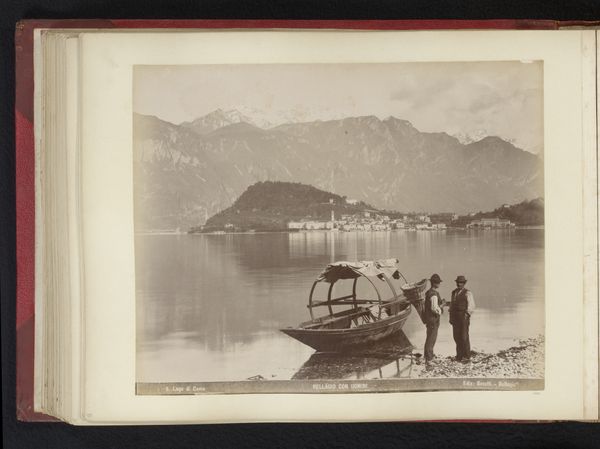
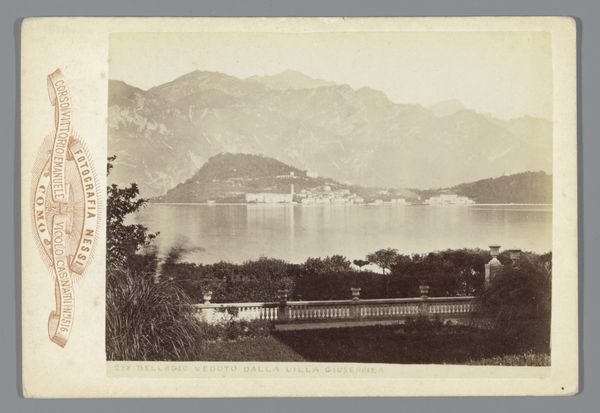
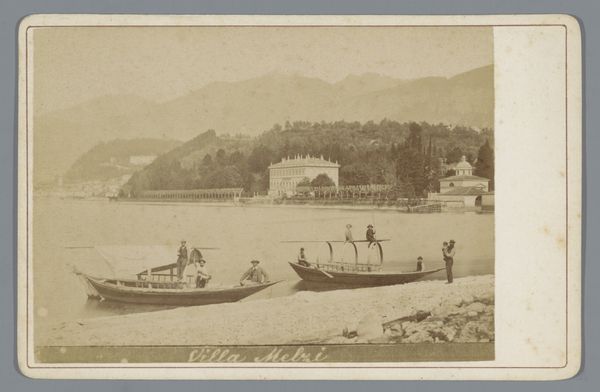
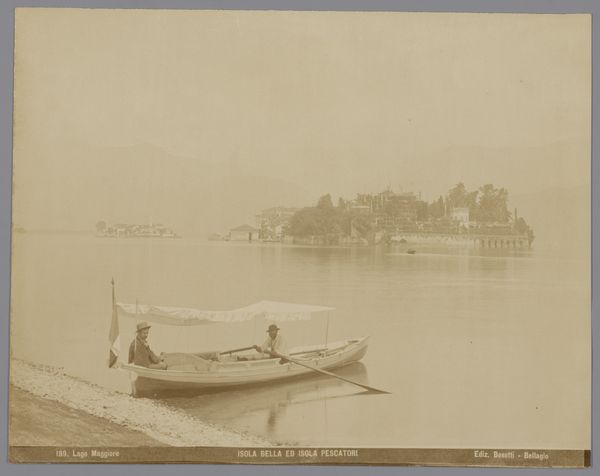
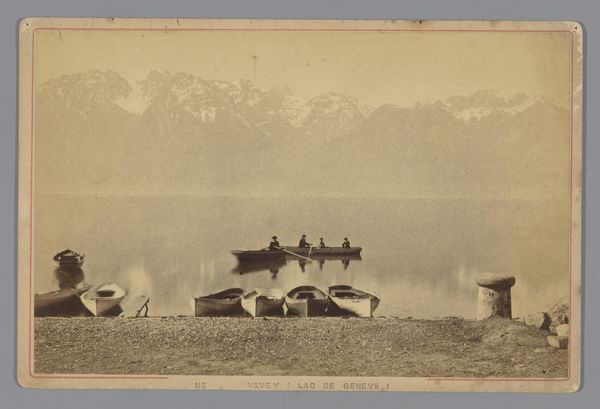
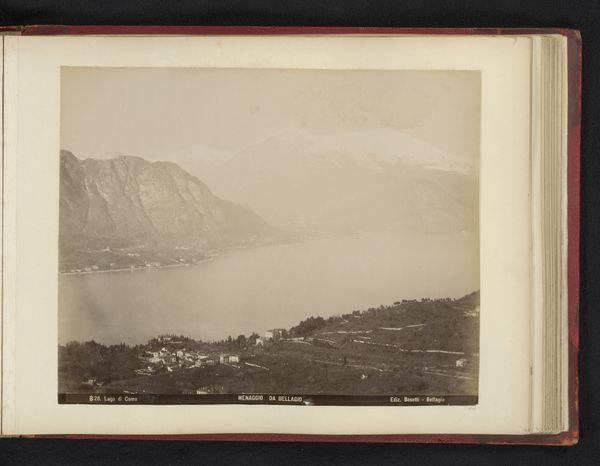
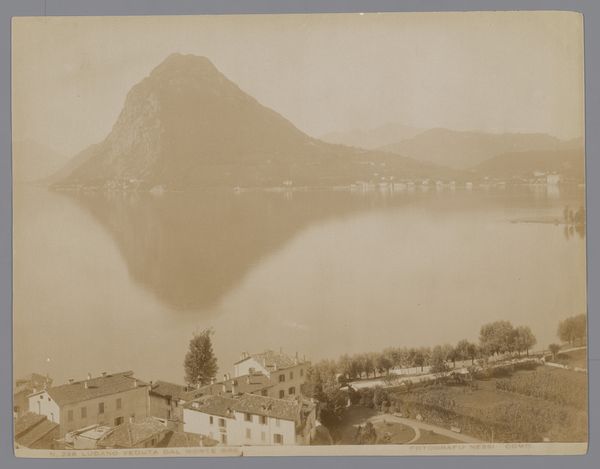
Curator: This gelatin silver print captures a scene of serene beauty; it’s titled “Gezicht op het meer van Como met Monte Crocione,” placing us at Lake Como with a view towards Monte Crocione. It’s attributed to Carlo Bosetti and dates to sometime between 1850 and 1900. Editor: It's melancholic, isn't it? A stillness that almost feels heavy. The palette, a range of sepias, emphasizes the silence of the lake, broken only by that small, empty boat beached in the foreground. Curator: Yes, the tonality certainly contributes to that atmosphere. This type of photographic print became quite popular in the latter half of the 19th century as photography evolved from a niche practice to wider acceptance within middle-class society, landscape views in particular. Editor: What intrigues me is how that little boat—it almost reads like a miniature stage. Does it speak to some idea of travel, or perhaps the isolation one feels even amidst great natural beauty? The mountains loom, vast and indifferent, above human endeavors. Curator: The boat, a potent symbol of transition, journey, the self, could have very well offered a tangible connection for the viewer to participate through vicarious experience and aspire to something greater. Editor: I wonder about its audience too; a middle-class clientele looking to collect these kinds of mementos from the Grand Tour. It represents access, ownership of experience. Were these widely accessible at the time, allowing access to vistas and cultural capital? Curator: Precisely. Photography helped democratize these grand vistas, placing them in the hands of many who perhaps could not physically visit such places. This image could have adorned a parlor room in a home, a constant reminder of the beauty of the natural world or as aspirations to ascend socially or geographically. Editor: So this is landscape not just as art, but as social marker and agent for aspirations. Looking back, it feels like more than just a pretty scene. Curator: Indeed. And viewing that pretty scene today it is an enduring symbol of human interactions with the natural world—complex interplay between longing, conquest, and perhaps also humility.
Comments
No comments
Be the first to comment and join the conversation on the ultimate creative platform.
 Collect
 React
React Comment
More like this