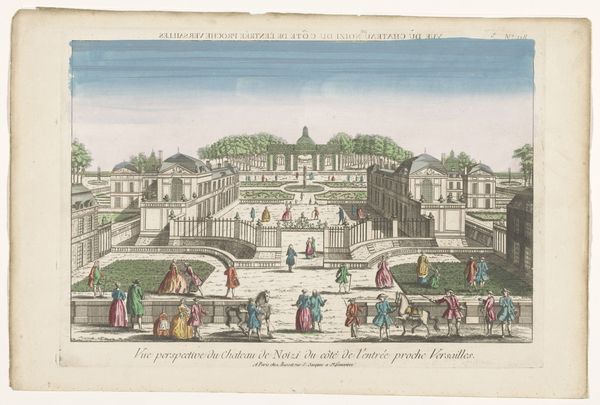
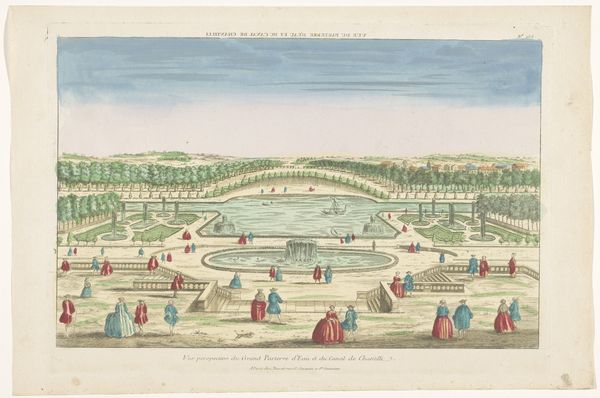
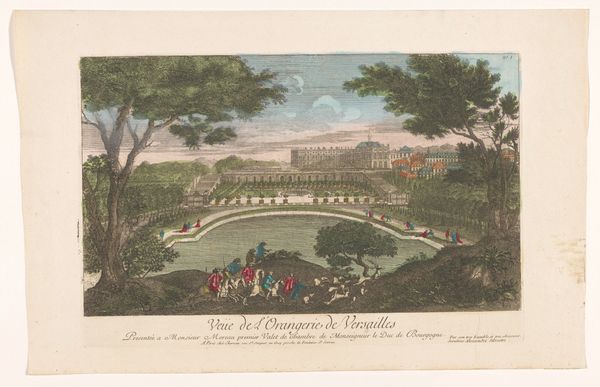
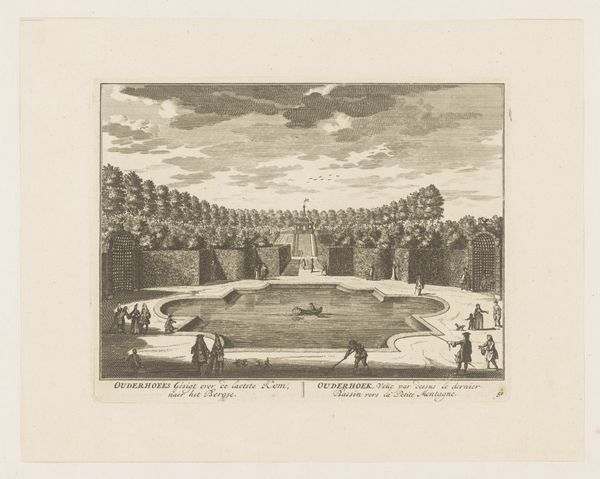
Gezicht op de grote sluis en het Pavillon de Manse te Chantilly 18th century

painting, print, etching, engraving
painting
etching
landscape
cityscape
engraving
rococo
Dimensions: height 263 mm, width 385 mm
Copyright: Rijks Museum: Open Domain
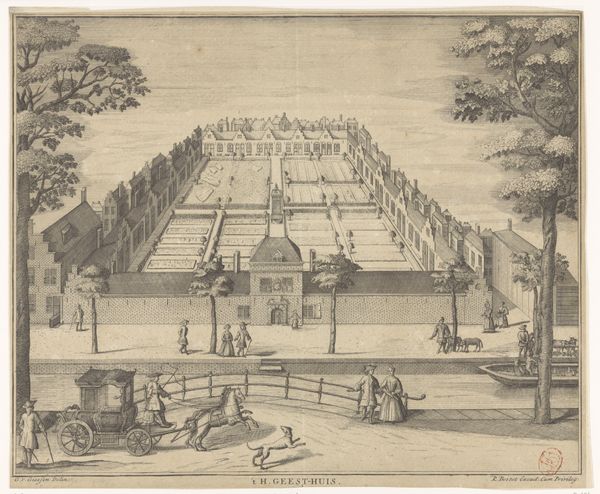
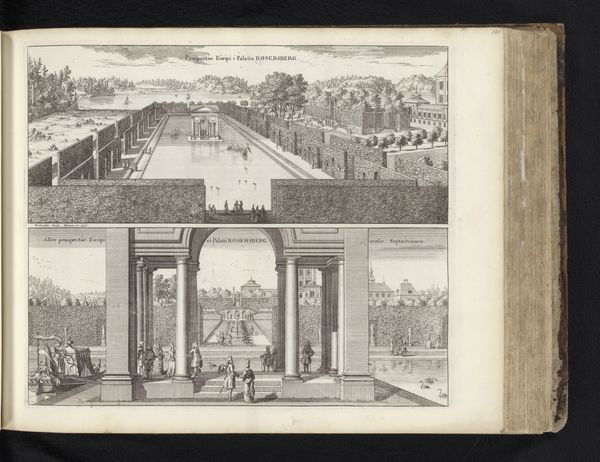
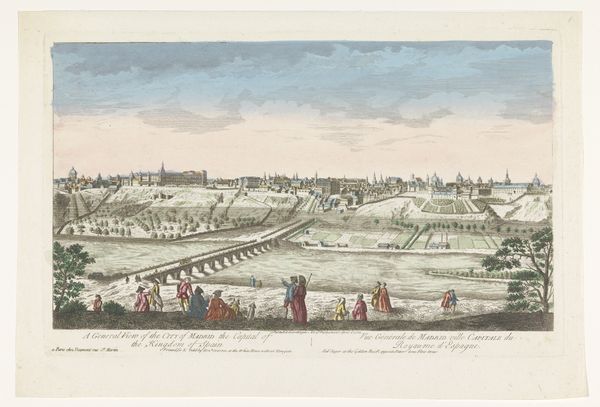
This print by the widow Chapoulaud depicts the Pavillon de Manse at Chantilly, showcasing the rigid geometry of French formal gardens. Note how the straight lines of the canal and pathways converge at the pavilion, symbolizing man's imposition of order onto nature. The concept of the formal garden—seen earlier in Persian gardens known as "paradise gardens"—evolved into the grand designs of Versailles. These gardens, like those at Chantilly, are not merely aesthetic; they embody power and control. The subjugation of nature mirrors the social hierarchies of the time, reflecting the desire to dominate both the natural world and human society. Such architectural landscapes serve as potent symbols of human ambition. They recur throughout history, transforming with each new era while retaining the core theme of control and imposed order. It is a recurring dream, reflecting our subconscious desire for mastery over chaos.
Comments
No comments
Be the first to comment and join the conversation on the ultimate creative platform.
 React
React Comment