About this artwork
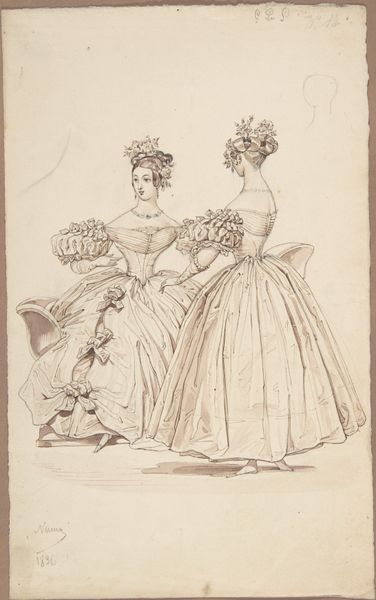
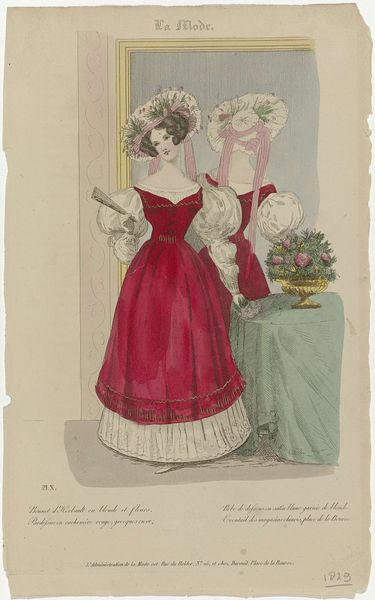
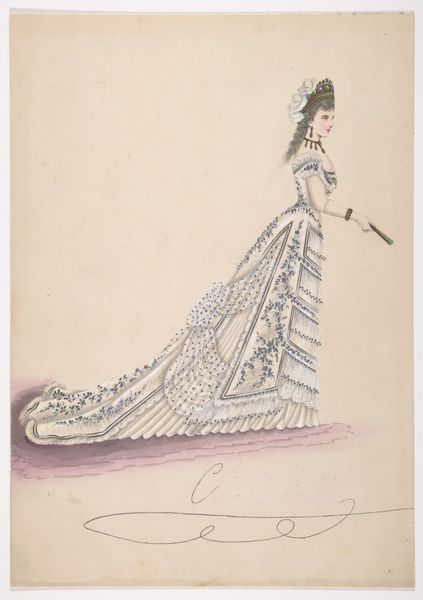
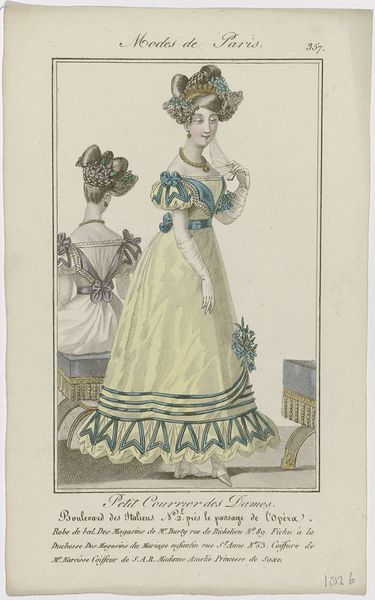
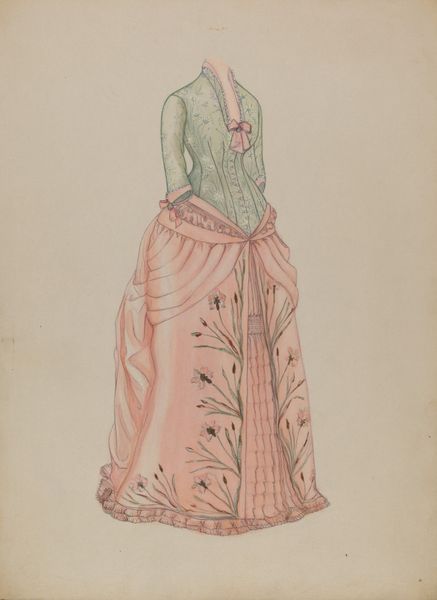
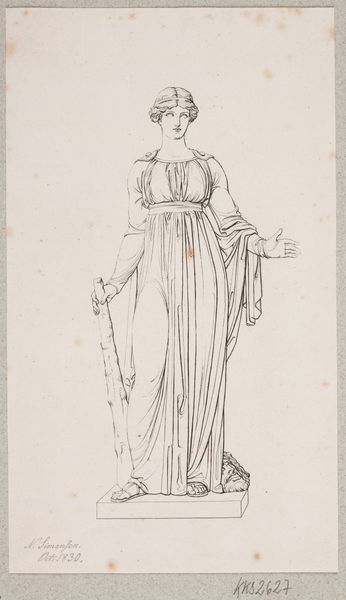
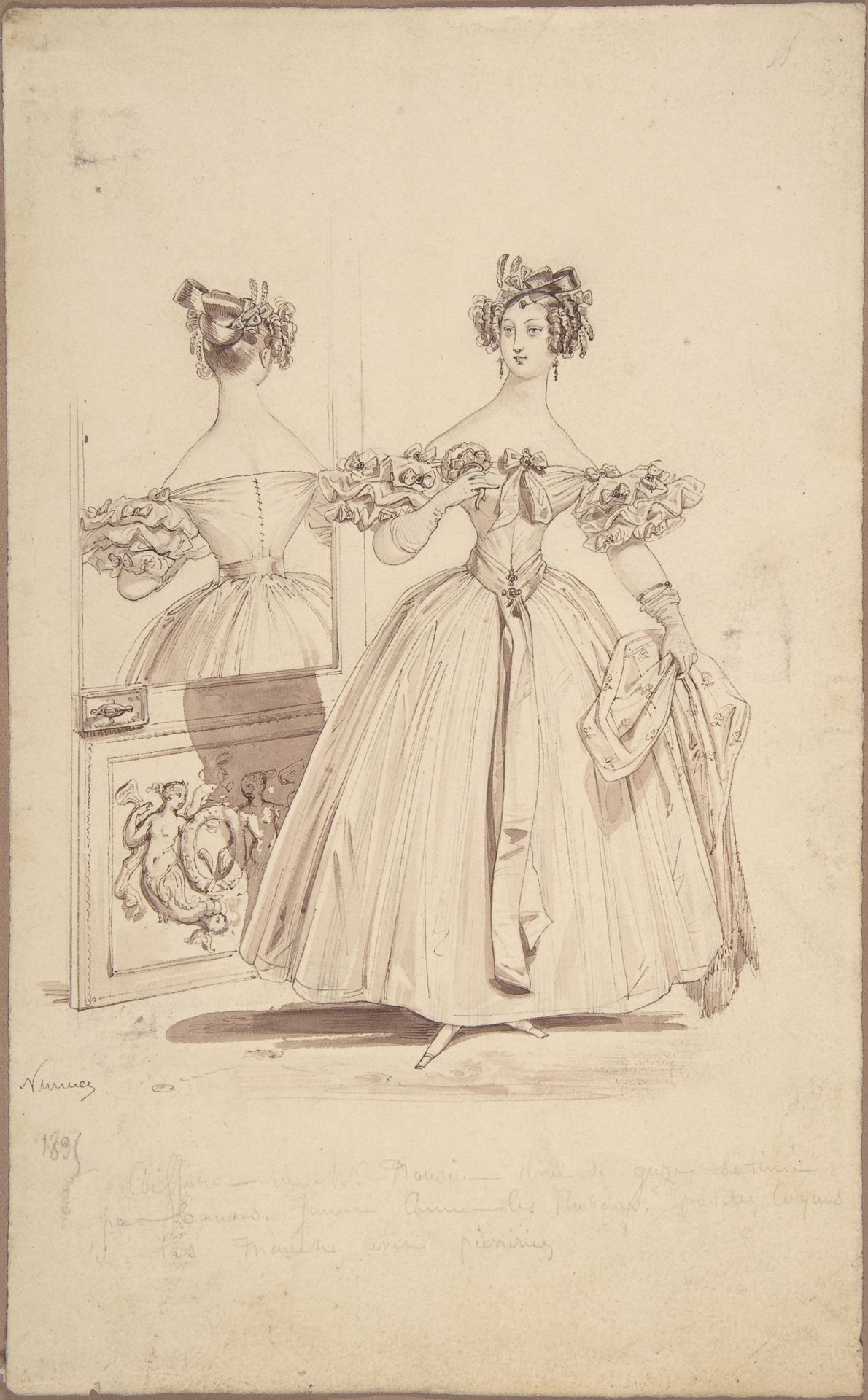
Pierre-Numa Bassaget, called Numa, created this costume design on paper in the 19th century. Observe the woman's reflection in the mirror, a visual doubling that evokes themes of vanity and self-awareness, reminiscent of Renaissance vanitas paintings. The mirror itself, adorned with cherubic figures, harkens back to classical ideals of beauty and innocence. This act of gazing into a mirror is not a mere representation of reality but a symbolic dance with one’s own image. Consider the mythical Narcissus, who fell in love with his reflection, and the psychological implications of such self-absorption. The woman’s elaborate gown, with its ruffles and ribbons, speaks to the cultural obsession with appearance, echoing motifs found in portraits across different eras. The power of the mirror lies in its ability to stir deep, subconscious reflections on identity and mortality. This design is not just about fashion but about the timeless human fascination with self-image.
Costume Design
1836 - 1837

Pierre-Numa Bassaget, called Numa
1830 - 1854
The Metropolitan Museum of Art
Metropolitan Museum of Art, New York, NYArtwork details
- Medium
- drawing, print, pencil
- Dimensions
- 9 1/2 x 5 7/8 in. (24.2 x 15 cm)
- Location
- Metropolitan Museum of Art, New York, NY
- Copyright
- Public Domain
Tags
Comments
Share your thoughts
About this artwork
Pierre-Numa Bassaget, called Numa, created this costume design on paper in the 19th century. Observe the woman's reflection in the mirror, a visual doubling that evokes themes of vanity and self-awareness, reminiscent of Renaissance vanitas paintings. The mirror itself, adorned with cherubic figures, harkens back to classical ideals of beauty and innocence. This act of gazing into a mirror is not a mere representation of reality but a symbolic dance with one’s own image. Consider the mythical Narcissus, who fell in love with his reflection, and the psychological implications of such self-absorption. The woman’s elaborate gown, with its ruffles and ribbons, speaks to the cultural obsession with appearance, echoing motifs found in portraits across different eras. The power of the mirror lies in its ability to stir deep, subconscious reflections on identity and mortality. This design is not just about fashion but about the timeless human fascination with self-image.
Comments
Share your thoughts