About this artwork
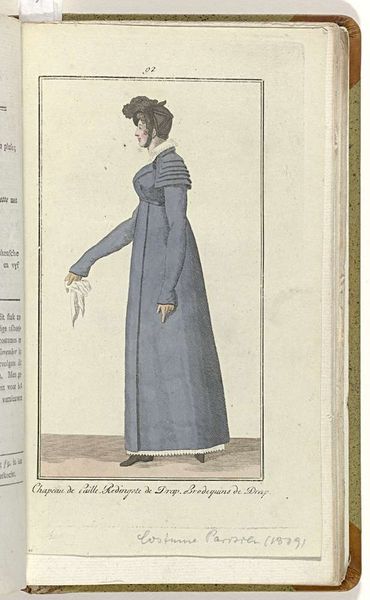
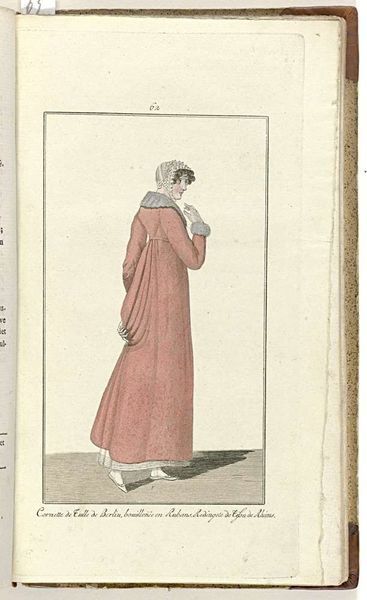
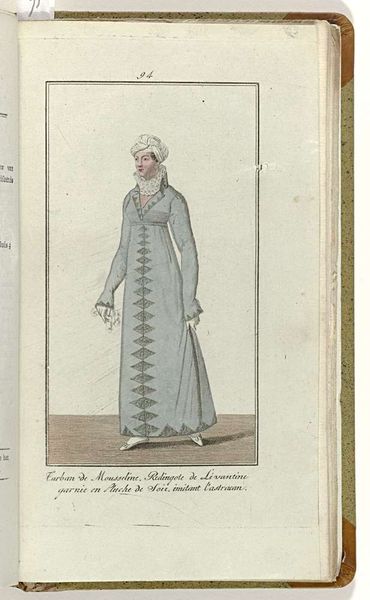
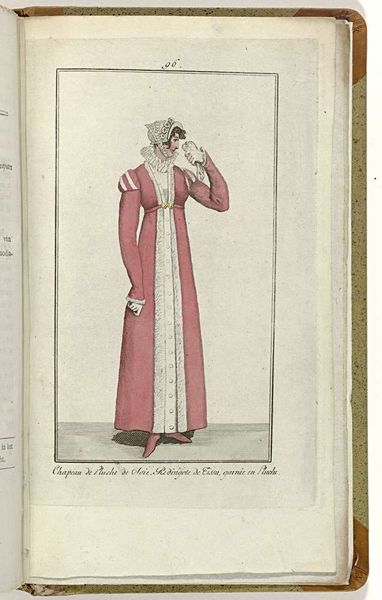
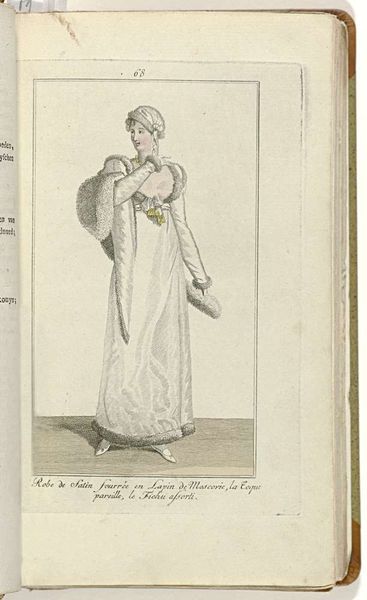
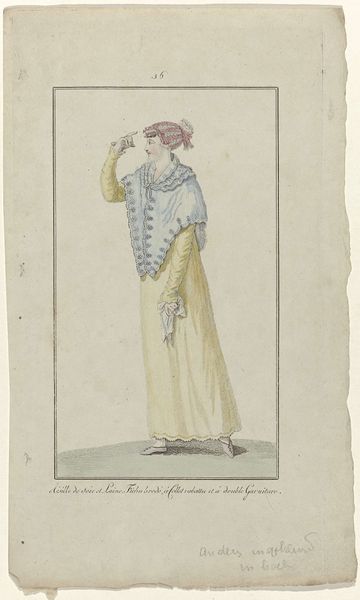
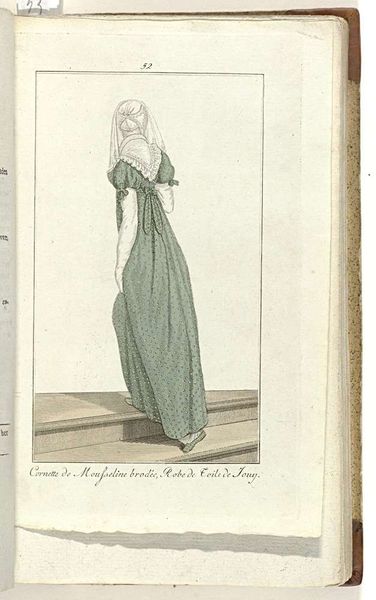
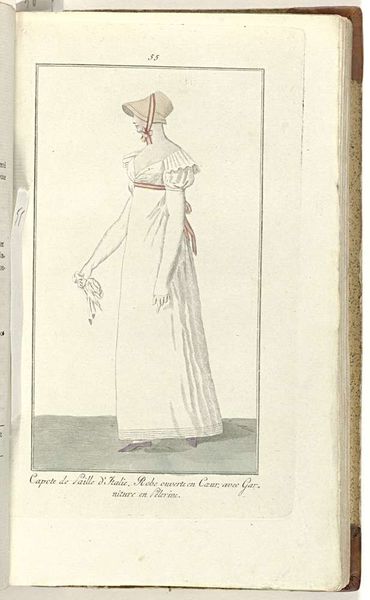
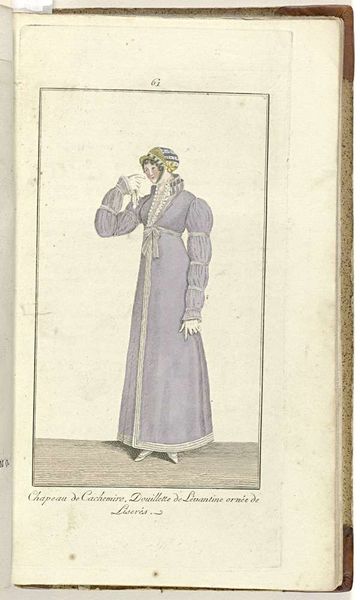
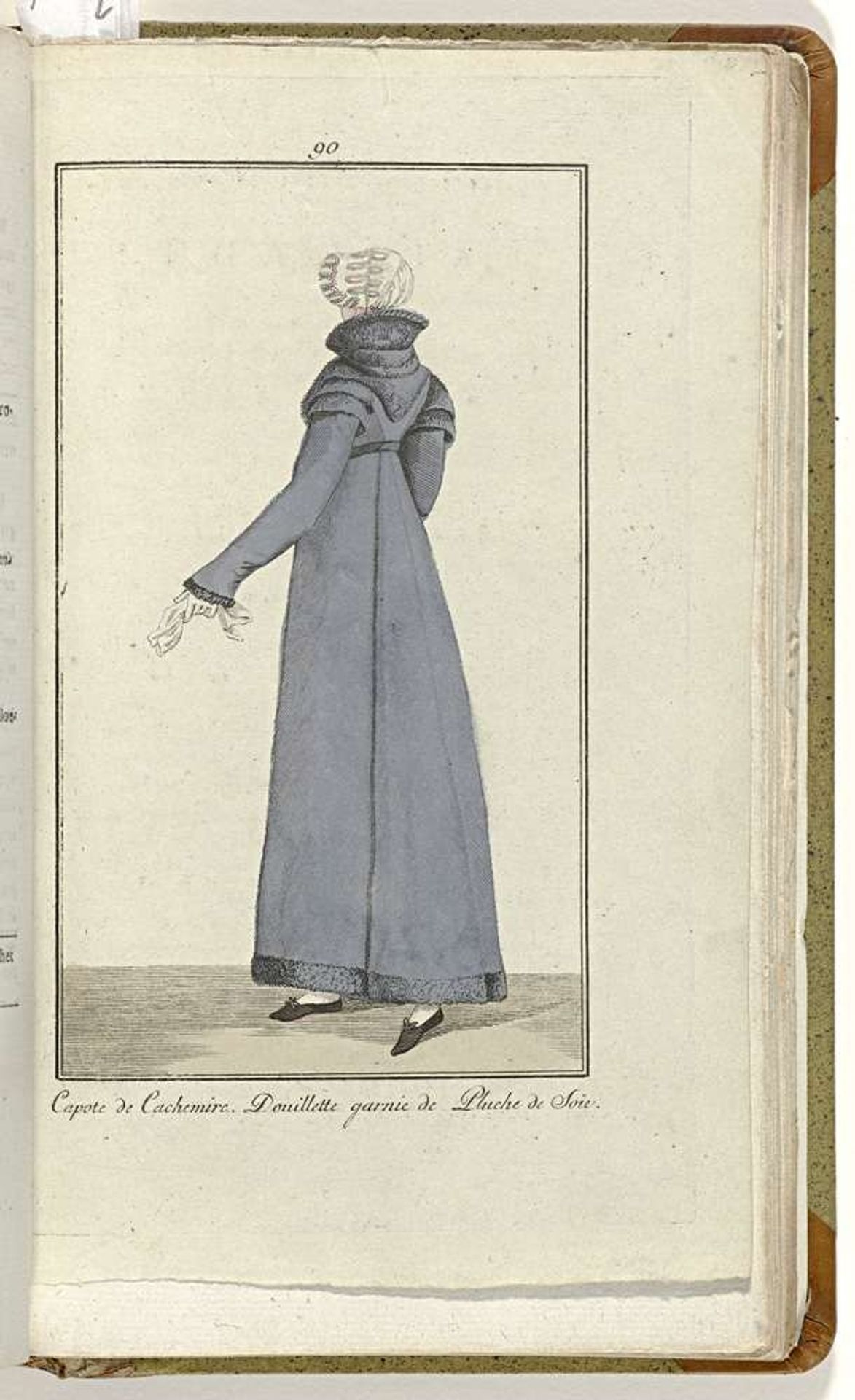
This hand-colored engraving is from the Dutch magazine, Elegantia, published in October 1809. It presents a fashion plate showcasing a woman's overcoat, or "Capote de Cachemire," trimmed with silk. Fashion plates like this one were instrumental in disseminating Parisian styles across Europe. The magazine itself served as a tool of cultural and economic influence, promoting French luxury goods abroad. In the Netherlands, this imagery would have reinforced social hierarchies through the display of status and taste, indicating the privilege of the wearer and the aspiration of the consumer. To truly understand the significance of this image, we might turn to period publications, trade records, and social histories that illuminate the dynamics of fashion, class, and cultural exchange during the Napoleonic era. Ultimately, the meaning of this fashion plate lies not just in its aesthetic qualities, but in its role within a complex web of social and institutional forces.
Elegantia, of tijdschrift van mode, luxe en smaak voor dames, Oktober 1809, No. 90: Capote de Cachemire... 1809

Anonymous
@anonymousLocation
RijksmuseumArtwork details
- Medium
- drawing, watercolor
- Dimensions
- height 220 mm, width 126 mm
- Location
- Rijksmuseum
- Copyright
- Rijks Museum: Open Domain
Tags
portrait
drawing
figuration
watercolor
historical fashion
romanticism
watercolour illustration
Comments
No comments
About this artwork
This hand-colored engraving is from the Dutch magazine, Elegantia, published in October 1809. It presents a fashion plate showcasing a woman's overcoat, or "Capote de Cachemire," trimmed with silk. Fashion plates like this one were instrumental in disseminating Parisian styles across Europe. The magazine itself served as a tool of cultural and economic influence, promoting French luxury goods abroad. In the Netherlands, this imagery would have reinforced social hierarchies through the display of status and taste, indicating the privilege of the wearer and the aspiration of the consumer. To truly understand the significance of this image, we might turn to period publications, trade records, and social histories that illuminate the dynamics of fashion, class, and cultural exchange during the Napoleonic era. Ultimately, the meaning of this fashion plate lies not just in its aesthetic qualities, but in its role within a complex web of social and institutional forces.
Comments
No comments