About this artwork
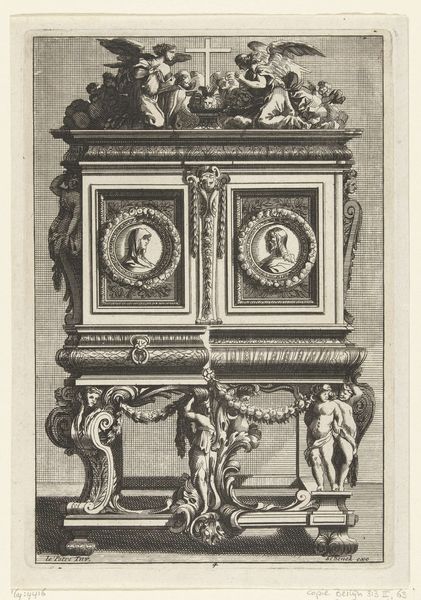
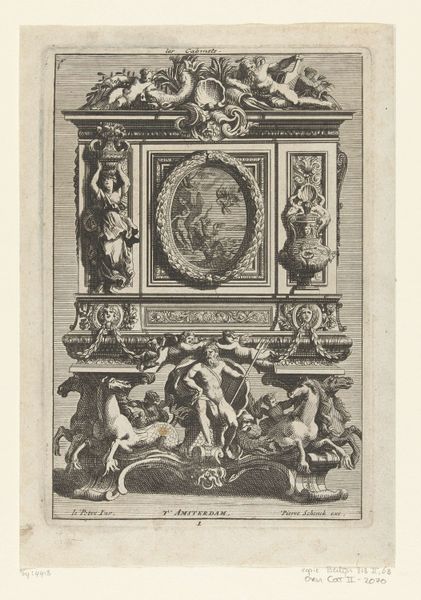
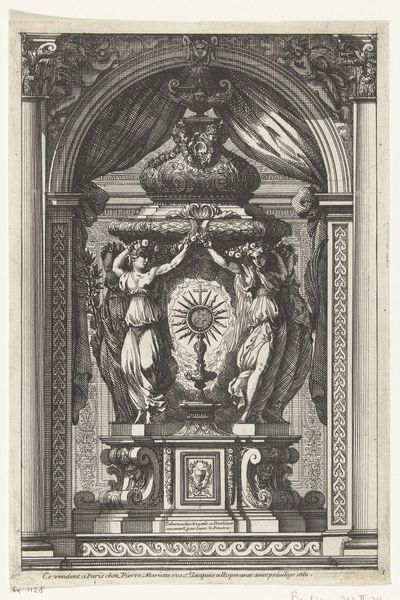
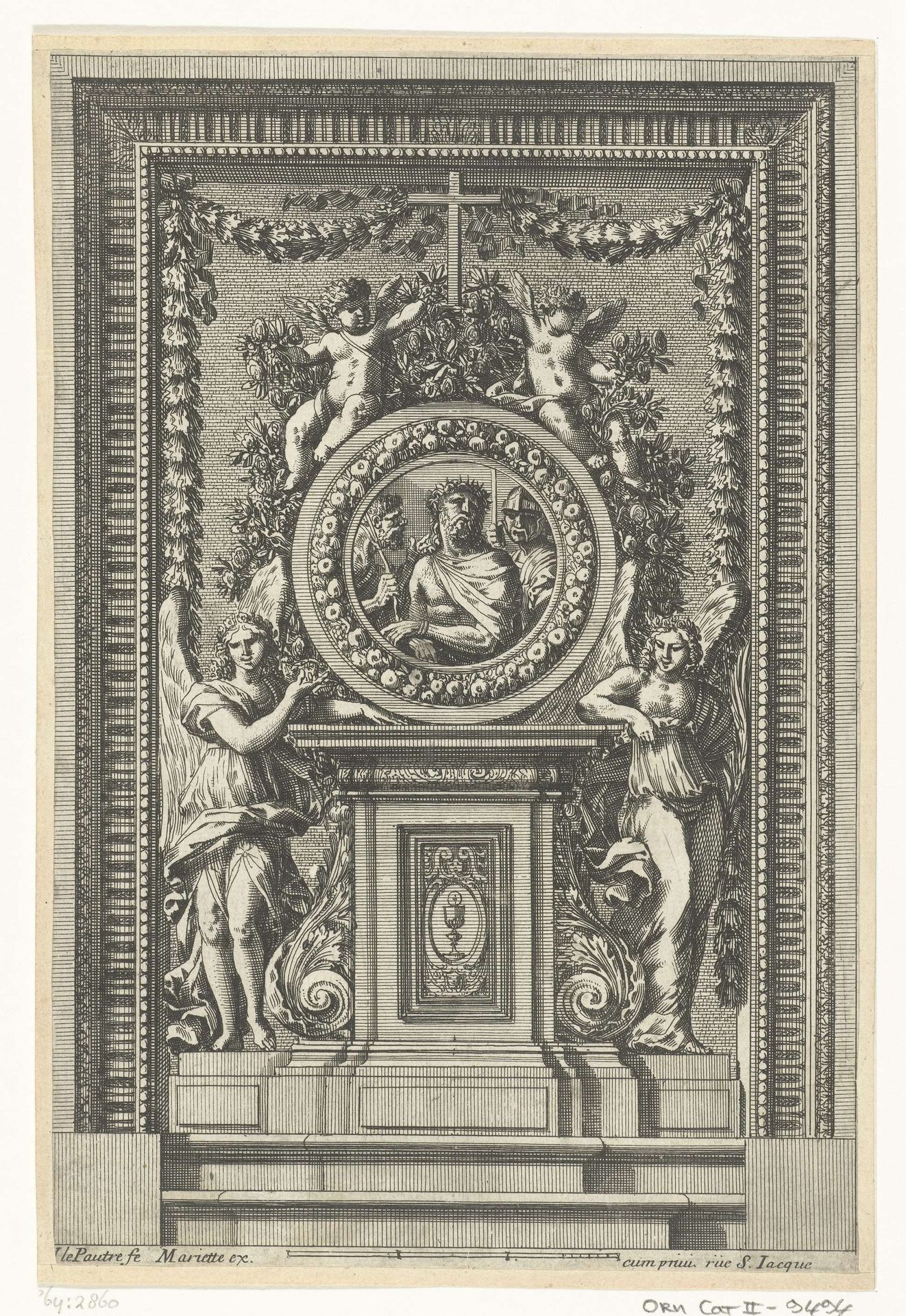
Jean Lepautre created this print, "Tabernacle with Christ and the Crown of Thorns," sometime in the 17th century. The formal composition is immediately striking. Notice the symmetry of the tabernacle, flanked by angels, and the circular image of Christ encircled by putti and greenery, all framed within a rectangular border. The meticulous use of line creates a sense of depth and texture, yet the piece maintains a flattened, almost ornamental quality. The engraving's structure invites us to consider the relationship between the sacred and the decorative. The tabernacle, a symbol of religious devotion, is presented within an elaborate framework, blending spiritual content with aesthetic form. Lepautre's work reflects a broader cultural interest in the interplay between religious symbolism and artistic expression. The very act of framing and presenting this image challenges fixed notions of worship, suggesting a more mediated and constructed form of reverence.
Tabernakel met Christus en de Doornenkroon
c. 1658 - 1670

Jean Lepautre
1618 - 1682Location
RijksmuseumArtwork details
- Medium
- print, intaglio, engraving
- Dimensions
- height 218 mm, width 145 mm
- Location
- Rijksmuseum
- Copyright
- Rijks Museum: Open Domain
Tags
Comments
Share your thoughts
About this artwork
Jean Lepautre created this print, "Tabernacle with Christ and the Crown of Thorns," sometime in the 17th century. The formal composition is immediately striking. Notice the symmetry of the tabernacle, flanked by angels, and the circular image of Christ encircled by putti and greenery, all framed within a rectangular border. The meticulous use of line creates a sense of depth and texture, yet the piece maintains a flattened, almost ornamental quality. The engraving's structure invites us to consider the relationship between the sacred and the decorative. The tabernacle, a symbol of religious devotion, is presented within an elaborate framework, blending spiritual content with aesthetic form. Lepautre's work reflects a broader cultural interest in the interplay between religious symbolism and artistic expression. The very act of framing and presenting this image challenges fixed notions of worship, suggesting a more mediated and constructed form of reverence.
Comments
Share your thoughts