About this artwork
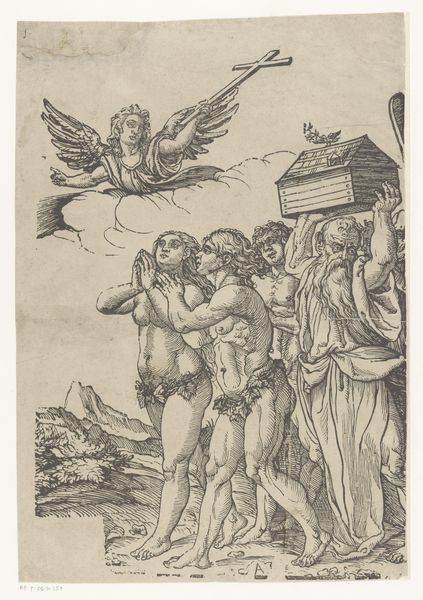
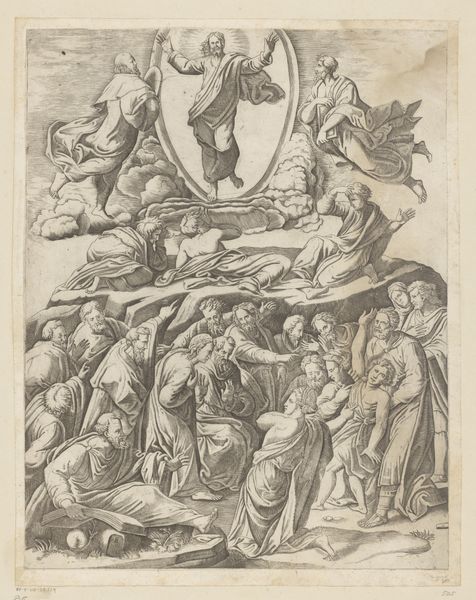
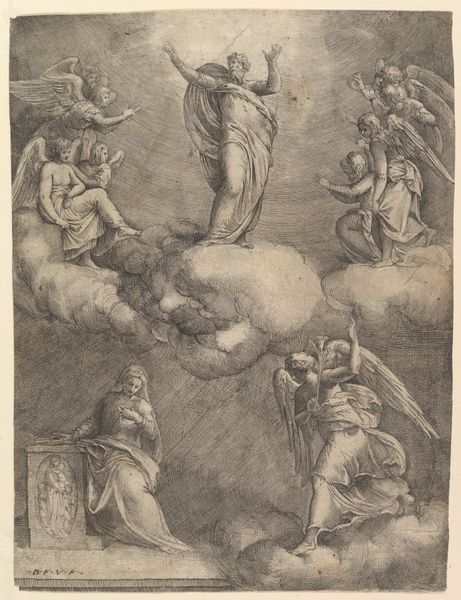
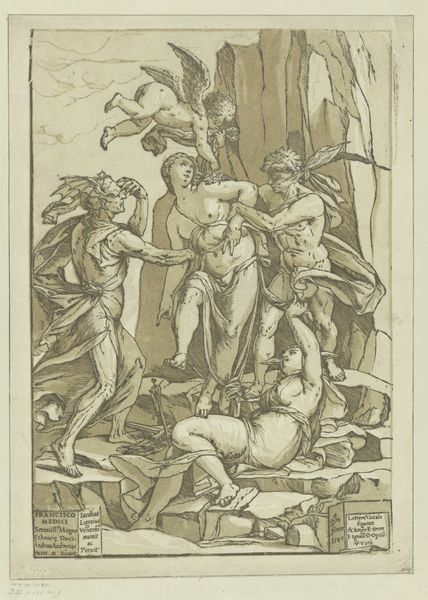
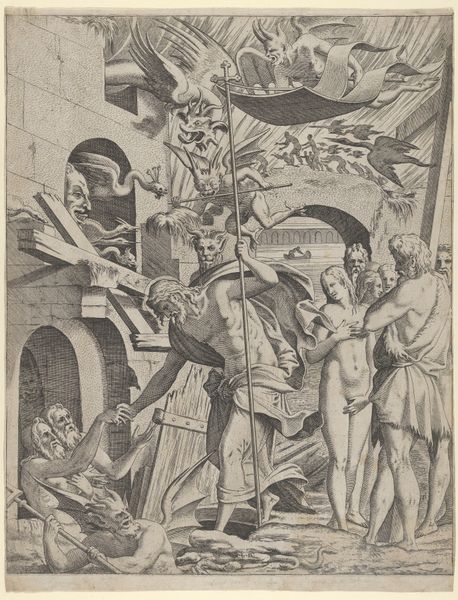
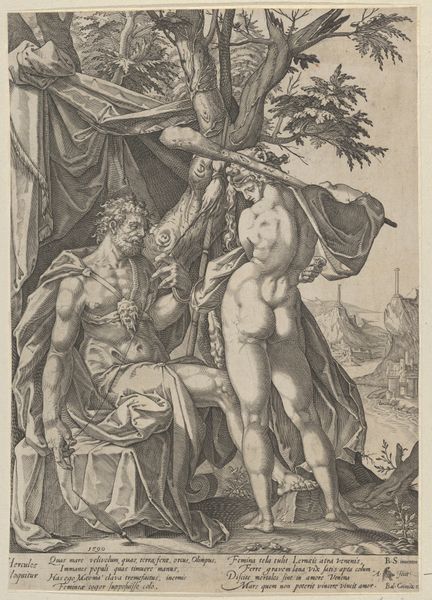
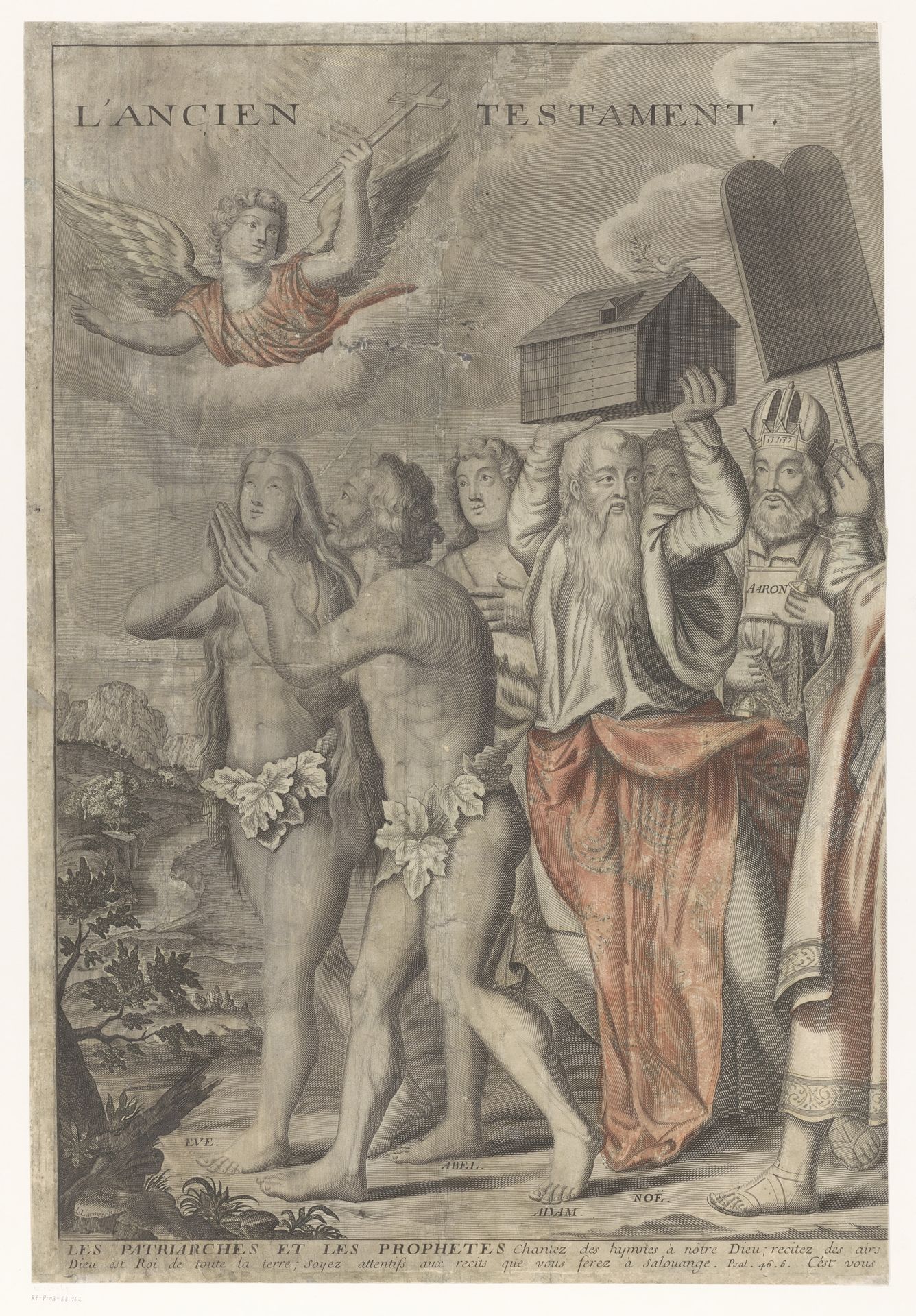
Nicolas de Larmessin I made this print depicting the triumph of Christ with figures from the Old and New Testament. As an engraving, the image began as a drawing incised into a copper plate, capturing fine details and textures. Ink would have been applied, and the plate pressed onto paper, transferring the composition. Consider how the linear quality of the engraving shapes our understanding of the narrative. The use of line defines the figures, from the delicate wings of the angel to the heavy tablets of the law, contributing to the overall solemnity of the scene. The act of engraving is a labor-intensive process. The artist's skill is evident in the precision and control of the lines, which convey depth, texture, and emotion. Prints like this one were often made for wide distribution. In this context, printmaking blurs the line between art and craft. It democratizes the image, making it accessible to a broader audience. The triumph depicted is not only a religious statement, but also an assertion of the value of skilled labor in disseminating cultural values.
Triomftocht van Christus met figuren uit het Oude en Nieuwe Testament (eerste deel)
1687 - 1694

Nicolas de (I) Larmessin
1632 - 1694Location
RijksmuseumArtwork details
- Medium
- drawing, print, etching, pen, engraving
- Dimensions
- height 684 mm, width 463 mm
- Location
- Rijksmuseum
- Copyright
- Rijks Museum: Open Domain
Tags
Comments
Share your thoughts
About this artwork
Nicolas de Larmessin I made this print depicting the triumph of Christ with figures from the Old and New Testament. As an engraving, the image began as a drawing incised into a copper plate, capturing fine details and textures. Ink would have been applied, and the plate pressed onto paper, transferring the composition. Consider how the linear quality of the engraving shapes our understanding of the narrative. The use of line defines the figures, from the delicate wings of the angel to the heavy tablets of the law, contributing to the overall solemnity of the scene. The act of engraving is a labor-intensive process. The artist's skill is evident in the precision and control of the lines, which convey depth, texture, and emotion. Prints like this one were often made for wide distribution. In this context, printmaking blurs the line between art and craft. It democratizes the image, making it accessible to a broader audience. The triumph depicted is not only a religious statement, but also an assertion of the value of skilled labor in disseminating cultural values.
Comments
Share your thoughts