About this artwork
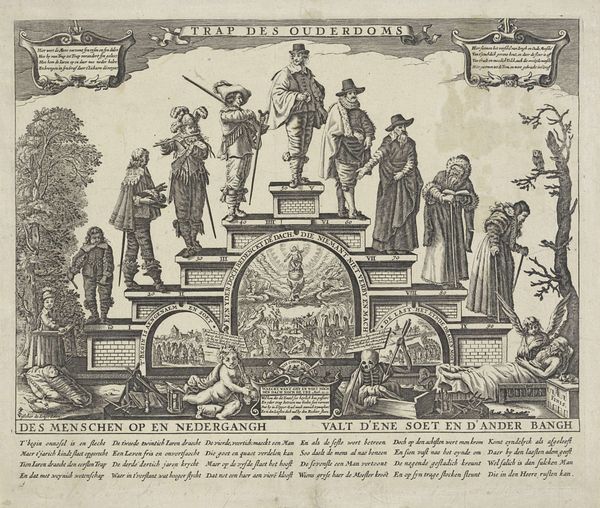
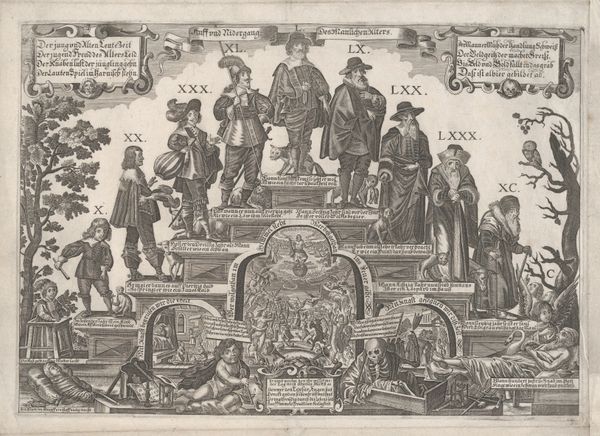
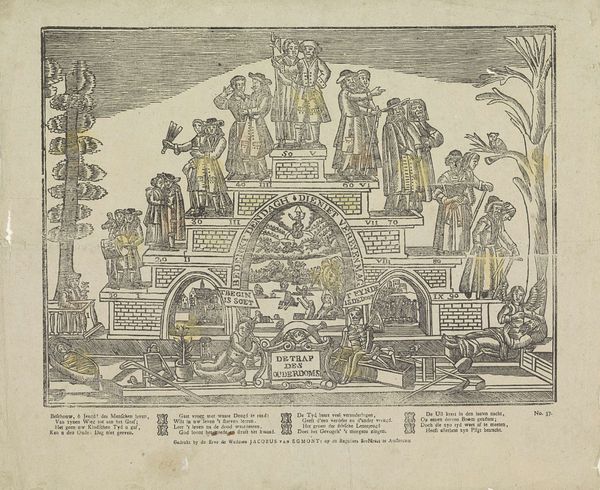
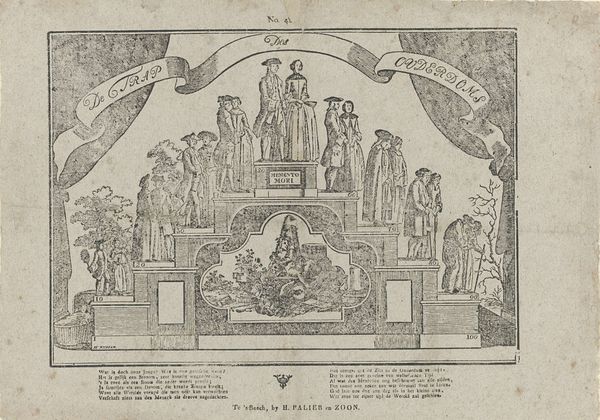
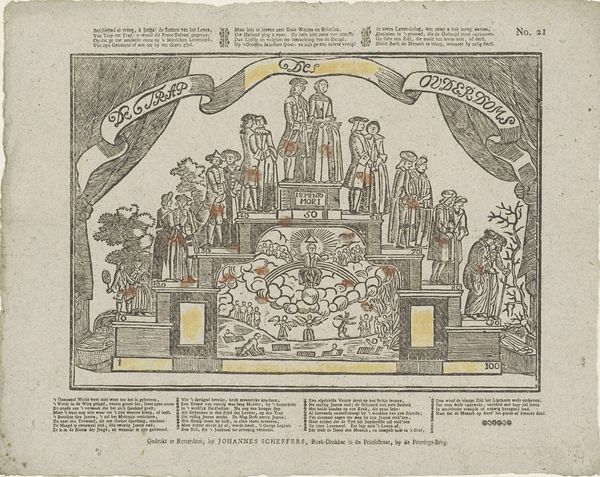
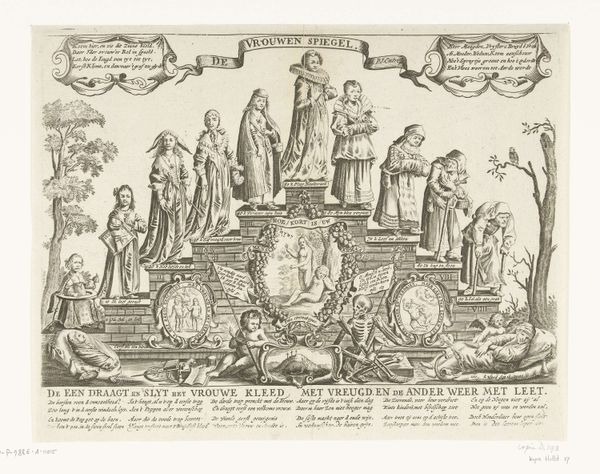
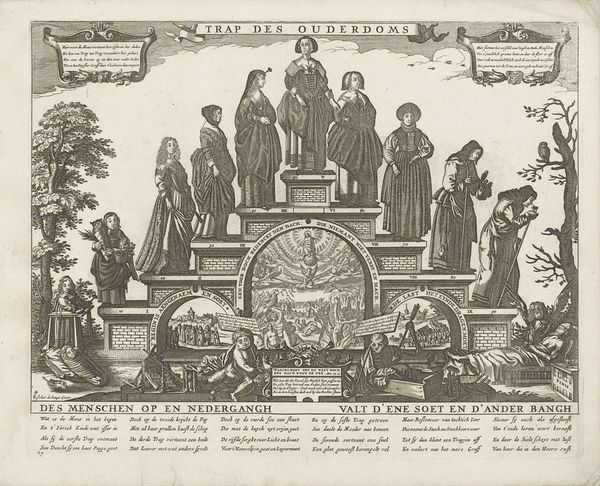
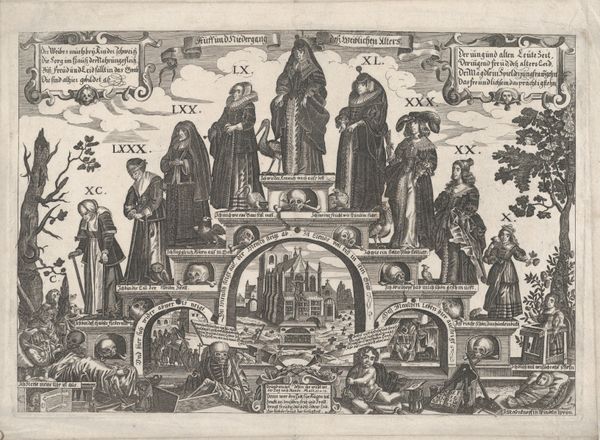
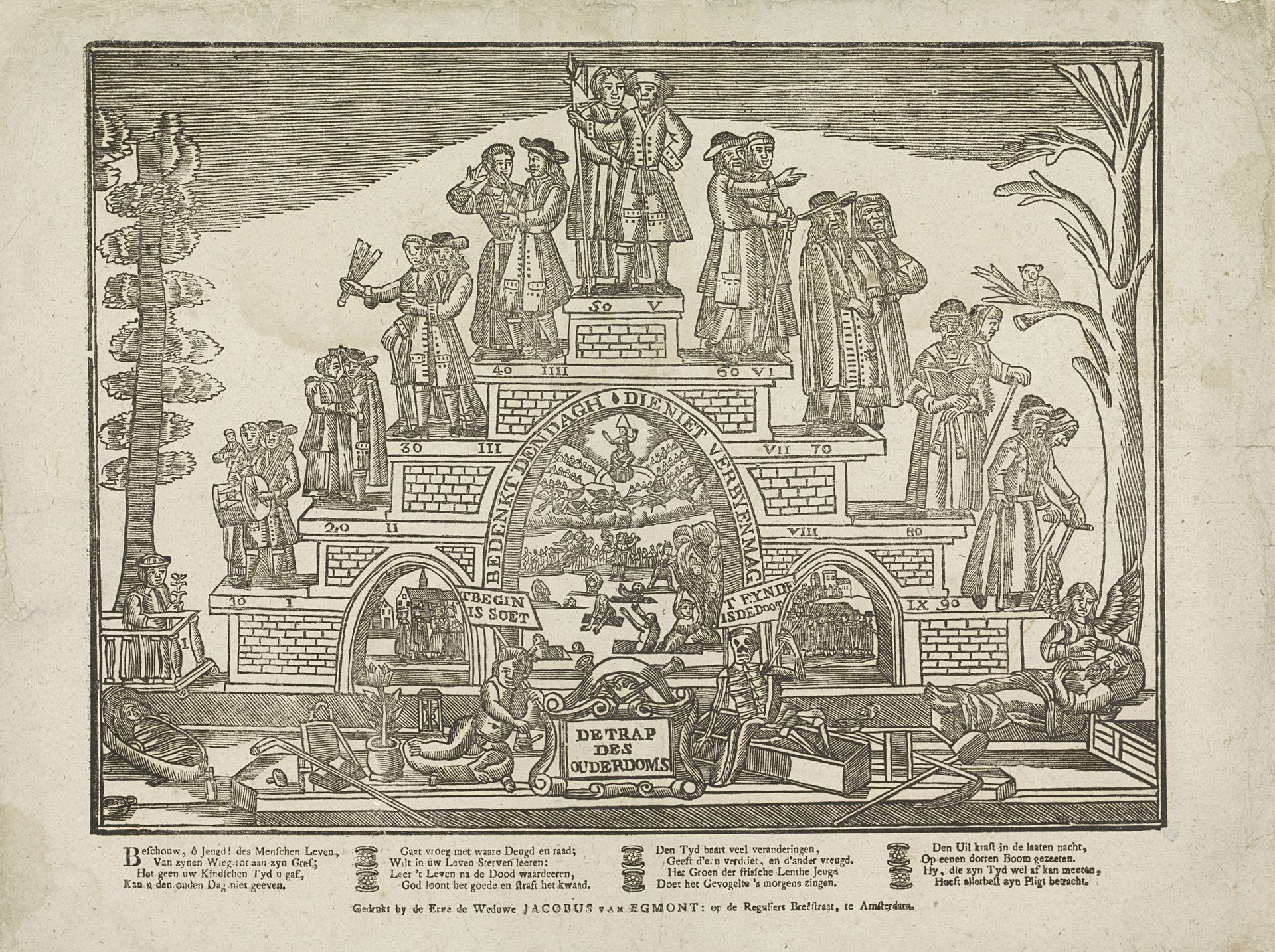
"De trap des ouderdoms," or "The Staircase of Old Age," was created by Erven de Weduwe Jacobus van Egmont, and is currently held in the Rijksmuseum. The print presents life as a series of stages, each represented by figures on a staircase, embodying a meditation on aging and mortality. The image is deeply embedded in the historical and cultural context of the Dutch Golden Age, a time marked by both prosperity and a heightened awareness of life's transience. Each step reveals a different phase of life, from youth to old age. The progression is steep, signifying the challenges and decline associated with growing older. Gender roles are subtly present, with men depicted in positions of authority, while women are often paired, reflecting the social norms of the time. The staircase leads ultimately to death, a stark reminder of life's finite nature. It’s a meditation on time, on what is gained and lost. The emotional power of this work lies in its unvarnished portrayal of the life cycle, inviting us to confront our own mortality.
De trap des ouderdoms
1761 - 1804

Erven de Weduwe Jacobus van Egmont
@ervendeweduwejacobusvanegmontLocation
RijksmuseumArtwork details
- Dimensions
- height 324 mm, width 415 mm
- Location
- Rijksmuseum
- Copyright
- Rijks Museum: Open Domain
Comments
Share your thoughts
About this artwork
"De trap des ouderdoms," or "The Staircase of Old Age," was created by Erven de Weduwe Jacobus van Egmont, and is currently held in the Rijksmuseum. The print presents life as a series of stages, each represented by figures on a staircase, embodying a meditation on aging and mortality. The image is deeply embedded in the historical and cultural context of the Dutch Golden Age, a time marked by both prosperity and a heightened awareness of life's transience. Each step reveals a different phase of life, from youth to old age. The progression is steep, signifying the challenges and decline associated with growing older. Gender roles are subtly present, with men depicted in positions of authority, while women are often paired, reflecting the social norms of the time. The staircase leads ultimately to death, a stark reminder of life's finite nature. It’s a meditation on time, on what is gained and lost. The emotional power of this work lies in its unvarnished portrayal of the life cycle, inviting us to confront our own mortality.
Comments
Share your thoughts