About this artwork
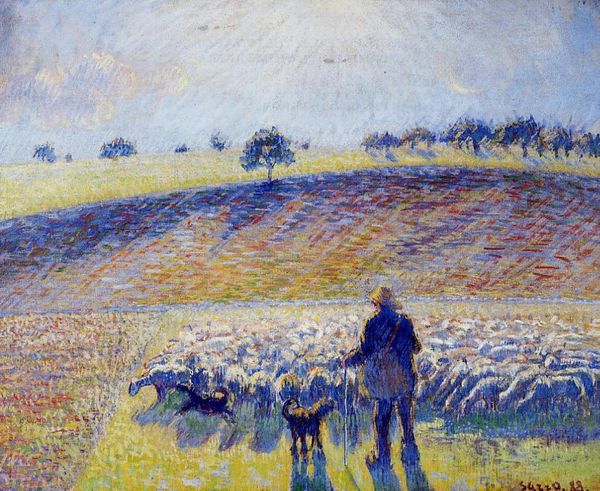
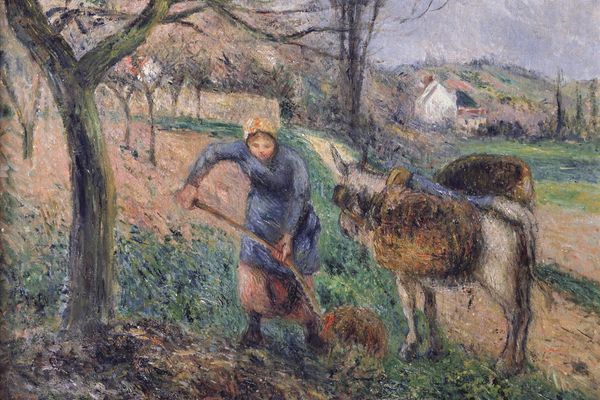
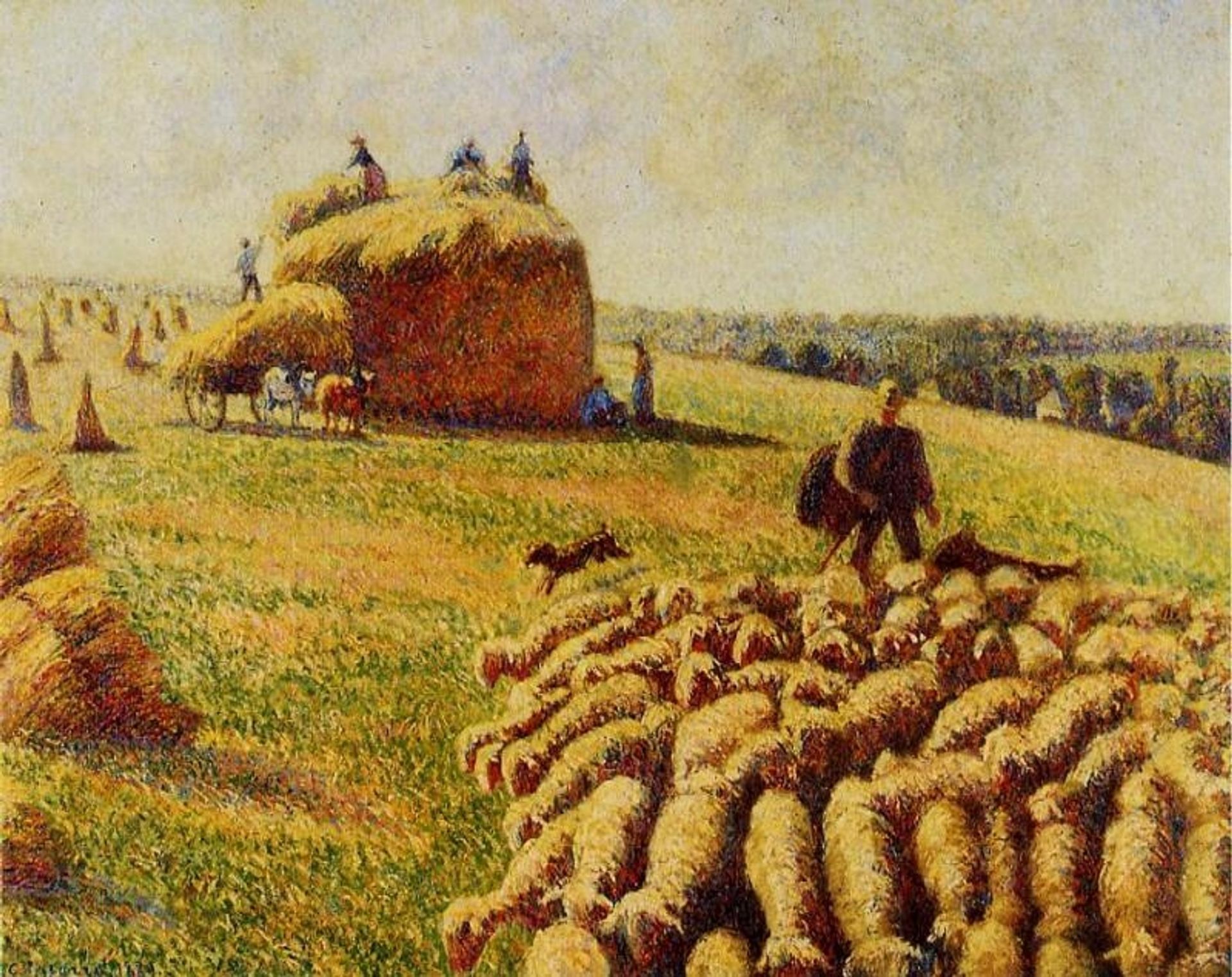
Camille Pissarro painted this scene of a "Flock of Sheep in a Field after the Harvest" with oils. At its heart, this is a work steeped in the ancient symbolism of pastoral life. The sheep, more than mere animals, evoke the idea of community and guidance, echoing the shepherd’s role as a protector and leader. You will find this symbolism as far back as early Mesopotamian art. The image of the flock, so central here, resonates with biblical parables and classical allegories, where sheep often stand for humanity's dependence on higher powers or moral leaders. Consider how these associations have evolved, from religious texts to secular pastoral poems, each adapting the symbol to reflect its era's values. This is not static, as their collective presence can also unconsciously speak to our anxieties about conformity and losing individuality. By connecting rural life to timeless symbols, Pissarro engages viewers on a subconscious level, stirring deeply rooted emotions and memories linked to human history.
Flock of Sheep in a Field after the Harvest
1889

Camille Pissarro
1830 - 1903Location
Private CollectionArtwork details
- Medium
- plein-air, oil-paint
- Location
- Private Collection
- Copyright
- Public domain
Tags
Comments
Share your thoughts
About this artwork
Camille Pissarro painted this scene of a "Flock of Sheep in a Field after the Harvest" with oils. At its heart, this is a work steeped in the ancient symbolism of pastoral life. The sheep, more than mere animals, evoke the idea of community and guidance, echoing the shepherd’s role as a protector and leader. You will find this symbolism as far back as early Mesopotamian art. The image of the flock, so central here, resonates with biblical parables and classical allegories, where sheep often stand for humanity's dependence on higher powers or moral leaders. Consider how these associations have evolved, from religious texts to secular pastoral poems, each adapting the symbol to reflect its era's values. This is not static, as their collective presence can also unconsciously speak to our anxieties about conformity and losing individuality. By connecting rural life to timeless symbols, Pissarro engages viewers on a subconscious level, stirring deeply rooted emotions and memories linked to human history.
Comments
Share your thoughts