drawing, print, etching
#
pencil drawn
#
drawing
# print
#
etching
#
pencil sketch
#
landscape
#
realism
Dimensions: Plate: 9 5/8 × 12 13/16 in. (24.5 × 32.6 cm) Sheet: 12 11/16 × 17 1/4 in. (32.2 × 43.8 cm)
Copyright: Public Domain
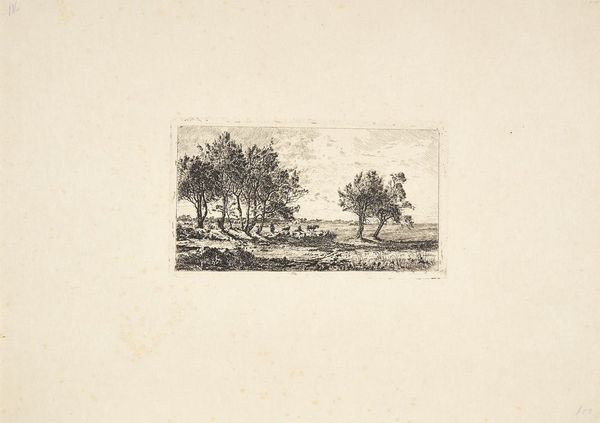
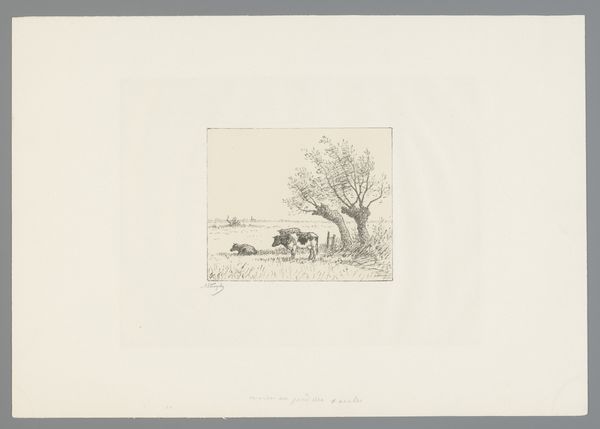
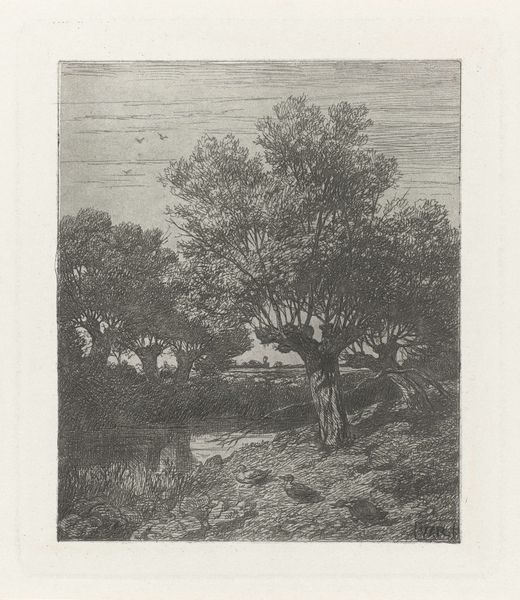
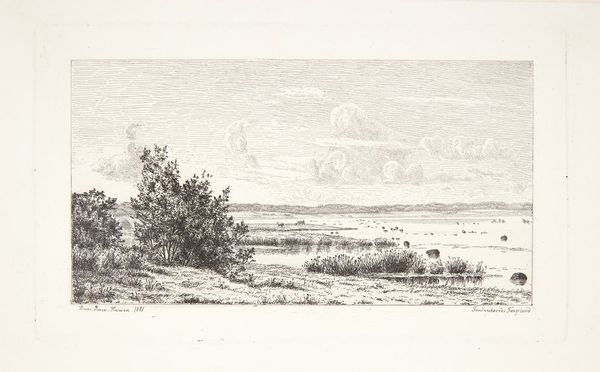
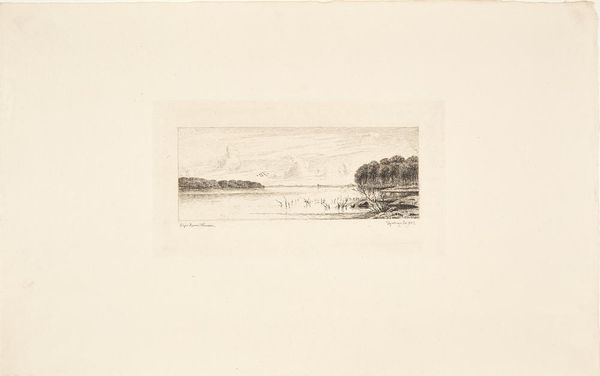
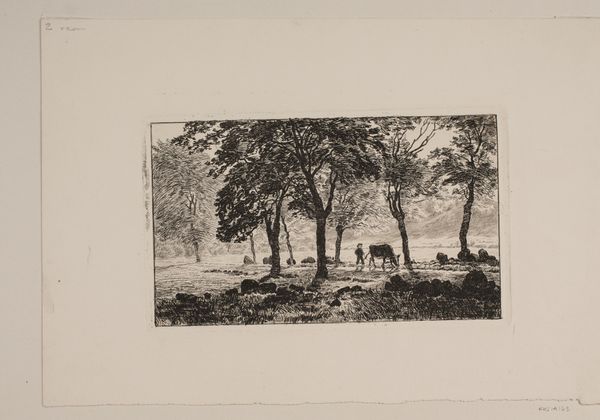
Curator: Let's turn our attention to "Morning," or "Le Matin" as it was originally titled, a print created in 1865 by Auguste Delâtre, currently residing here at The Met. Editor: It strikes me as remarkably quiet, a serene tableau. The light, even in this monochrome print, feels soft. Curator: Absolutely. Delâtre masterfully uses etching to convey this sense of calm, focusing on the interplay between light and shadow across the water and the bare trees. The composition invites reflection. One has to think of the history of how such tranquil scenes have shaped public perception of landscape in the 19th century. Editor: Thinking about that sense of calm, it almost feels manufactured given the historical moment. The Industrial Revolution was rapidly transforming landscapes and labour, which led to nostalgia for rural simplicity in art. How can we understand Delâtre's choices around the politics of that representation? Curator: That's a critical point. We see the ducks gliding on the pond, the solitary figures beneath the trees in the background, all composing a scene disconnected from urban struggles. Delâtre, though, might not necessarily be promoting idyllic fallacy. As the art world changed so rapidly then, artists faced new expectations for what the 'proper' subject of painting should be. Editor: It raises questions of class too, doesn’t it? Who has the luxury to pause and contemplate this morning scene, this sense of leisure, when labor and urbanization are redefining everyday existence? This image doesn’t reflect the struggles of the working class; it caters to the comforts and expectations of the wealthy. The fact this circulated in print form widens the audience who consumed that lifestyle as aspirational, shaping norms around aspiration that linger to this day. Curator: Delâtre's choice of etching also underscores a specific set of aesthetic priorities. He seems less interested in glorifying the pastoral. There are signs he wants to simply portray a vision as neutrally as possible given the social changes occuring at the time. Editor: Ultimately, viewing ‘Le Matin’ forces us to acknowledge that even seemingly gentle landscape pieces partake in dialogues concerning power and cultural ideals of an era gone by. Curator: Indeed, It prompts reflection beyond the surface charm.
Comments
No comments
Be the first to comment and join the conversation on the ultimate creative platform.
 Collect
 React
React Comment
More like this