About this artwork
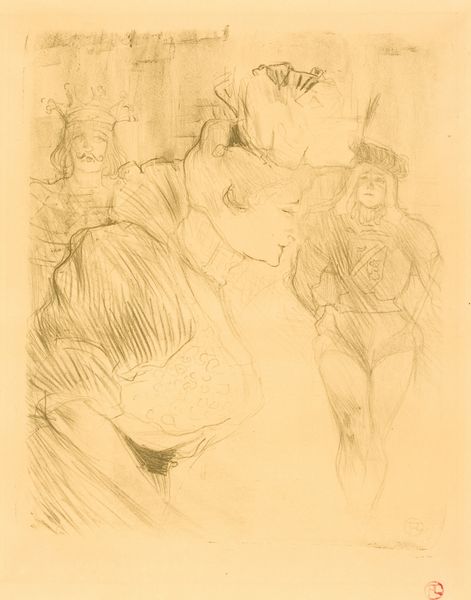
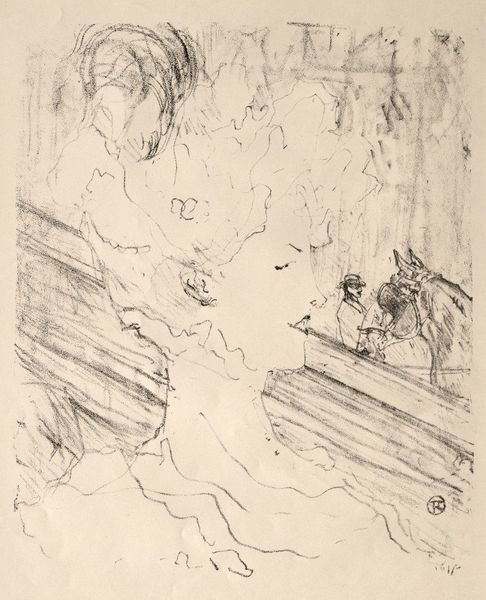
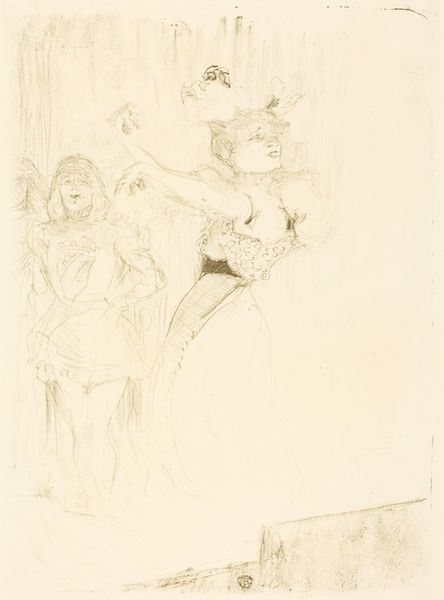
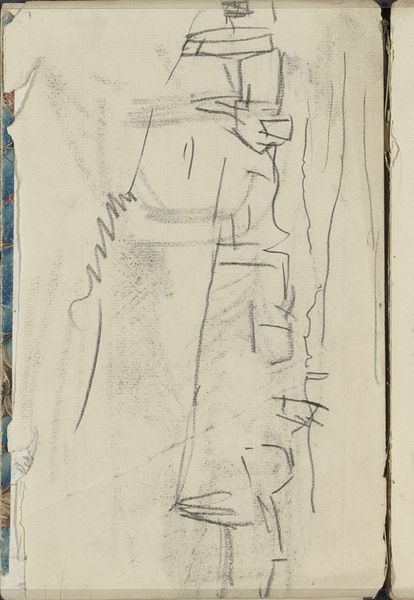
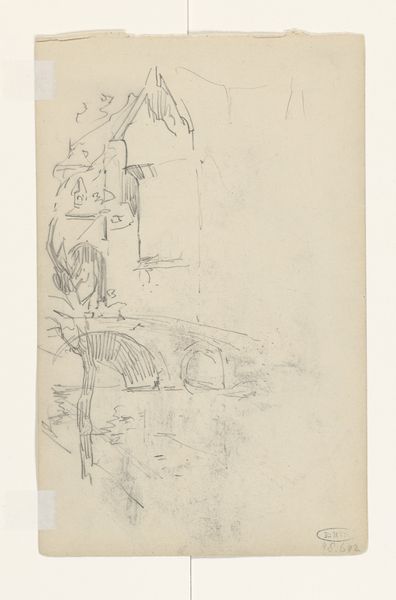
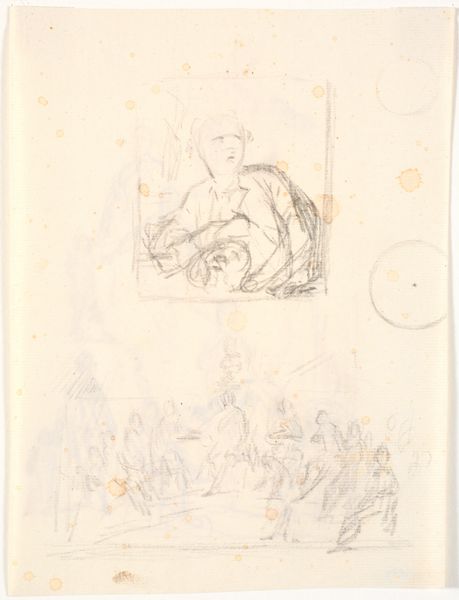
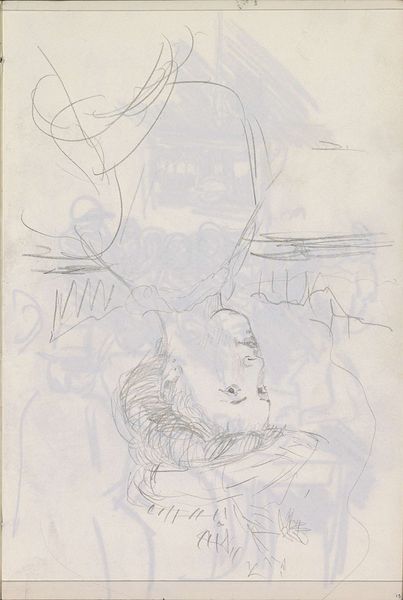
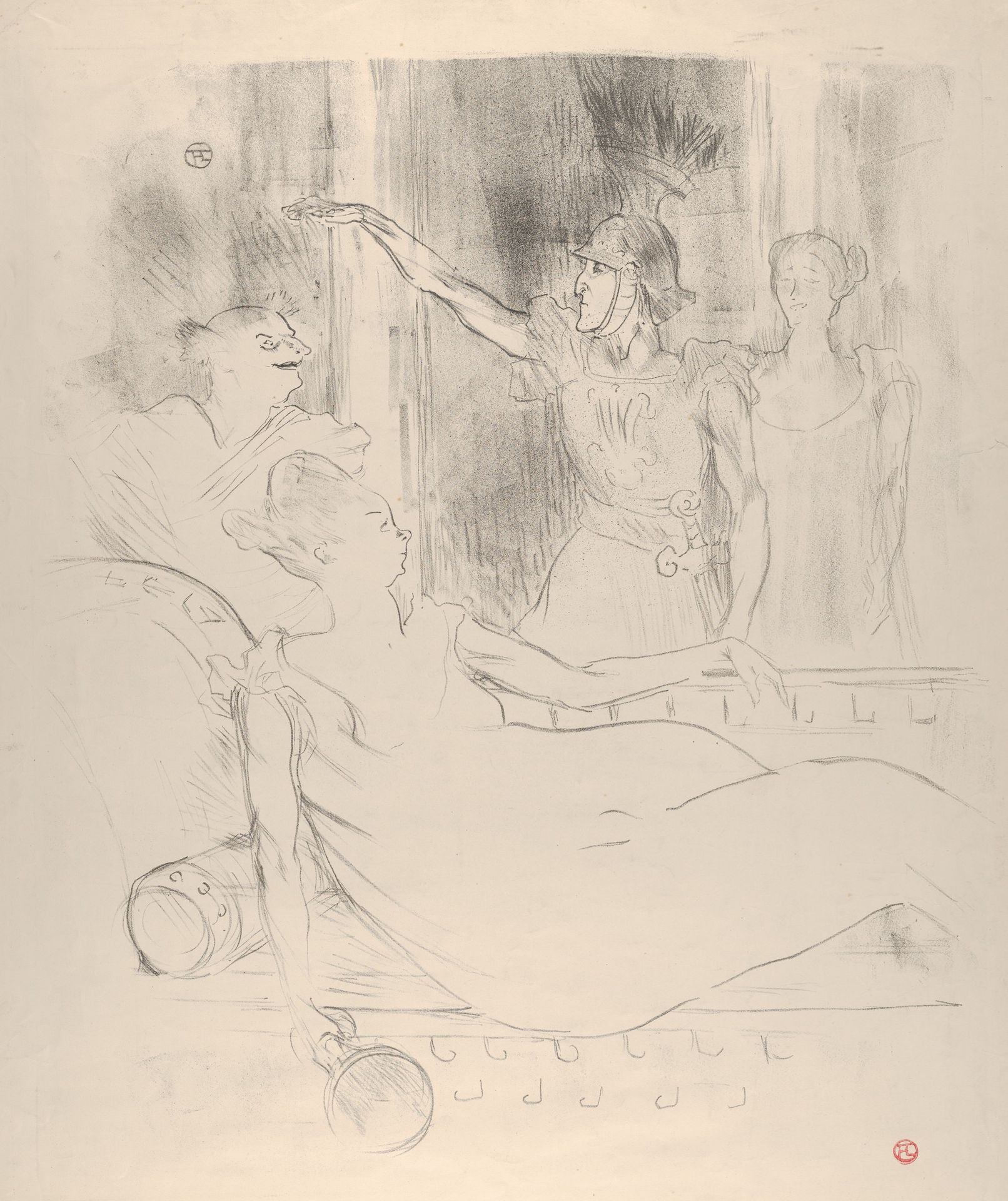
Henri de Toulouse-Lautrec rendered this lithograph of a scene from Offenbach's *La Belle Hélène*. It captures the operetta's comedic and satirical elements, reflecting the cultural milieu of late 19th-century Paris. Toulouse-Lautrec, an artist who was no stranger to marginalization due to his physical disabilities, often depicted performers, prostitutes, and other members of Parisian nightlife. He highlights those on the fringes of society. In *La Belle Hélène*, he turns his attention to the stage, portraying a scene with a focus on the characters' theatricality. We see this through exaggerated gestures and expressions. The loose, sketch-like quality of the lithograph adds to the sense of immediacy, capturing a fleeting moment from the performance. The opera itself satirizes the societal norms and values of the time, using humor to critique power, gender roles, and class distinctions. Toulouse-Lautrec mirrors this, offering a glimpse into the world of entertainment and the complex social dynamics within it. He encourages us to consider the artist's own experiences and perspectives in relation to the subjects he chose to depict, inviting a deeper exploration of identity, representation, and the artist's emotional connection to the scene.
A Scene from Offenbach's La Belle Hélène 1900

Henri de Toulouse-Lautrec
1864 - 1901
The Metropolitan Museum of Art
Metropolitan Museum of Art, New York, NYArtwork details
- Medium
- drawing, lithograph, print, pencil
- Dimensions
- 27-15/16 x 20-7/16 in. (71.0 x 51.9 cm)
- Location
- Metropolitan Museum of Art, New York, NY
- Copyright
- Public Domain
Tags
portrait
drawing
lithograph
figuration
soldier
pen-ink sketch
pencil
symbolism
Comments
No comments
About this artwork
Henri de Toulouse-Lautrec rendered this lithograph of a scene from Offenbach's *La Belle Hélène*. It captures the operetta's comedic and satirical elements, reflecting the cultural milieu of late 19th-century Paris. Toulouse-Lautrec, an artist who was no stranger to marginalization due to his physical disabilities, often depicted performers, prostitutes, and other members of Parisian nightlife. He highlights those on the fringes of society. In *La Belle Hélène*, he turns his attention to the stage, portraying a scene with a focus on the characters' theatricality. We see this through exaggerated gestures and expressions. The loose, sketch-like quality of the lithograph adds to the sense of immediacy, capturing a fleeting moment from the performance. The opera itself satirizes the societal norms and values of the time, using humor to critique power, gender roles, and class distinctions. Toulouse-Lautrec mirrors this, offering a glimpse into the world of entertainment and the complex social dynamics within it. He encourages us to consider the artist's own experiences and perspectives in relation to the subjects he chose to depict, inviting a deeper exploration of identity, representation, and the artist's emotional connection to the scene.
Comments
No comments