About this artwork
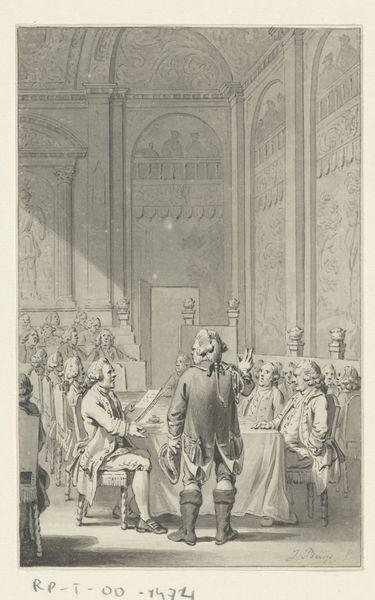
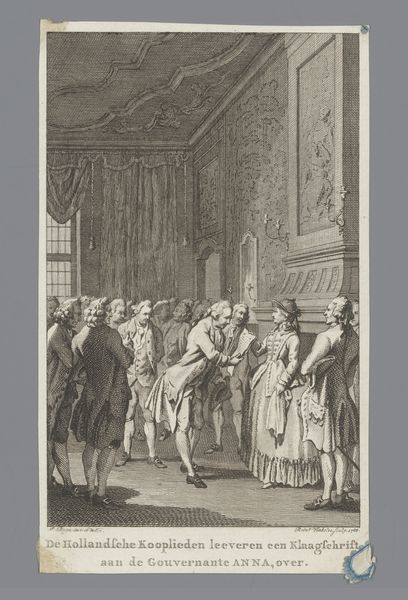
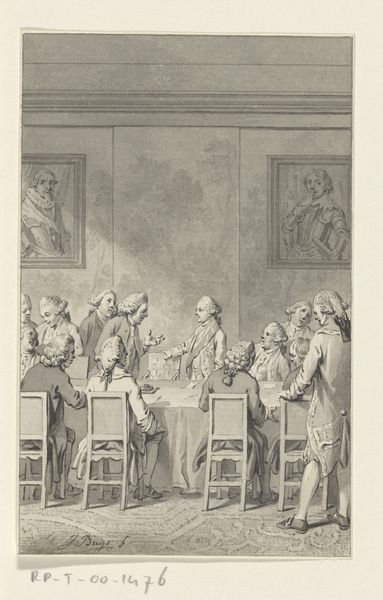
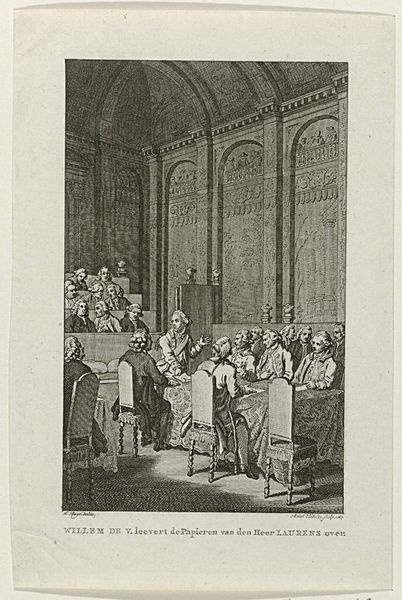
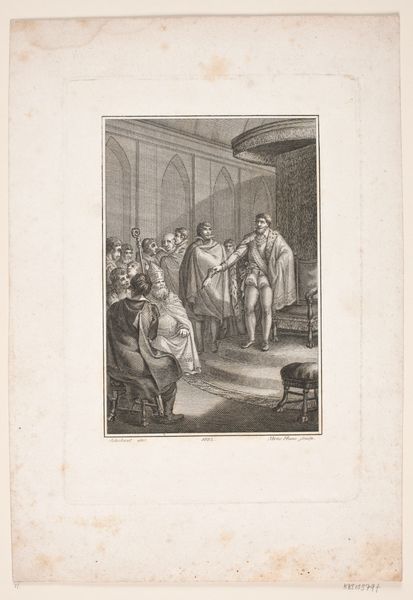
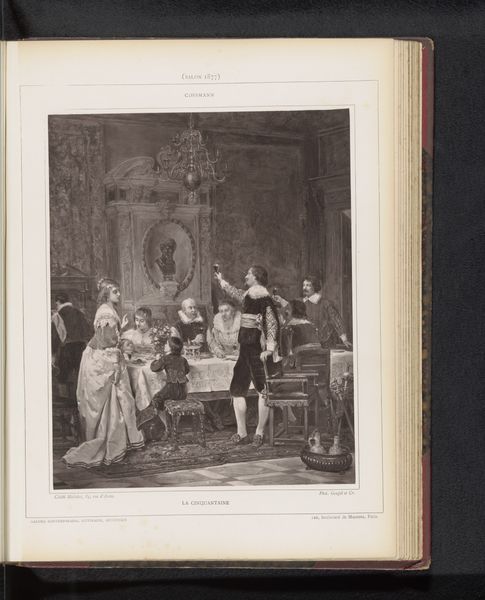
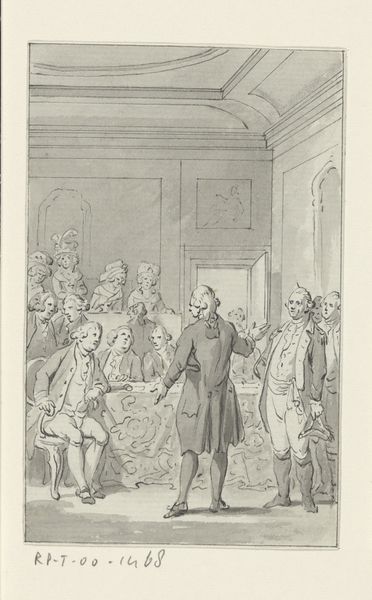
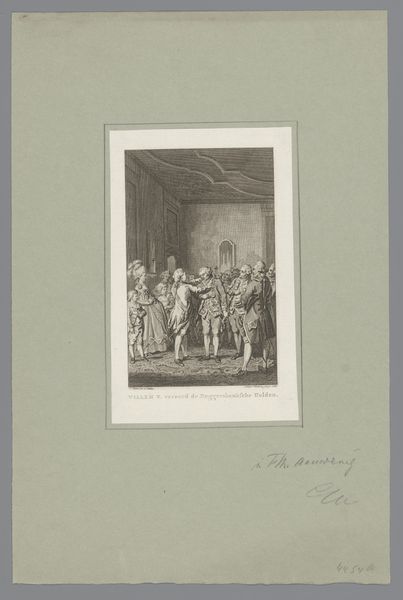
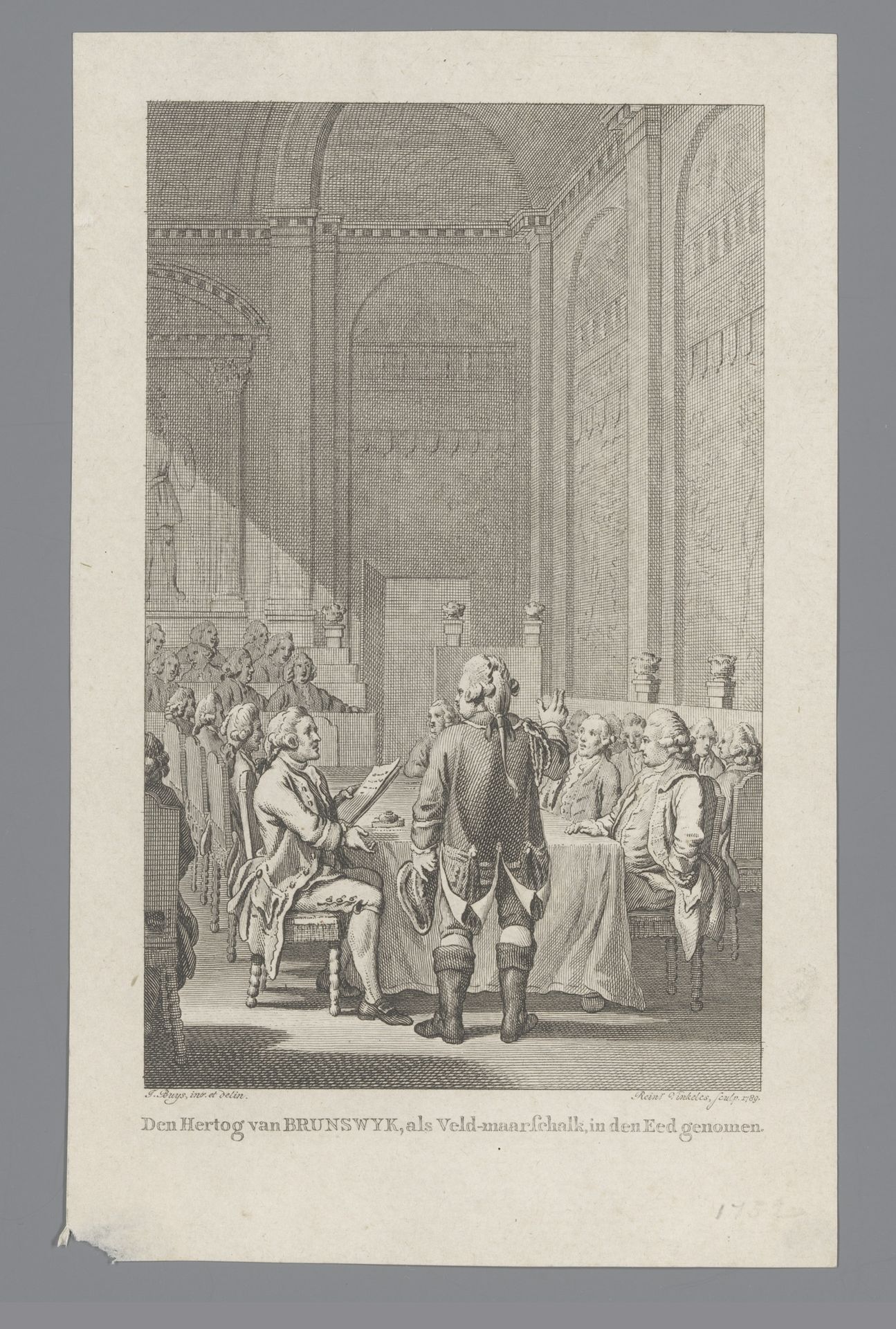
Reinier Vinkeles created this print of Lodewijk Ernst, Duke of Brunswick, taking his oath as field marshal, around 1759. He used the technique of etching, which involves drawing a design onto a metal plate covered with wax. The exposed lines are then bitten by acid, creating grooves that hold ink. The material qualities of the printmaking process directly influence the image we see. The fine, precise lines created through etching allow for a high level of detail. Vinkeles skillfully uses these lines to depict textures and forms, from the Duke's elaborate clothing to the architecture of the room. Consider the labor involved in creating such an image. Each line meticulously etched, each print carefully pulled. This was a skilled craft, requiring years of training and a deep understanding of materials and processes. The social significance lies in the dissemination of images. Prints like these were a primary way to circulate information, commemorate events, and shape public perception. By appreciating the materials, the making process, and the historical context, we can move beyond simply seeing an image to understanding the values and the labor embedded within.
Lodewijk Ernst, hertog van Brunswijk legt de eed af als veldmaarschalk, 1759 1789

Reinier Vinkeles
1741 - 1816Location
RijksmuseumArtwork details
- Medium
- drawing, print, engraving
- Dimensions
- height 177 mm, width 109 mm
- Location
- Rijksmuseum
- Copyright
- Rijks Museum: Open Domain
Tags
portrait
drawing
neoclacissism
narrative-art
figuration
classicism
group-portraits
line
history-painting
academic-art
engraving
realism
Comments
No comments
About this artwork
Reinier Vinkeles created this print of Lodewijk Ernst, Duke of Brunswick, taking his oath as field marshal, around 1759. He used the technique of etching, which involves drawing a design onto a metal plate covered with wax. The exposed lines are then bitten by acid, creating grooves that hold ink. The material qualities of the printmaking process directly influence the image we see. The fine, precise lines created through etching allow for a high level of detail. Vinkeles skillfully uses these lines to depict textures and forms, from the Duke's elaborate clothing to the architecture of the room. Consider the labor involved in creating such an image. Each line meticulously etched, each print carefully pulled. This was a skilled craft, requiring years of training and a deep understanding of materials and processes. The social significance lies in the dissemination of images. Prints like these were a primary way to circulate information, commemorate events, and shape public perception. By appreciating the materials, the making process, and the historical context, we can move beyond simply seeing an image to understanding the values and the labor embedded within.
Comments
No comments