About this artwork
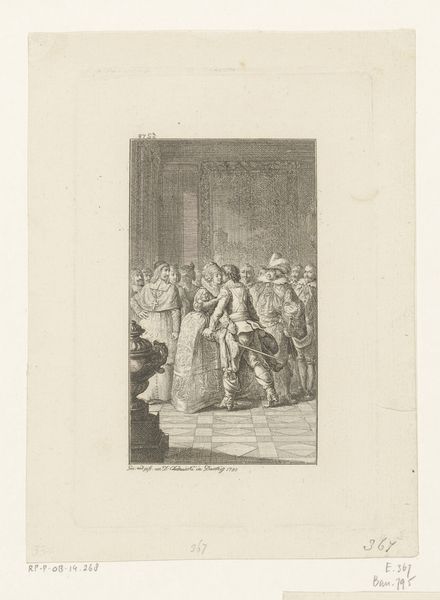
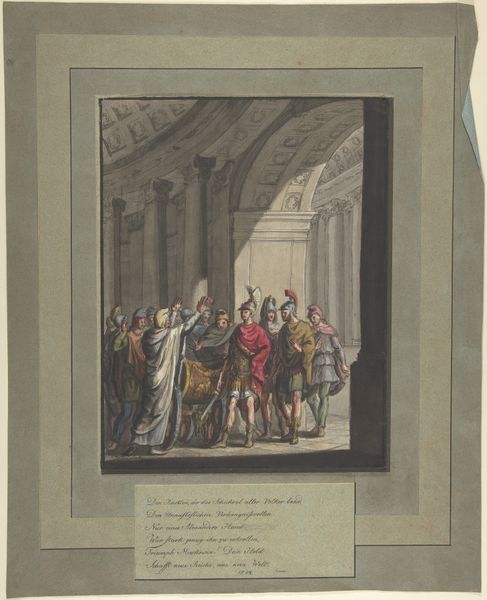
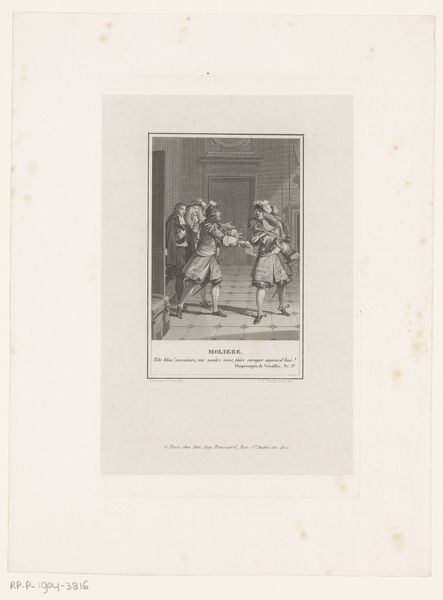
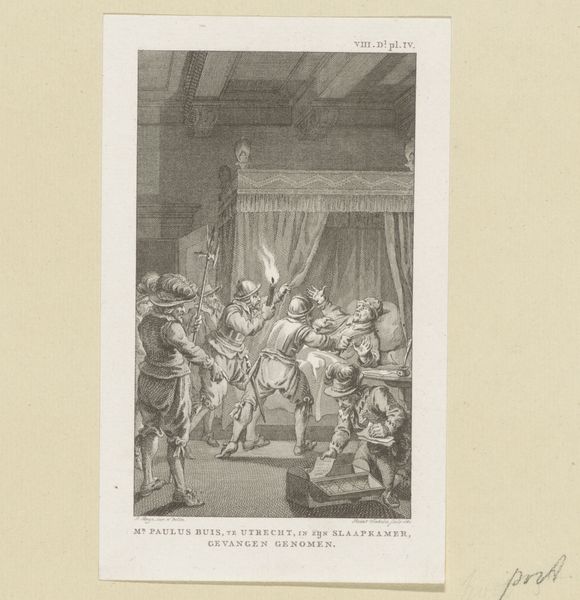
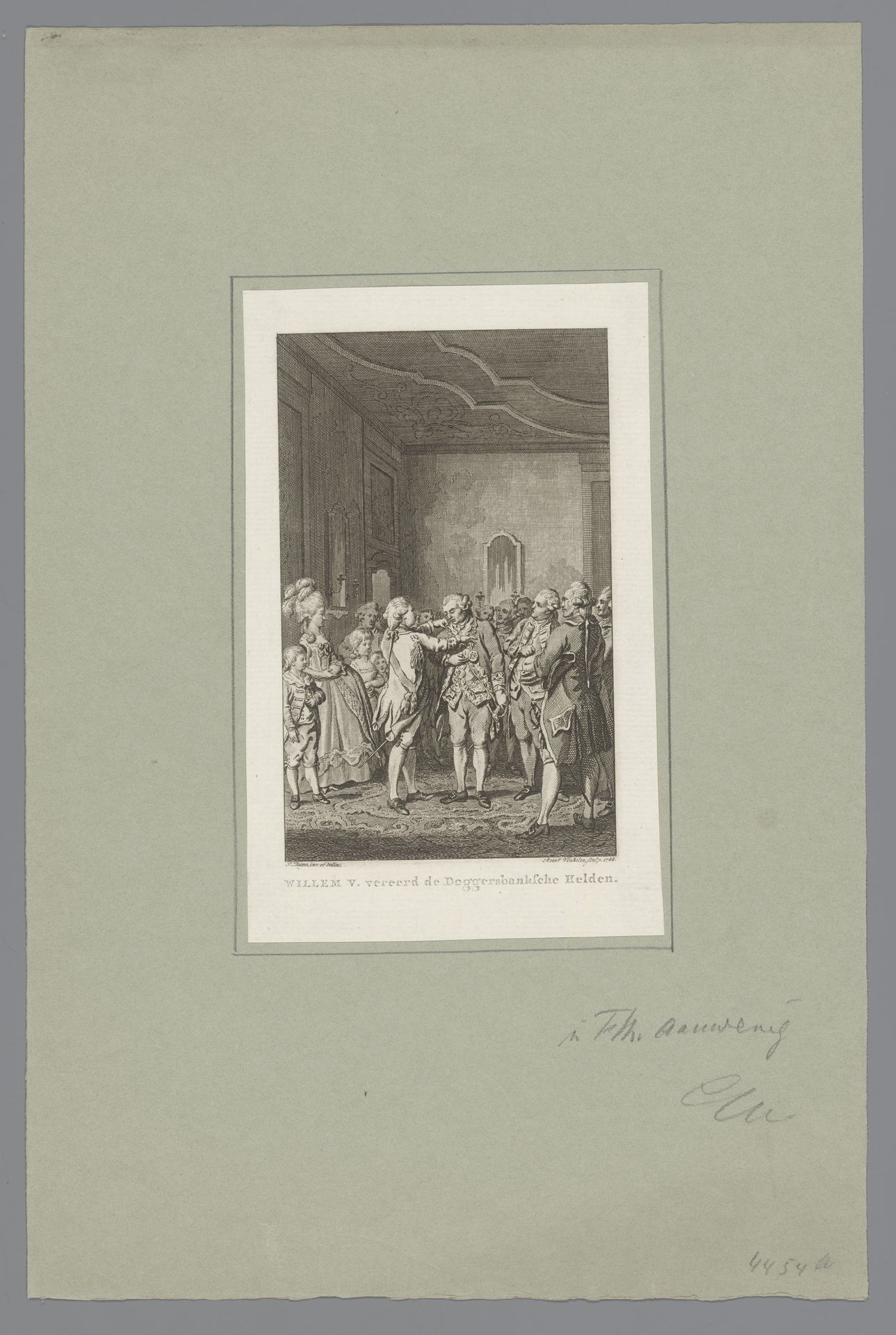
This engraving, "Willem V vereert de helden van de zeeslag bij Doggersbank, 1781," was created by Reinier Vinkeles. The composition is rigidly structured, focusing on a central, brightly lit space where Willem V, rendered with meticulous detail, acknowledges the naval heroes. The controlled lines and precise rendering of form create a tableau that is both staged and subtly propagandistic. This arrangement, set within a formal interior, uses the visual language of neoclassicism to emphasize order, reason, and the glorification of patriotic duty. Consider how the artist employs a semiotic system of gestures and spatial relations to communicate power dynamics and virtue. Willem V's physical act of honoring these figures elevates them, reinforcing established hierarchies, while the surrounding architecture suggests a backdrop of institutional support and enduring legacy. Ultimately, the print serves as a cultural artifact that reflects the values and narratives of its time.
Willem V vereert de helden van de zeeslag bij Doggersbank, 1781
1788

Reinier Vinkeles
1741 - 1816Location
RijksmuseumArtwork details
- Dimensions
- height 174 mm, width 111 mm
- Location
- Rijksmuseum
- Copyright
- Rijks Museum: Open Domain
Comments
Share your thoughts
About this artwork
This engraving, "Willem V vereert de helden van de zeeslag bij Doggersbank, 1781," was created by Reinier Vinkeles. The composition is rigidly structured, focusing on a central, brightly lit space where Willem V, rendered with meticulous detail, acknowledges the naval heroes. The controlled lines and precise rendering of form create a tableau that is both staged and subtly propagandistic. This arrangement, set within a formal interior, uses the visual language of neoclassicism to emphasize order, reason, and the glorification of patriotic duty. Consider how the artist employs a semiotic system of gestures and spatial relations to communicate power dynamics and virtue. Willem V's physical act of honoring these figures elevates them, reinforcing established hierarchies, while the surrounding architecture suggests a backdrop of institutional support and enduring legacy. Ultimately, the print serves as a cultural artifact that reflects the values and narratives of its time.
Comments
Share your thoughts