c. 1938
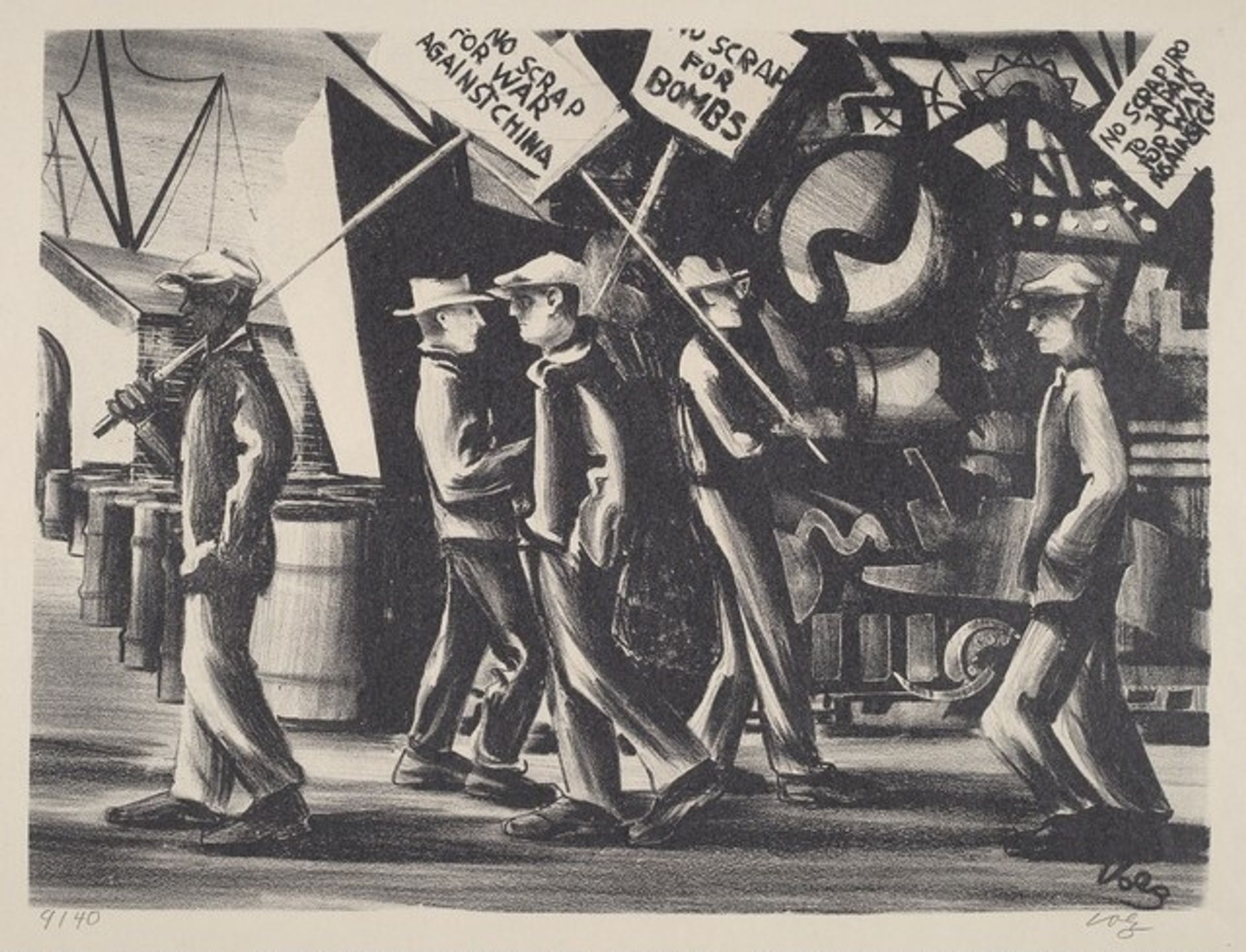
Untitled (Picket Line)


Listen to curator's interpretation
Curatorial notes
Curator: This compelling graphite drawing and print, "Untitled (Picket Line)," comes to us from Herman Volz, likely created around 1938. It presents an intriguing tableau of urban life and protest. Editor: My immediate reaction is a feeling of grim determination. The strong lines create a stark contrast that heightens the figures’ seriousness. The print itself is simple yet monumental. Curator: Indeed. Note how Volz employs line to create a clear, graphic image. The composition divides roughly into thirds horizontally. A slightly elevated and starkly clear street defines the bottom plane, and behind these marchers, looming geometric shapes depict an industrialized space in the upper two thirds. There is a wonderful interplay between the human and the geometric, wouldn’t you say? Editor: Absolutely. The geometric industrial backdrop—factories, I presume—functions as a weighty symbol of the very system they seem to be protesting. Look at the signs: “No Scrap for War Against China," and “No Scrap for Bombs." There’s a clear condemnation of industrialized war and its human cost. Curator: Semiotically, the signs function as potent signifiers of the anti-war sentiment prevalent in the pre-World War II era, I agree. Also, I appreciate the subtle shifts in shading which build tone in this otherwise monotone image. What would you say those dark, more intensely shaded areas indicate? Editor: They certainly direct our eyes, creating focal points on the signs themselves, but I think they add depth to the psychological feeling, too—casting a shadow, so to speak, onto the social and ethical implications of war. Curator: An astute observation. One could almost say the artist implicates the heavy machinations of production in creating implements for devastation. Editor: Exactly. And these marchers, with their weary faces, become almost archetypal figures of resistance, reminding us of the cyclical nature of these conflicts throughout history. Curator: I find myself pondering the technical skill required to achieve such atmospheric density using only graphite. The composition offers a rather sophisticated treatment of shadow and form. Editor: Thinking about Volz's work here, it echoes the social realist movement but also reflects the enduring human struggle for peace, doesn’t it? The simplicity belies a more enduring sentiment about production and global conflict.