About this artwork
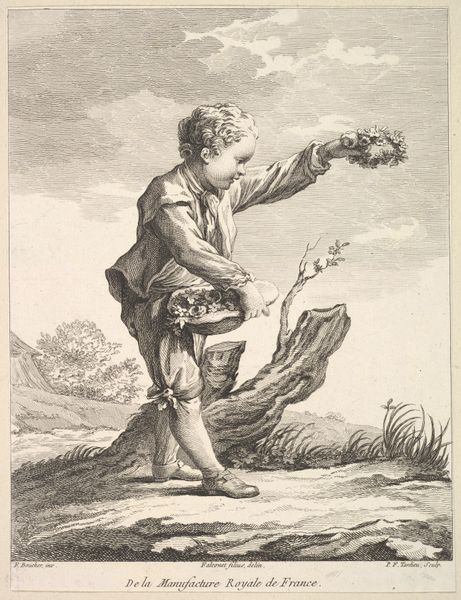
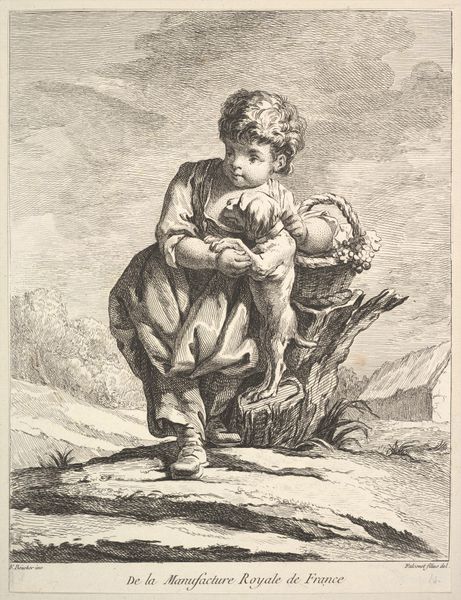
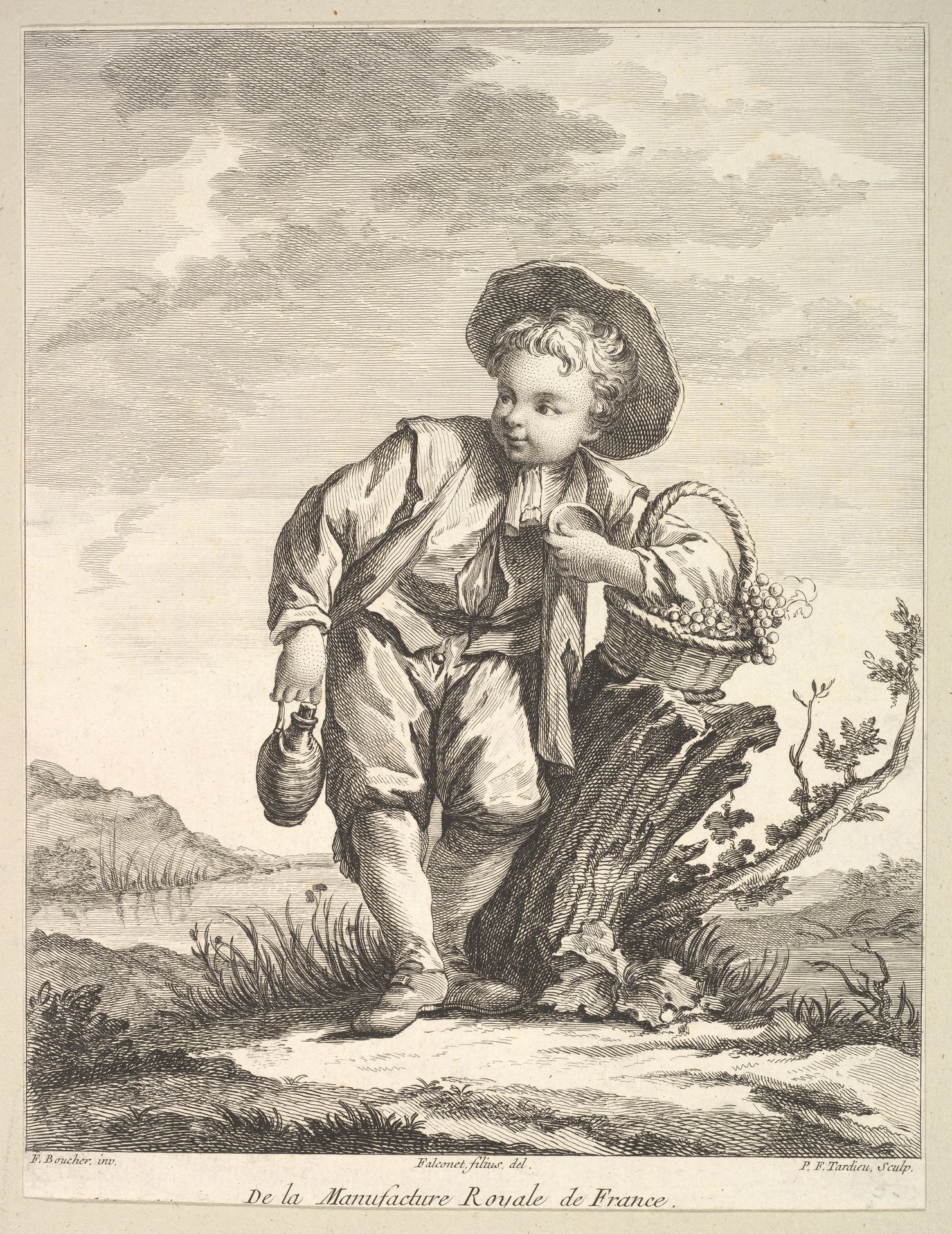
Pierre François Tardieu's engraving shows a boy holding a basket overflowing with grapes, echoing themes of abundance and youthful innocence. This image, like others of its time, draws upon a deep well of classical motifs, specifically Bacchus, the god of wine and fertility, often depicted with grapes and vines. Consider how the grape motif appears in Roman mosaics or Renaissance paintings, symbolizing not only earthly pleasures but also divine grace and sacrifice. In Christian iconography, grapes are tied to the Eucharist, representing the blood of Christ. Tardieu's image captures the evolution of these symbols, distilling them into a charming, secular scene, yet hinting at the deeper layers of meaning. The innocent depiction of the boy evokes a sense of nostalgia, tapping into a collective memory of pastoral ideals. It presents an emotional, psychological space where the viewer may contemplate the cyclical nature of life, death, and rebirth. The image becomes a potent reminder of cultural memory, resonating across time.
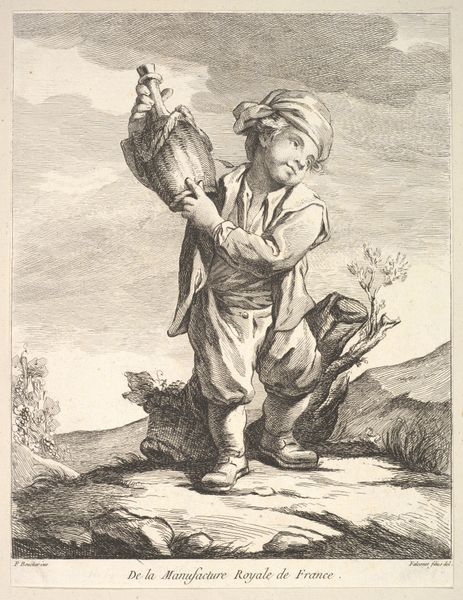
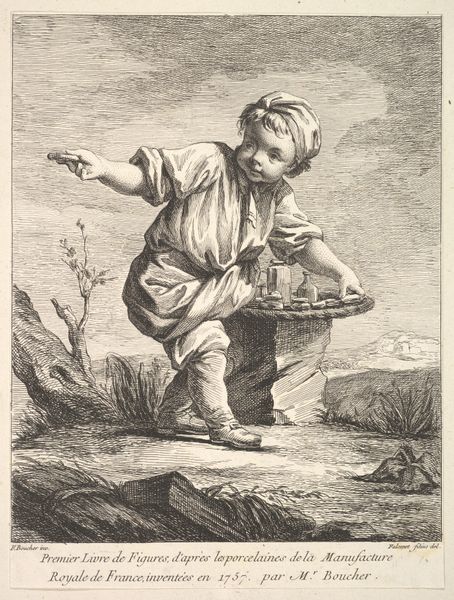
Little boy holding a basket of grapes, from Deuxième Livre de Figures d'après les porcelaines de la Manufacture Royale de France (Second Book of Figures after porcelains from the Manufacture Royale de France)
1757 - 1771

Pierre François Tardieu
1711 - 1771
The Metropolitan Museum of Art
Metropolitan Museum of Art, New York, NYArtwork details
- Dimensions
- Sheet: 9 3/4 x 7 3/8 in. (24.8 x 18.8 cm)
- Location
- Metropolitan Museum of Art, New York, NY
- Copyright
- Public Domain
Comments
Share your thoughts
About this artwork
Pierre François Tardieu's engraving shows a boy holding a basket overflowing with grapes, echoing themes of abundance and youthful innocence. This image, like others of its time, draws upon a deep well of classical motifs, specifically Bacchus, the god of wine and fertility, often depicted with grapes and vines. Consider how the grape motif appears in Roman mosaics or Renaissance paintings, symbolizing not only earthly pleasures but also divine grace and sacrifice. In Christian iconography, grapes are tied to the Eucharist, representing the blood of Christ. Tardieu's image captures the evolution of these symbols, distilling them into a charming, secular scene, yet hinting at the deeper layers of meaning. The innocent depiction of the boy evokes a sense of nostalgia, tapping into a collective memory of pastoral ideals. It presents an emotional, psychological space where the viewer may contemplate the cyclical nature of life, death, and rebirth. The image becomes a potent reminder of cultural memory, resonating across time.
Comments
Share your thoughts