About this artwork
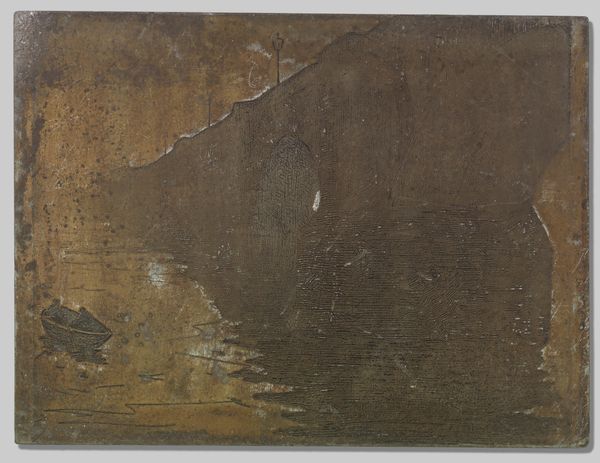
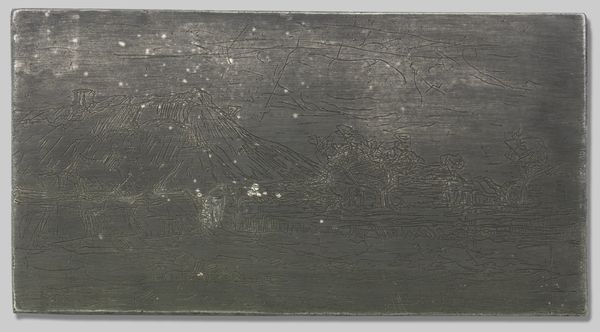
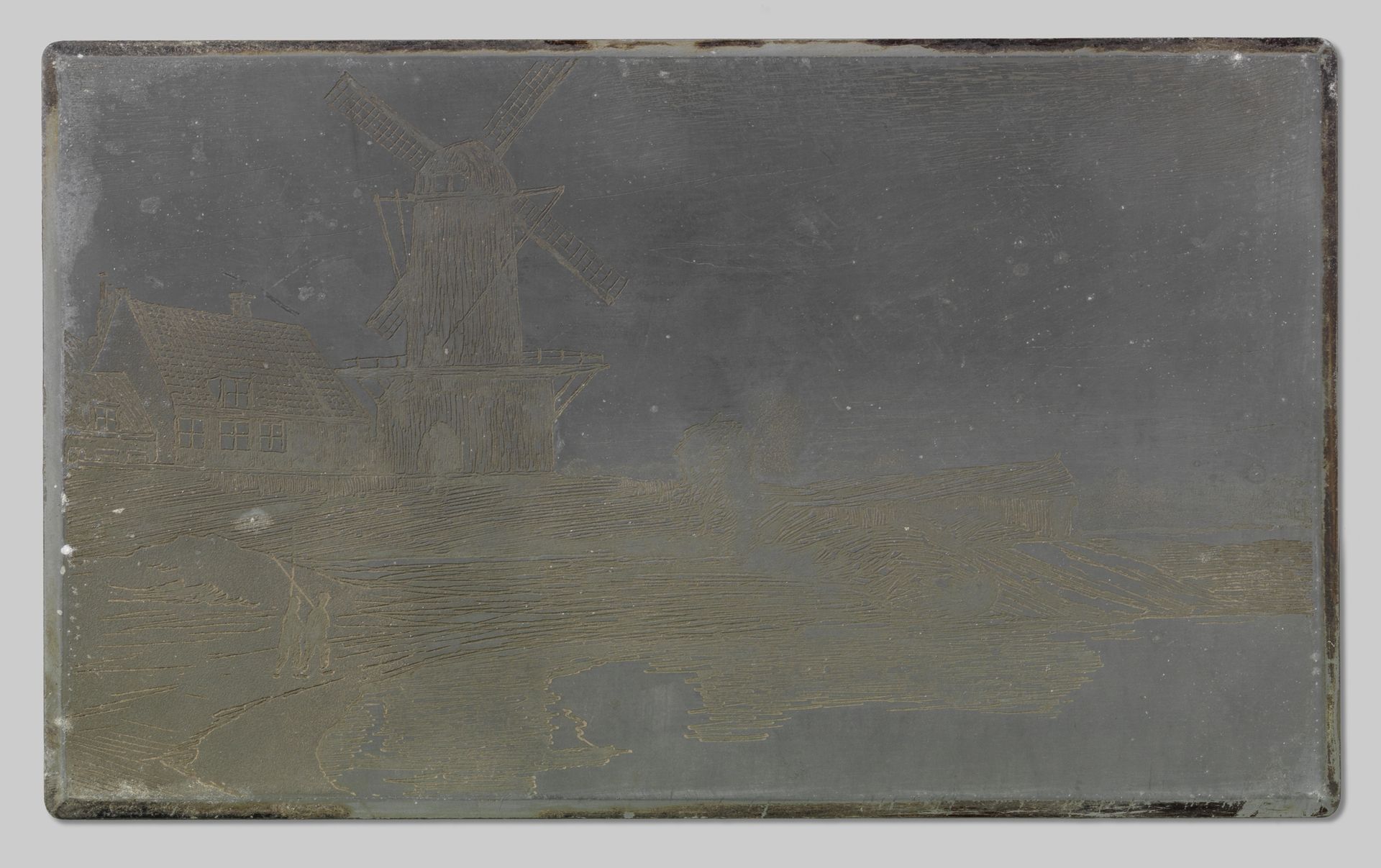
Editor: This is "Molen aan het water, Wijk bij Duurstede," an etching on paper by Willem Witsen, from around 1906. It feels so quiet and still; the monochromatic palette and the reflections in the water create a sense of profound stillness. How do you interpret this work? Curator: That stillness, I think, speaks volumes. Consider the context: early 20th century, industrialization rapidly transforming landscapes. This image, though seemingly simple, becomes an act of resistance. It romanticizes the pre-industrial, the agrarian. The windmill, a symbol of Dutch identity and ingenuity, is juxtaposed with the quiet flow of the water. It makes me wonder: is Witsen offering a critique of progress, longing for a connection to a simpler, perhaps idealized, past? Who do you think this piece speaks to and why? Editor: I can definitely see that tension. I guess, viewing it today, in an even more technologically advanced world, that longing is still incredibly relevant, maybe even amplified? The return to simplicity is romantic for us now. Curator: Exactly. It becomes a commentary on our own relationship to technology and nature. Also, consider the etching medium itself - a traditional technique, consciously chosen to depict this scene. It suggests a deliberate return to older methods of production, further highlighting the artist's ideological stance. Editor: So, Witsen isn't just depicting a landscape, he's making a statement about societal values and our relationship with the past. Curator: Precisely. The quietness of the scene isn't just aesthetic; it's a call to reflect on what we've gained and lost in the pursuit of progress. The piece subtly pushes back against dominant narratives of modernization. Editor: I hadn't considered that depth initially; I was focused on the surface beauty, the quietness. But now, seeing it as a dialogue with progress and a reflection on cultural identity makes it much more powerful. Thanks so much! Curator: Indeed. These landscapes aren't mere documents. They can be read as historical arguments for cultural identity and reflections of the relationship between technological growth and nostalgic imagery. It's been enlightening.

Artwork details
- Medium
- drawing, print, etching, paper
- Dimensions
- height 151 mm, width 251 mm
- Location
- Rijksmuseum
- Copyright
- Rijks Museum: Open Domain
Tags
Comments
Share your thoughts
About this artwork
Editor: This is "Molen aan het water, Wijk bij Duurstede," an etching on paper by Willem Witsen, from around 1906. It feels so quiet and still; the monochromatic palette and the reflections in the water create a sense of profound stillness. How do you interpret this work? Curator: That stillness, I think, speaks volumes. Consider the context: early 20th century, industrialization rapidly transforming landscapes. This image, though seemingly simple, becomes an act of resistance. It romanticizes the pre-industrial, the agrarian. The windmill, a symbol of Dutch identity and ingenuity, is juxtaposed with the quiet flow of the water. It makes me wonder: is Witsen offering a critique of progress, longing for a connection to a simpler, perhaps idealized, past? Who do you think this piece speaks to and why? Editor: I can definitely see that tension. I guess, viewing it today, in an even more technologically advanced world, that longing is still incredibly relevant, maybe even amplified? The return to simplicity is romantic for us now. Curator: Exactly. It becomes a commentary on our own relationship to technology and nature. Also, consider the etching medium itself - a traditional technique, consciously chosen to depict this scene. It suggests a deliberate return to older methods of production, further highlighting the artist's ideological stance. Editor: So, Witsen isn't just depicting a landscape, he's making a statement about societal values and our relationship with the past. Curator: Precisely. The quietness of the scene isn't just aesthetic; it's a call to reflect on what we've gained and lost in the pursuit of progress. The piece subtly pushes back against dominant narratives of modernization. Editor: I hadn't considered that depth initially; I was focused on the surface beauty, the quietness. But now, seeing it as a dialogue with progress and a reflection on cultural identity makes it much more powerful. Thanks so much! Curator: Indeed. These landscapes aren't mere documents. They can be read as historical arguments for cultural identity and reflections of the relationship between technological growth and nostalgic imagery. It's been enlightening.
Comments
Share your thoughts