About this artwork
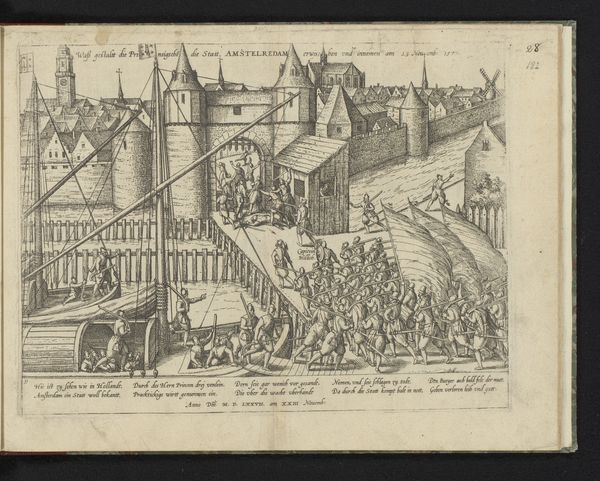
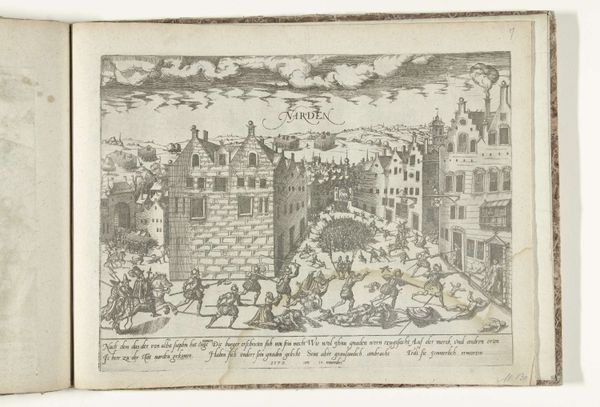
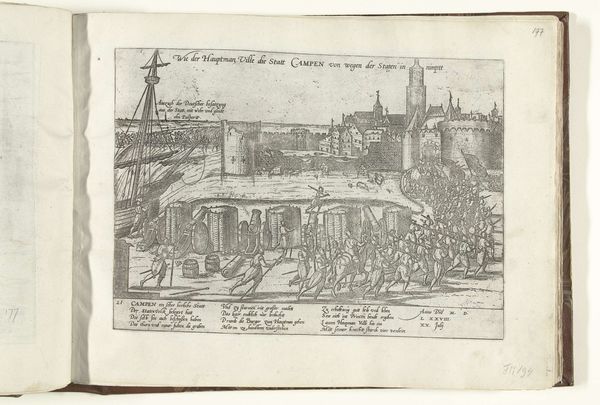
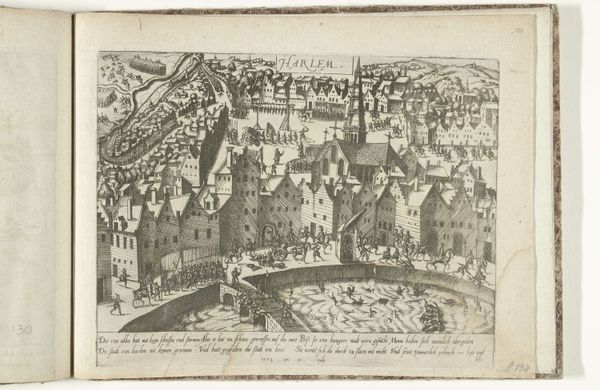
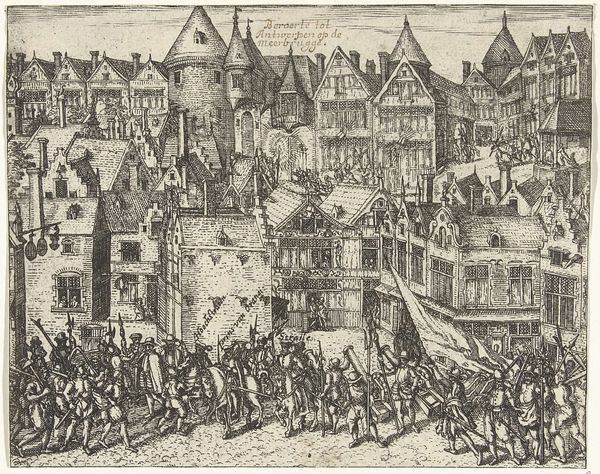
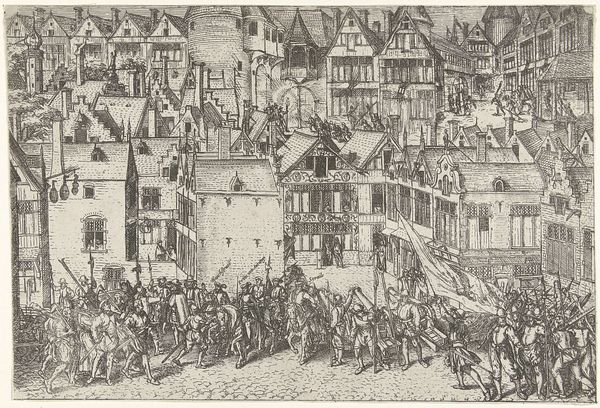
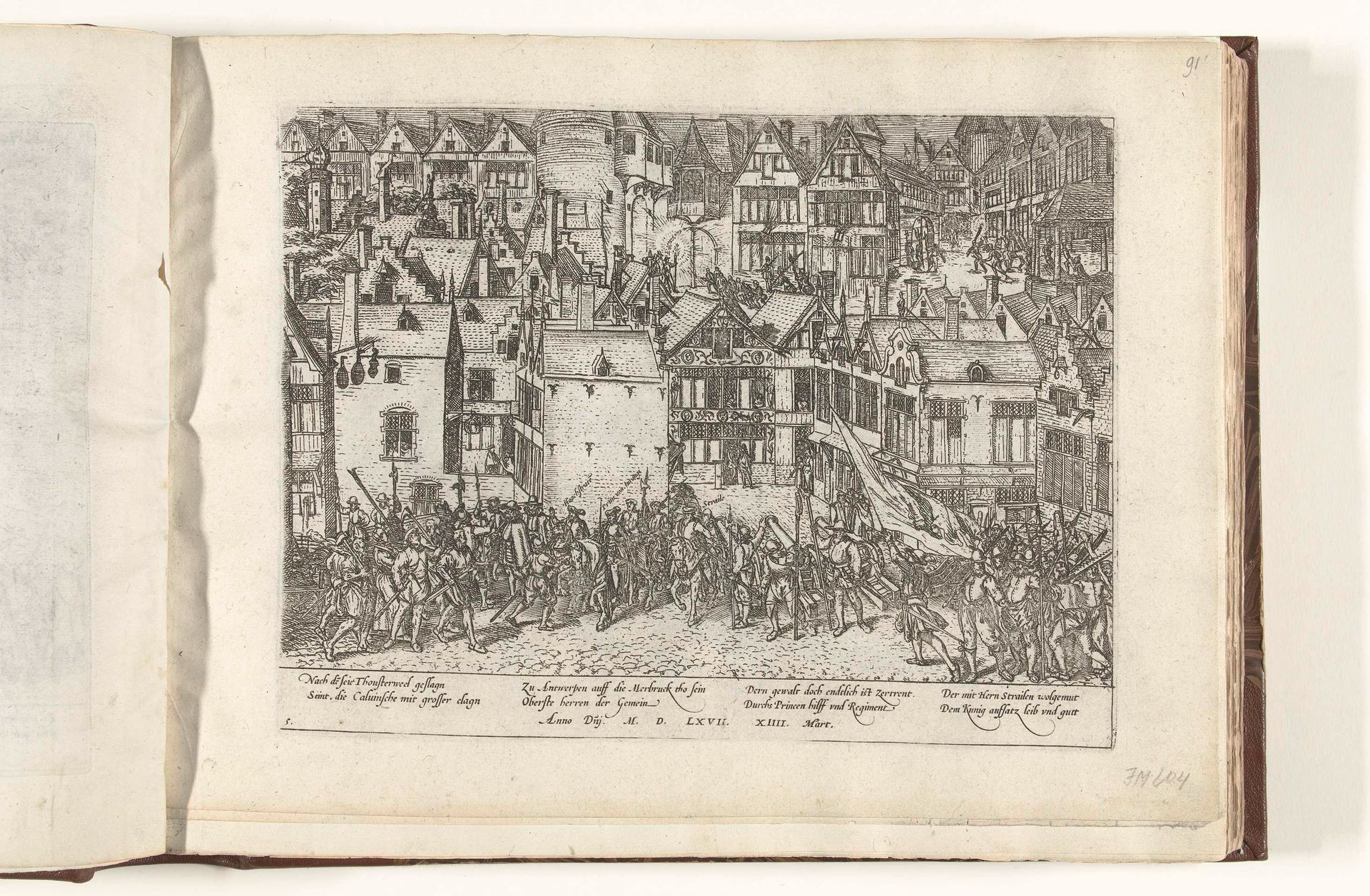
This is Frans Hogenberg's "Calvinistisch oproer in Antwerpen bedwongen, 1567", an engraving from 1567. Immediately, the density of the composition strikes us, filled with architectural details and figures, rendered in stark black lines against the white of the paper. Hogenberg uses a high vantage point, creating a panoramic view of the tumultuous event unfolding below. Notice how he employs linear perspective, not to create an illusion of depth, but to flatten the scene, emphasizing the multitude of bodies and buildings crammed into the frame. This compression serves to heighten the sense of chaos and conflict. The artist meticulously details the architecture. But these elements don't serve as a neutral backdrop, instead they function as active participants in the drama. The buildings loom over the scene, their rigid geometry contrasting with the organic forms of the human figures, caught in the act of suppressing the riot. The engraving, in its very structure, mirrors the sociopolitical climate of the time. It invites us to consider how such a seemingly simple medium can be deployed to document, interpret, and ultimately shape our understanding of historical events.
Calvinistisch oproer in Antwerpen bedwongen, 1567 1567 - 1570

Frans Hogenberg
1540 - 1590Location
RijksmuseumArtwork details
- Medium
- print, engraving
- Dimensions
- height 210 mm, width 280 mm
- Location
- Rijksmuseum
- Copyright
- Rijks Museum: Open Domain
Tags
medieval
landscape
cityscape
history-painting
northern-renaissance
engraving
Comments
No comments
About this artwork
This is Frans Hogenberg's "Calvinistisch oproer in Antwerpen bedwongen, 1567", an engraving from 1567. Immediately, the density of the composition strikes us, filled with architectural details and figures, rendered in stark black lines against the white of the paper. Hogenberg uses a high vantage point, creating a panoramic view of the tumultuous event unfolding below. Notice how he employs linear perspective, not to create an illusion of depth, but to flatten the scene, emphasizing the multitude of bodies and buildings crammed into the frame. This compression serves to heighten the sense of chaos and conflict. The artist meticulously details the architecture. But these elements don't serve as a neutral backdrop, instead they function as active participants in the drama. The buildings loom over the scene, their rigid geometry contrasting with the organic forms of the human figures, caught in the act of suppressing the riot. The engraving, in its very structure, mirrors the sociopolitical climate of the time. It invites us to consider how such a seemingly simple medium can be deployed to document, interpret, and ultimately shape our understanding of historical events.
Comments
No comments