About this artwork
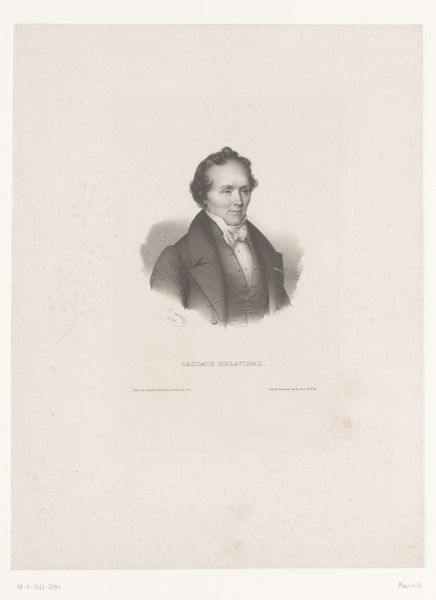
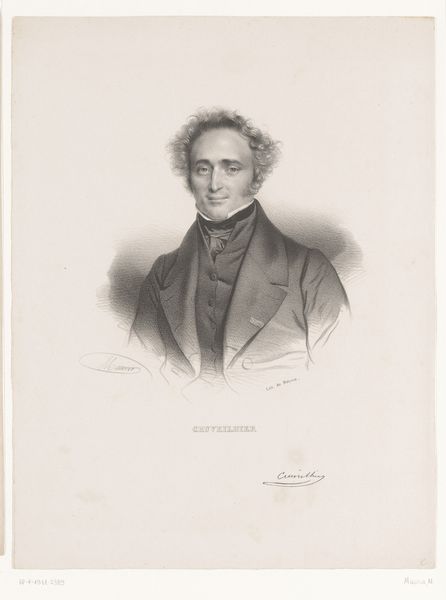
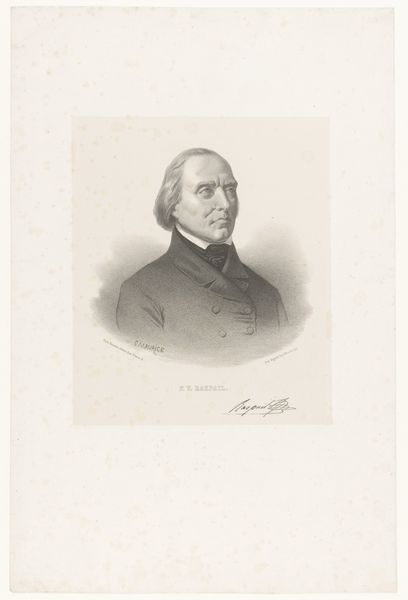
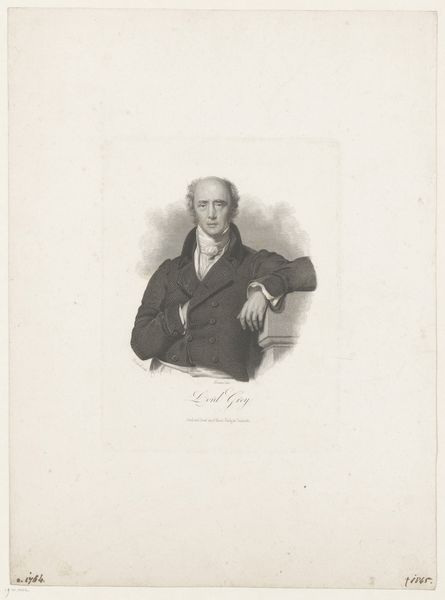
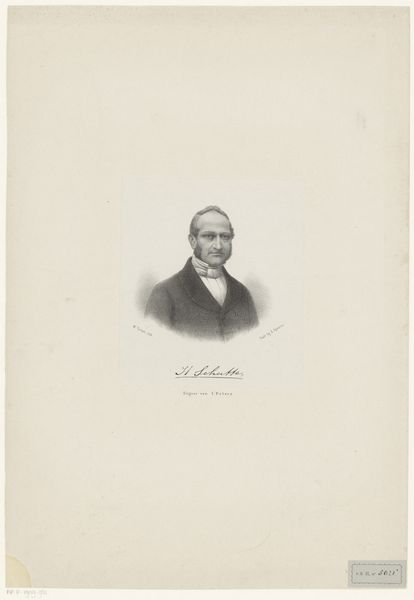
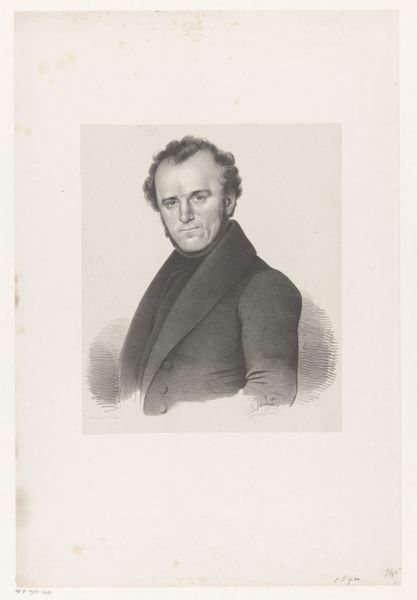
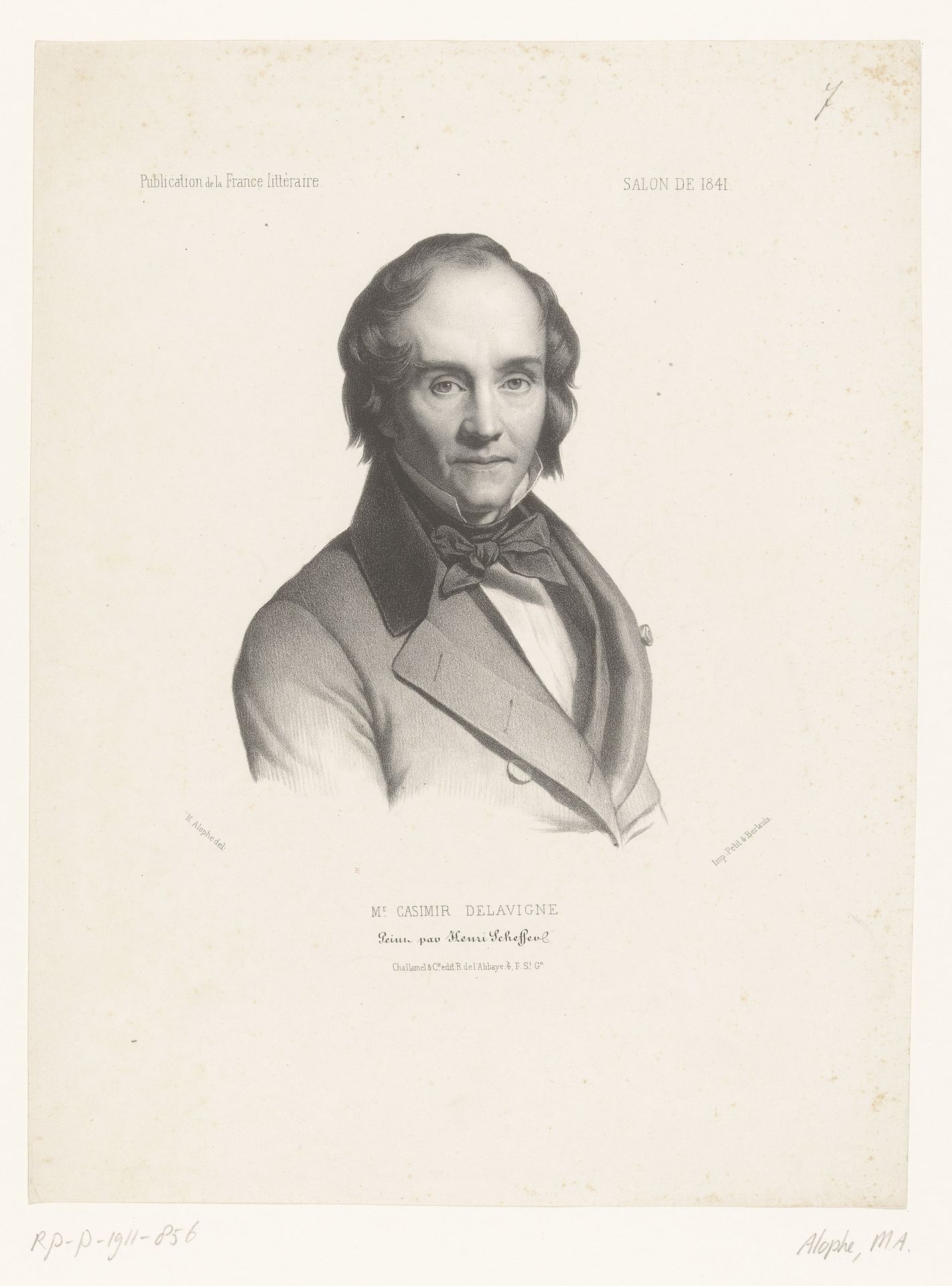
Marie-Alexandre Alophe created this print of the poet Casimir Delavigne. It was featured in the Salon de 1841, and signals the complex intersection of art, literature, and politics in 19th century France. The print captures the likeness of Delavigne, known for his politically charged plays and poems. These works often reflected the turbulent times following the French Revolution and the subsequent restoration of the monarchy. Delavigne navigated these shifting political landscapes, and his writings engaged with themes of nationalism, liberty, and social justice. Alophe, as the artist, was working within a society that was rapidly changing. His work would have been received and interpreted through the lenses of these socio-political currents. The image serves not just as a representation of an individual, but as an artifact deeply embedded within the discourses of its time.
Portret van de dichter Casimir Delavigne
1841

Marie-Alexandre Alophe
1811 - 1883Location
RijksmuseumArtwork details
- Medium
- drawing, graphite, pen
- Dimensions
- height 308 mm, width 237 mm
- Location
- Rijksmuseum
- Copyright
- Rijks Museum: Open Domain
Tags
Comments
Share your thoughts
About this artwork
Marie-Alexandre Alophe created this print of the poet Casimir Delavigne. It was featured in the Salon de 1841, and signals the complex intersection of art, literature, and politics in 19th century France. The print captures the likeness of Delavigne, known for his politically charged plays and poems. These works often reflected the turbulent times following the French Revolution and the subsequent restoration of the monarchy. Delavigne navigated these shifting political landscapes, and his writings engaged with themes of nationalism, liberty, and social justice. Alophe, as the artist, was working within a society that was rapidly changing. His work would have been received and interpreted through the lenses of these socio-political currents. The image serves not just as a representation of an individual, but as an artifact deeply embedded within the discourses of its time.
Comments
Share your thoughts