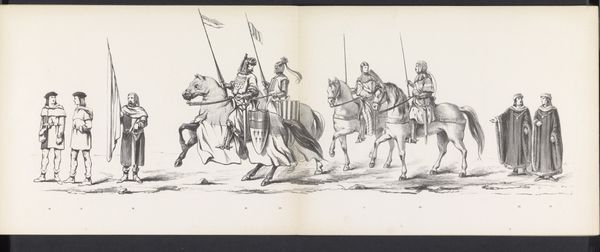
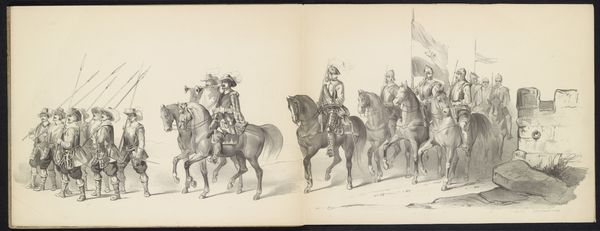
print, woodcut
#
art-nouveau
# print
#
landscape
#
woodcut
#
cityscape
Dimensions: height 312 mm, width 250 mm
Copyright: Rijks Museum: Open Domain
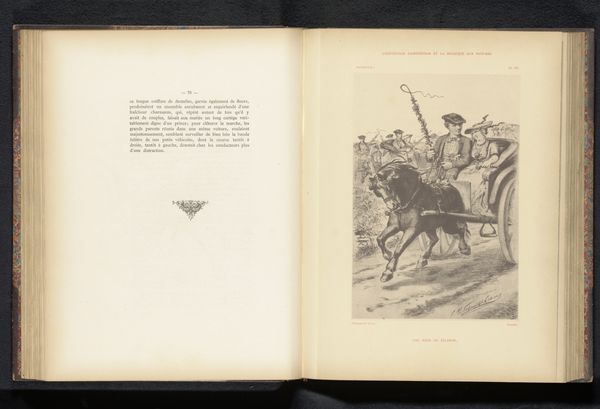
Editor: So this is "Paard en wagen met koetsier en hoornblazer," or "Horse and carriage with coachman and horn blower" by William Nicholson, from 1898. It's a woodcut print, currently held at the Rijksmuseum. I'm struck by its graphic style; the bold lines and limited color palette feel very modern. What is your interpretation of this print? Curator: This piece provides an interesting glimpse into the performance of wealth and status at the turn of the century. Carriages, like the one depicted, weren’t just transportation; they were potent symbols of social standing. Consider the figures within - their attire and bearing suggest a particular class. Do you notice any element that draws particular attention to this dynamic? Editor: I see what you mean, particularly the figures with the top hats and formal dress—very different from everyday clothing. The inclusion of the horn blower also seems deliberately performative. Curator: Exactly! It's an image carefully constructed to project a certain kind of power. Beyond the individuals, consider how the cityscape in the background, although subtly rendered, implies a controlled, 'civilized' environment suited for such displays. The Art Nouveau style contributes to the overall aesthetic, doesn't it? Editor: It does, particularly through its emphasis on the stylized elements of the forms. Given its medium as a print, does it point to anything regarding the artist's intended audience, and what role he plays as an image-maker of his time? Curator: The work exists as a print— likely intended for wider circulation. Thus it brings to question; how Nicholson wanted his artistic creation to be regarded publicly? Does this piece intend to merely illustrate affluent culture, or critique it, perhaps with its very aesthetic choices? It's the intersection of artistry and the socio-political reality that really draws me in. Editor: This has completely changed how I see it. I'm no longer just observing a carriage; I'm examining a snapshot of a very specific societal structure and its values. Thanks for making it so much richer. Curator: My pleasure! That's the beauty of looking at art through the lens of history – it opens up these layers of understanding and invites critical engagement.
Comments
No comments
Be the first to comment and join the conversation on the ultimate creative platform.
 Collect
 React
React Comment
More like this