About this artwork
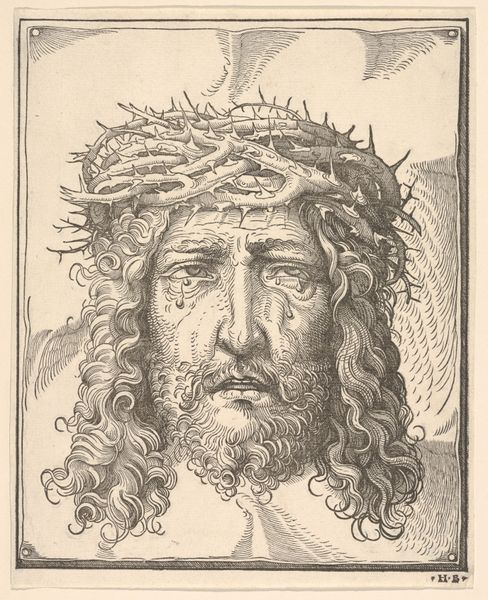
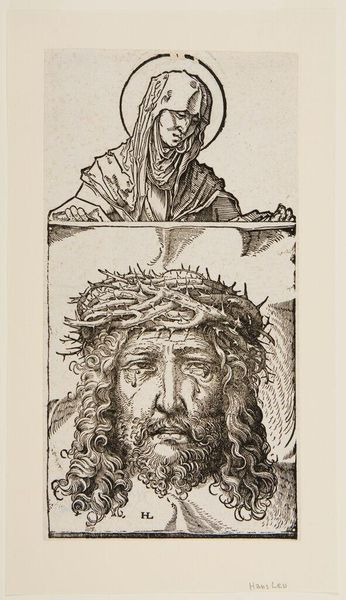
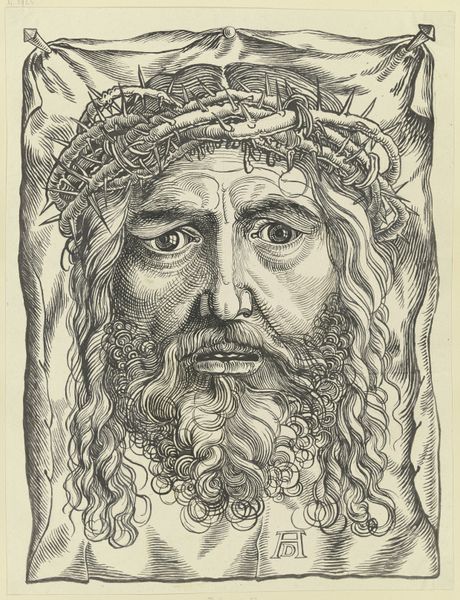
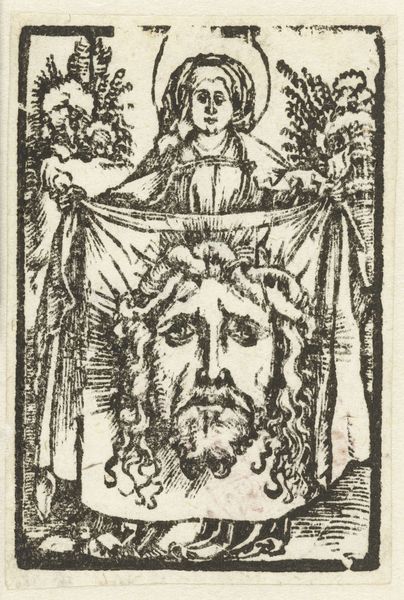
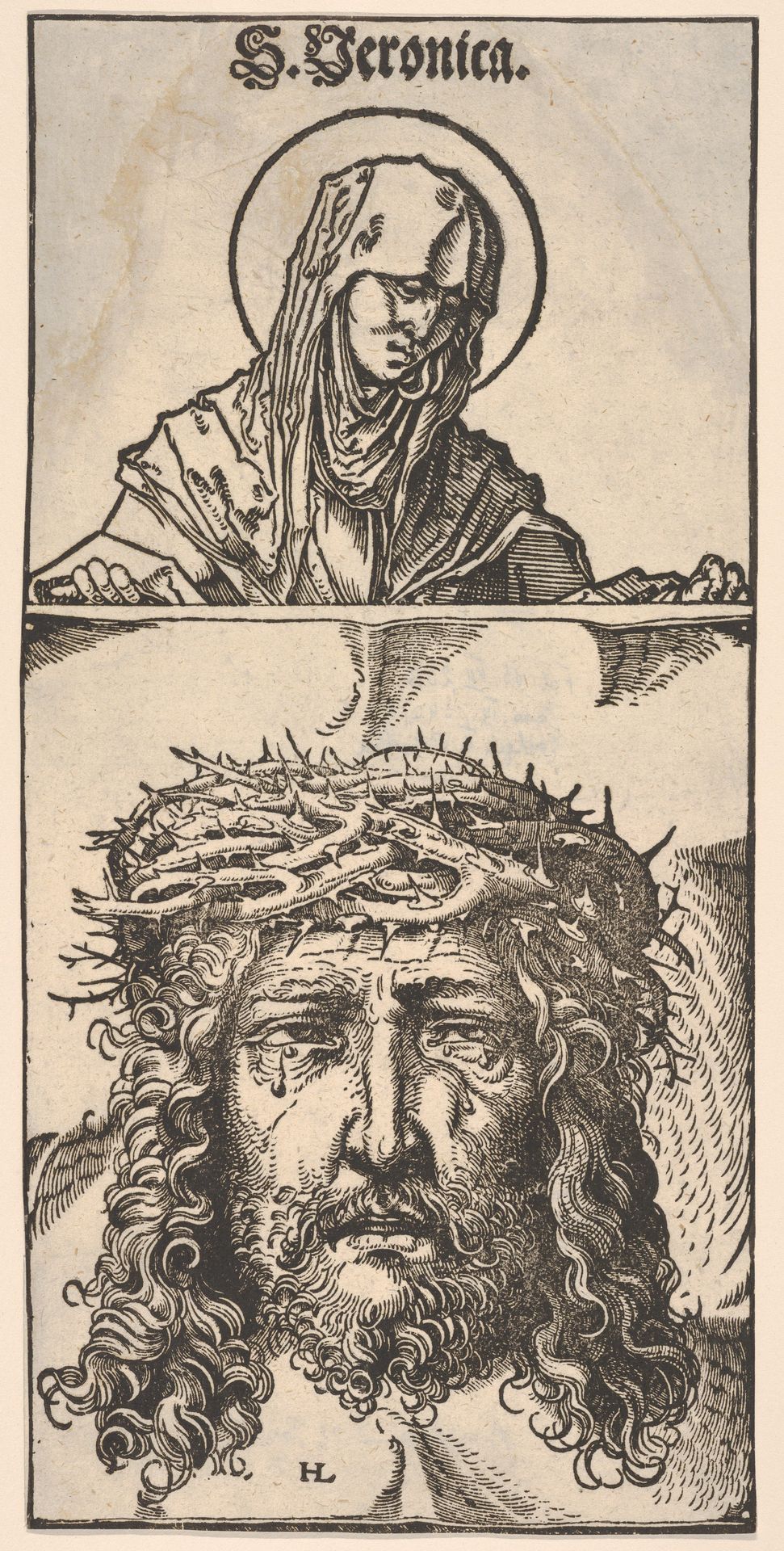
Hans Burgkmair created this woodcut of Saint Veronica with the Vernicle. It presents us with a powerful image of Saint Veronica displaying the Holy Face of Jesus. Veronica, framed by a halo, presents the cloth with reverence. Below, Christ’s face is etched with suffering, crowned with thorns. The image is a potent symbol of compassion and faith, capturing a moment of human kindness amidst divine suffering. The veil bearing Christ’s image has a long history, appearing in various forms across different cultures. Similar images appear in Byzantine art. This motif recurs throughout the centuries, each time carrying echoes of the original event, yet adapting to new cultural contexts. The suffering face of Christ, captured on the veil, serves as a mirror reflecting humanity’s own pain and mortality. It is an attempt to connect with the divine through the act of remembrance. This work engages viewers on a deep, subconscious level, reminding us of the timeless human capacity for empathy and the enduring quest for spiritual connection.
Saint Veronica with the Vernicle 1498 - 1531


Artwork details
- Medium
- drawing, print
- Dimensions
- Sheet: 12 7/16 × 6 3/16 in. (31.6 × 15.7 cm)
- Location
- Metropolitan Museum of Art, New York, NY
- Copyright
- Public Domain
Tags
drawing
pen drawing
mechanical pen drawing
pen illustration
pen sketch
personal sketchbook
ink drawing experimentation
pen-ink sketch
pen work
sketchbook drawing
sketchbook art
Comments
No comments
About this artwork
Hans Burgkmair created this woodcut of Saint Veronica with the Vernicle. It presents us with a powerful image of Saint Veronica displaying the Holy Face of Jesus. Veronica, framed by a halo, presents the cloth with reverence. Below, Christ’s face is etched with suffering, crowned with thorns. The image is a potent symbol of compassion and faith, capturing a moment of human kindness amidst divine suffering. The veil bearing Christ’s image has a long history, appearing in various forms across different cultures. Similar images appear in Byzantine art. This motif recurs throughout the centuries, each time carrying echoes of the original event, yet adapting to new cultural contexts. The suffering face of Christ, captured on the veil, serves as a mirror reflecting humanity’s own pain and mortality. It is an attempt to connect with the divine through the act of remembrance. This work engages viewers on a deep, subconscious level, reminding us of the timeless human capacity for empathy and the enduring quest for spiritual connection.
Comments
No comments