About this artwork
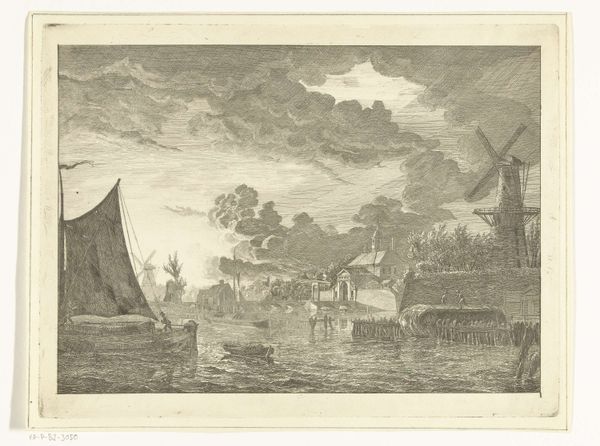
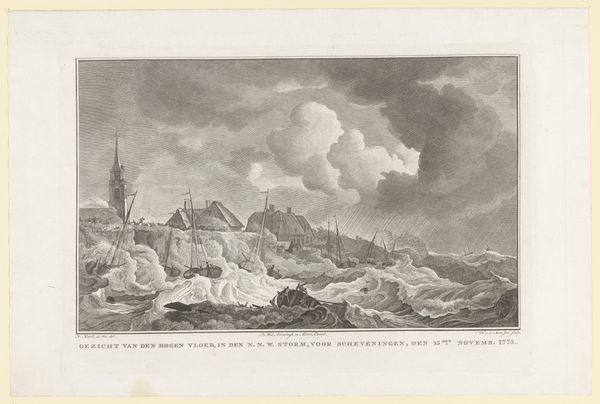
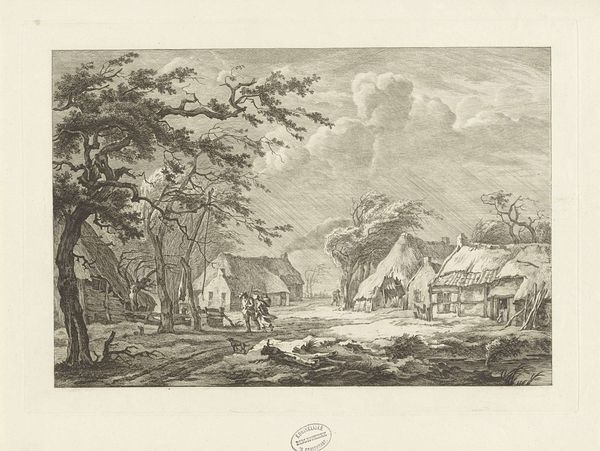
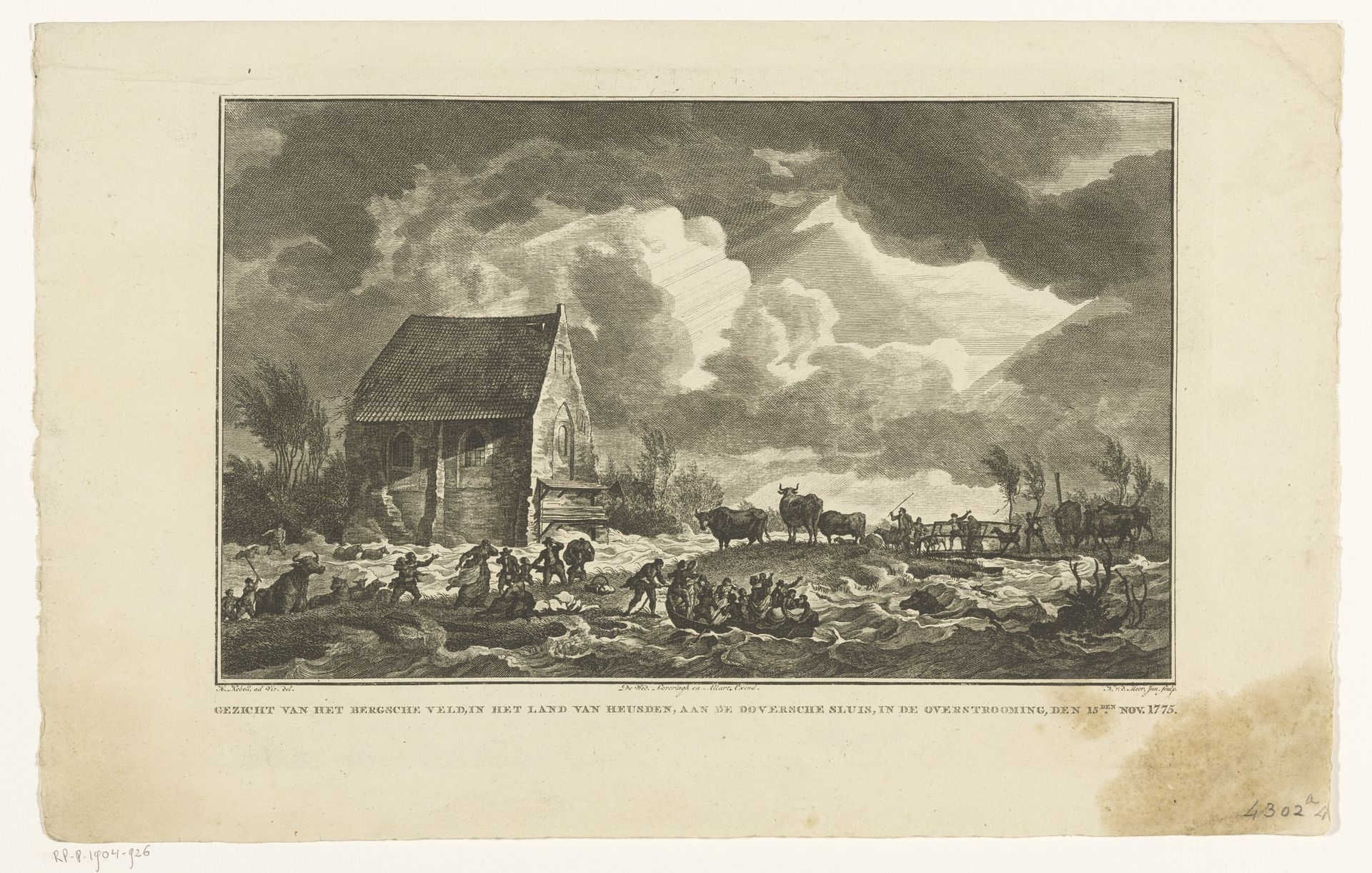
This etching depicts the Overstroming van het Bergse Veld in het Land van Heusden of the 15th of November, 1775 by Noach van der Meer the Younger. The composition is dominated by a dramatic contrast between the turbulent sky and the flooded landscape. The varying states of the etched lines, from dark and dense to light and sparse, create texture to emphasize the chaos of the natural disaster. The structural organization of the etching uses the building on the left as a compositional anchor, directing our gaze across the scene. Notice how the artist uses line and form to convey a sense of movement and instability. The linear strokes of the etching create a visual rhythm. This rhythm guides our eyes across the artwork, mirroring the chaotic flow of the floodwaters and the desperate attempts of the figures to navigate the deluge. The etching serves not only as a record, but a lens to see how humans confront forces beyond their control. This artwork is a visual testimony of a specific historical event and an invitation to reflect on broader themes of human resilience and the power of nature.
Overstroming van het Bergse Veld in het Land van Heusden, 15 november 1775
1775 - 1776

Noach van der (II) Meer
1741 - 1822Location
RijksmuseumArtwork details
- Medium
- print, engraving
- Dimensions
- height 212 mm, width 307 mm
- Location
- Rijksmuseum
- Copyright
- Rijks Museum: Open Domain
Tags
Comments
Share your thoughts
About this artwork
This etching depicts the Overstroming van het Bergse Veld in het Land van Heusden of the 15th of November, 1775 by Noach van der Meer the Younger. The composition is dominated by a dramatic contrast between the turbulent sky and the flooded landscape. The varying states of the etched lines, from dark and dense to light and sparse, create texture to emphasize the chaos of the natural disaster. The structural organization of the etching uses the building on the left as a compositional anchor, directing our gaze across the scene. Notice how the artist uses line and form to convey a sense of movement and instability. The linear strokes of the etching create a visual rhythm. This rhythm guides our eyes across the artwork, mirroring the chaotic flow of the floodwaters and the desperate attempts of the figures to navigate the deluge. The etching serves not only as a record, but a lens to see how humans confront forces beyond their control. This artwork is a visual testimony of a specific historical event and an invitation to reflect on broader themes of human resilience and the power of nature.
Comments
Share your thoughts