About this artwork
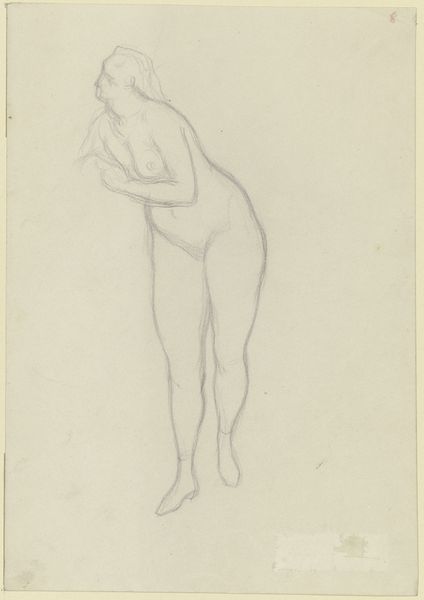
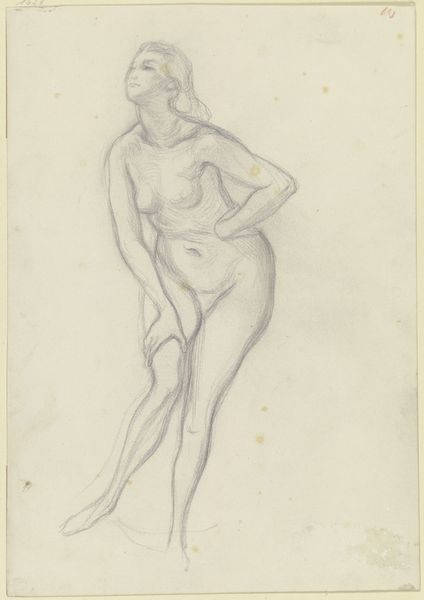
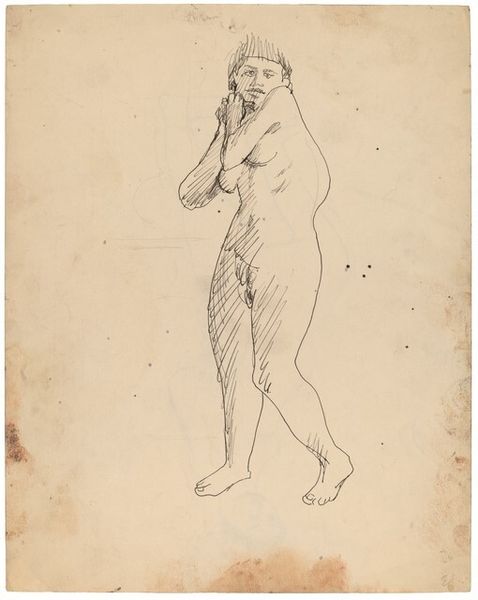
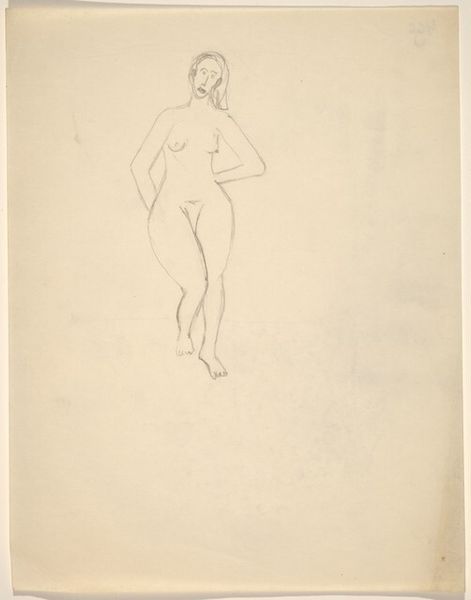
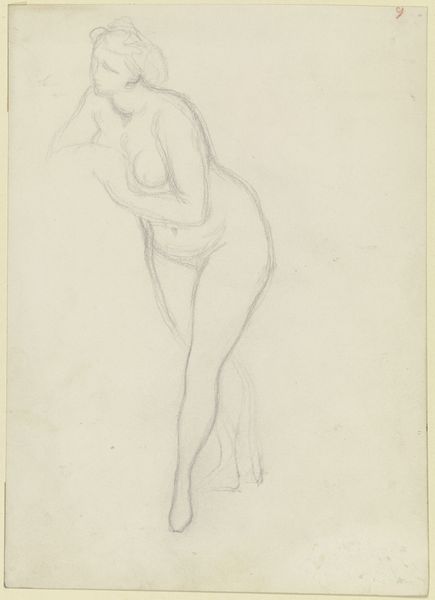
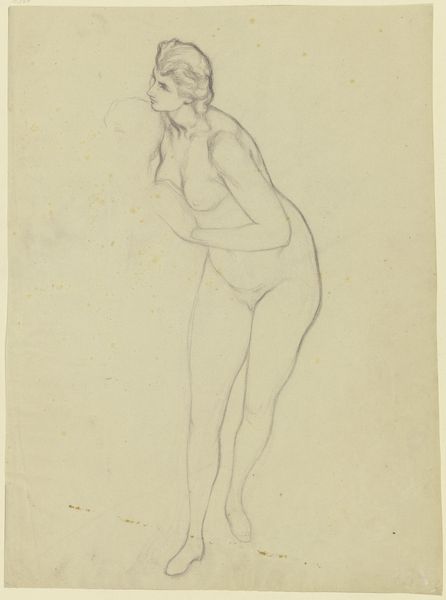
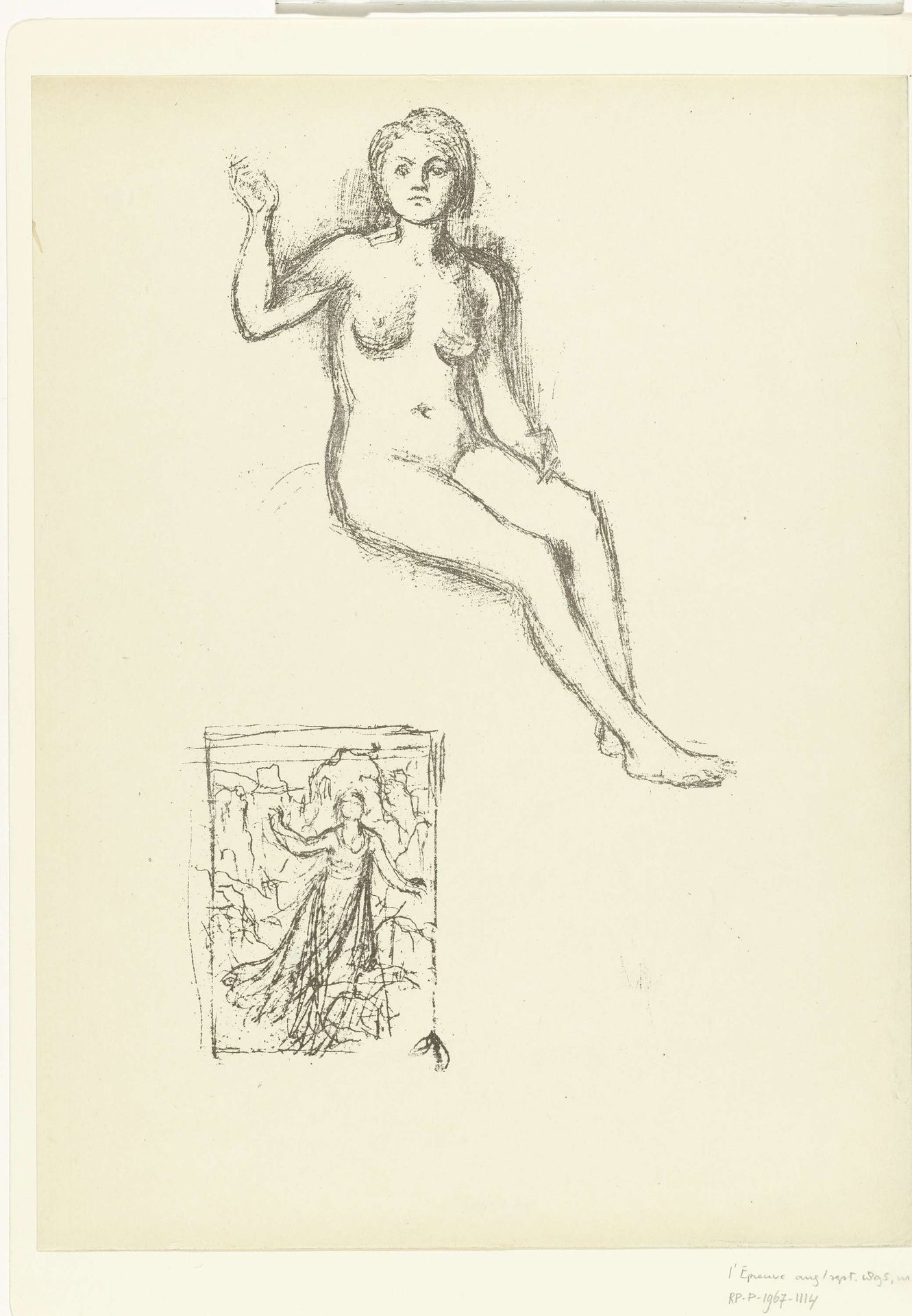
Pierre Puvis de Chavannes created this drawing, Zittende naakte vrouw en vrouw in landschap, using graphite on paper. Graphite, in its raw state, is a form of carbon, and we see it here used as a medium for swift, economical mark-making. The artist’s hand is evident in the texture of the strokes. With each line, a build-up of material and tonal value articulates two female figures. Graphite’s matte surface absorbs light, giving the image a soft and understated quality. The lower figure, a landscape with a woman, evokes classical friezes, but the rapidly sketched and insubstantial strokes of graphite give it a provisional, incomplete quality. The choice of such a humble material implies the artist's concern with a work's immediate and primary elements. This challenges traditional notions of fine art, which would expect a more refined medium like oil paint. It emphasizes the significance of process in understanding the artwork's meaning. By understanding this, we can better understand the labor and context embedded within the artwork.
Zittende naakte vrouw en vrouw in landschap Possibly 1895 - 1898

Pierre Puvis de Chavannes
1824 - 1898Location
RijksmuseumArtwork details
- Dimensions
- height 310 mm, width 180 mm
- Location
- Rijksmuseum
- Copyright
- Rijks Museum: Open Domain
Comments
No comments
About this artwork
Pierre Puvis de Chavannes created this drawing, Zittende naakte vrouw en vrouw in landschap, using graphite on paper. Graphite, in its raw state, is a form of carbon, and we see it here used as a medium for swift, economical mark-making. The artist’s hand is evident in the texture of the strokes. With each line, a build-up of material and tonal value articulates two female figures. Graphite’s matte surface absorbs light, giving the image a soft and understated quality. The lower figure, a landscape with a woman, evokes classical friezes, but the rapidly sketched and insubstantial strokes of graphite give it a provisional, incomplete quality. The choice of such a humble material implies the artist's concern with a work's immediate and primary elements. This challenges traditional notions of fine art, which would expect a more refined medium like oil paint. It emphasizes the significance of process in understanding the artwork's meaning. By understanding this, we can better understand the labor and context embedded within the artwork.
Comments
No comments