About this artwork
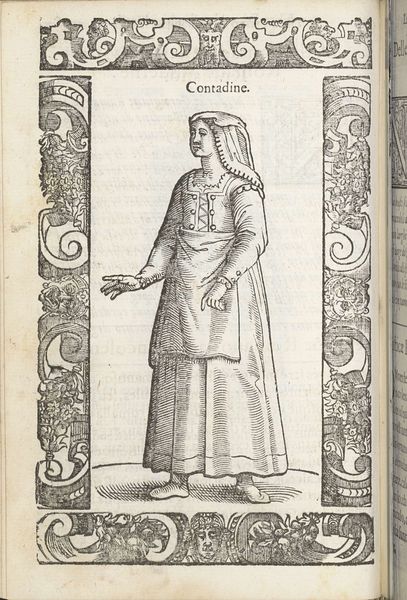
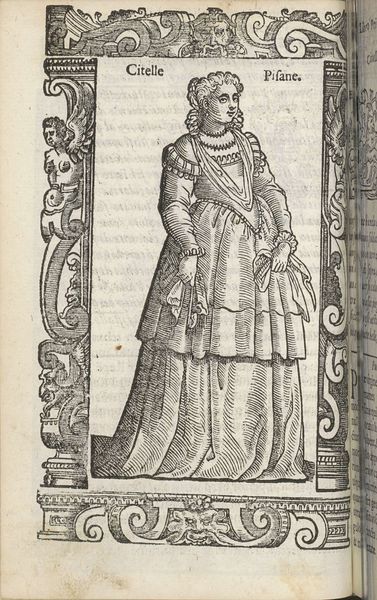
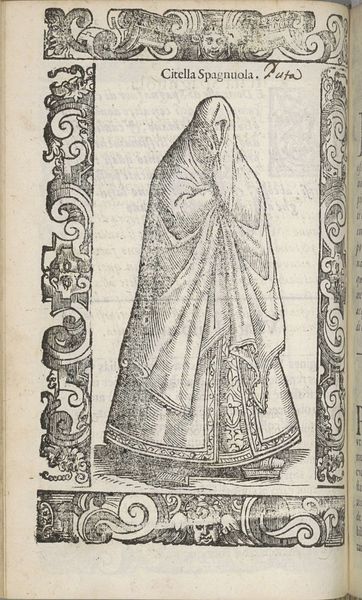
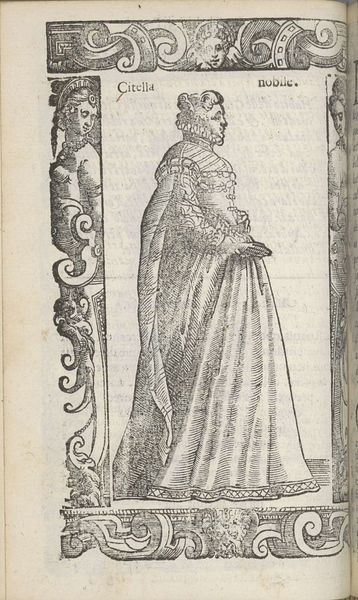
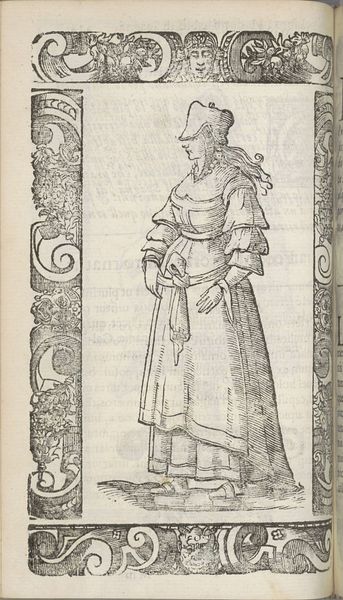
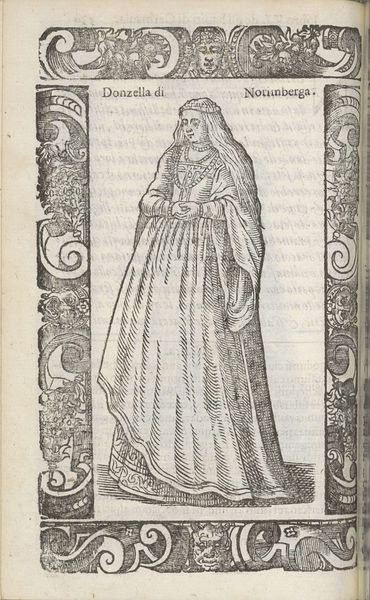
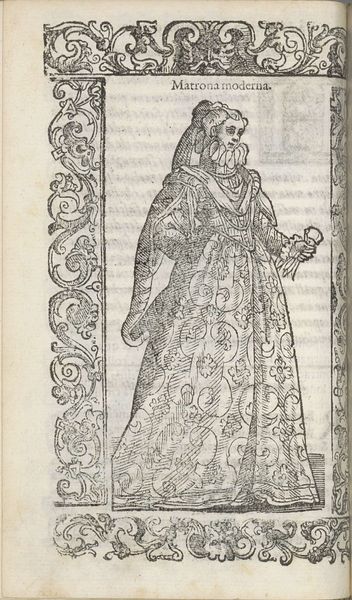
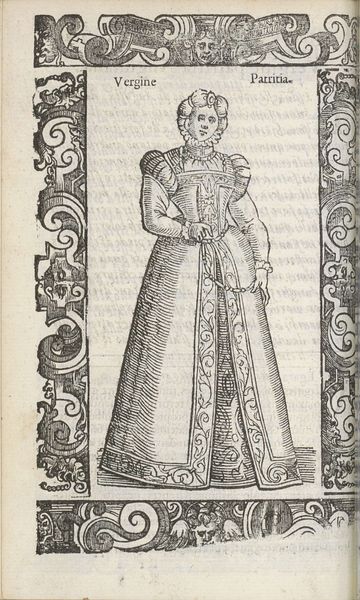
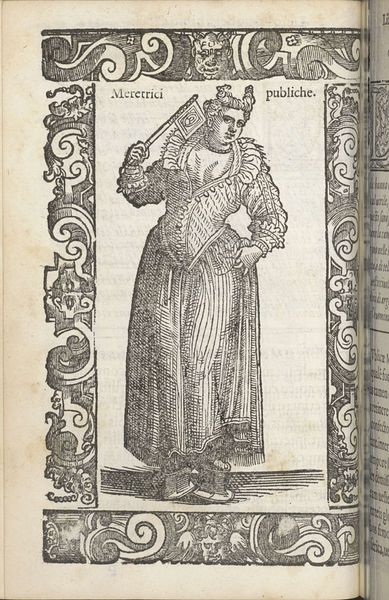
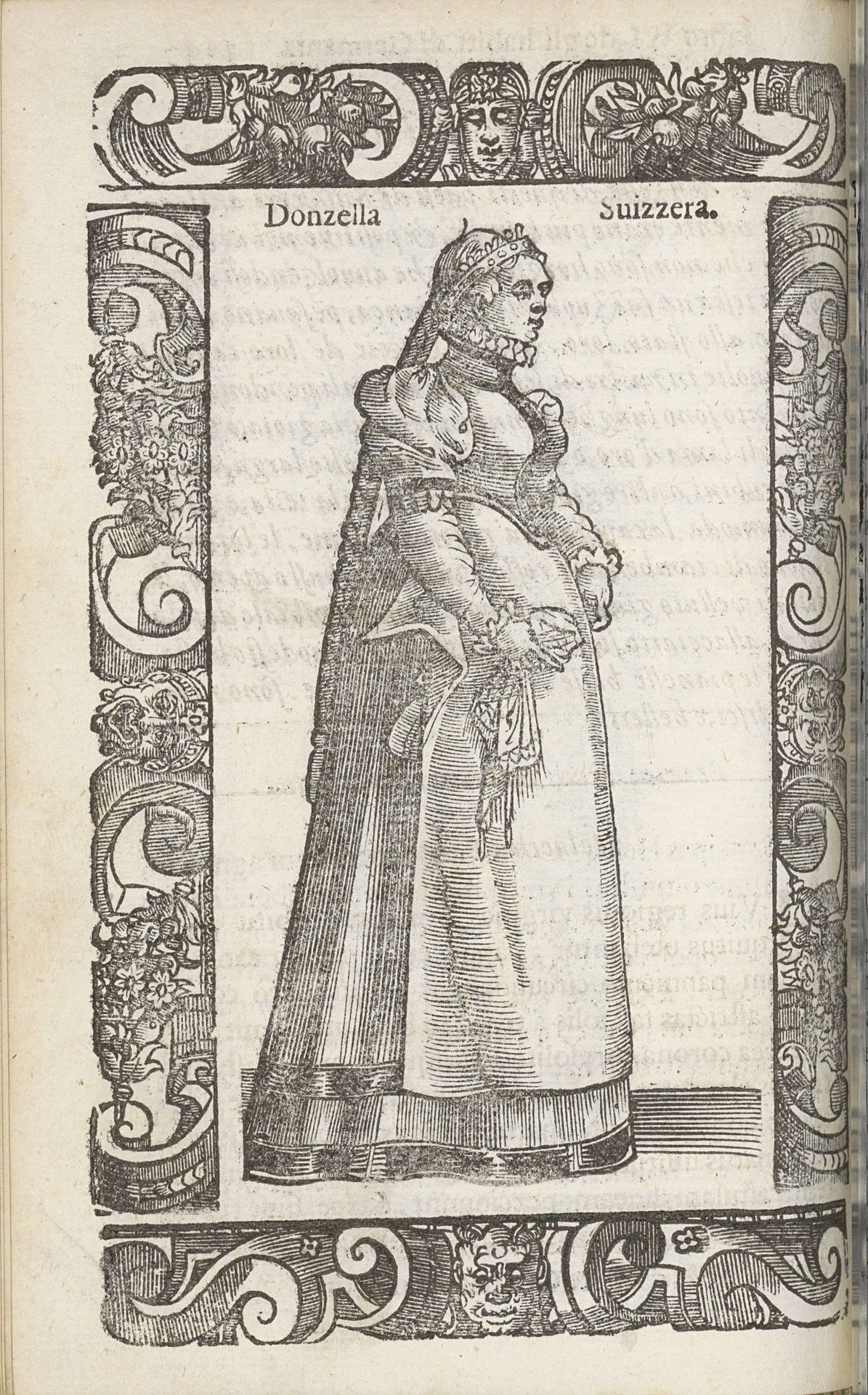
This engraving, titled "Donzella Suizzera," presents a Swiss maiden framed by symbolic motifs, capturing a glimpse into 16th-century cultural identity. The borders teem with images of grotesque masks, flora and fauna, and human faces, all common elements of the grotesque style popular since the Renaissance rediscovery of classical antiquity. The grotesque, derived from the Italian "grottesca," refers to a style of decorative art characterized by fanciful combinations of human and animal forms with vegetal ornaments. These motifs hearken back to ancient Roman decorations found in the underground ruins, or "grotte." Notice how, over time, these fantastical, often unsettling images, originally intended to ward off evil, were reinterpreted and integrated into decorative schemes. The mask is a potent symbol, a visual echo across time, morphing from a protective emblem into a mere ornamental flourish. It reflects our complex relationship with the past, where fear and beauty intertwine, mirroring our subconscious anxieties and desires. The cyclical progression of this symbol is undeniable, resurfacing, evolving, and taking on new meanings across epochs.

Artwork details
- Medium
- print, engraving
- Dimensions
- height 167 mm, width 125 mm
- Copyright
- Rijks Museum: Open Domain
Tags
Comments
Share your thoughts
About this artwork
This engraving, titled "Donzella Suizzera," presents a Swiss maiden framed by symbolic motifs, capturing a glimpse into 16th-century cultural identity. The borders teem with images of grotesque masks, flora and fauna, and human faces, all common elements of the grotesque style popular since the Renaissance rediscovery of classical antiquity. The grotesque, derived from the Italian "grottesca," refers to a style of decorative art characterized by fanciful combinations of human and animal forms with vegetal ornaments. These motifs hearken back to ancient Roman decorations found in the underground ruins, or "grotte." Notice how, over time, these fantastical, often unsettling images, originally intended to ward off evil, were reinterpreted and integrated into decorative schemes. The mask is a potent symbol, a visual echo across time, morphing from a protective emblem into a mere ornamental flourish. It reflects our complex relationship with the past, where fear and beauty intertwine, mirroring our subconscious anxieties and desires. The cyclical progression of this symbol is undeniable, resurfacing, evolving, and taking on new meanings across epochs.
Comments
Share your thoughts