About this artwork
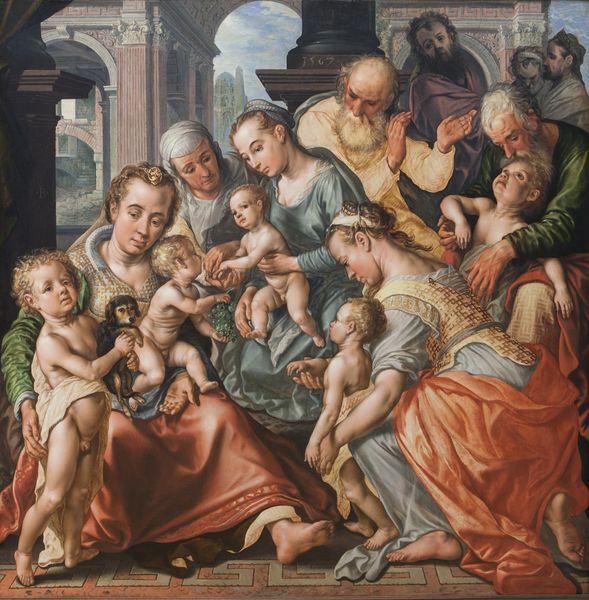
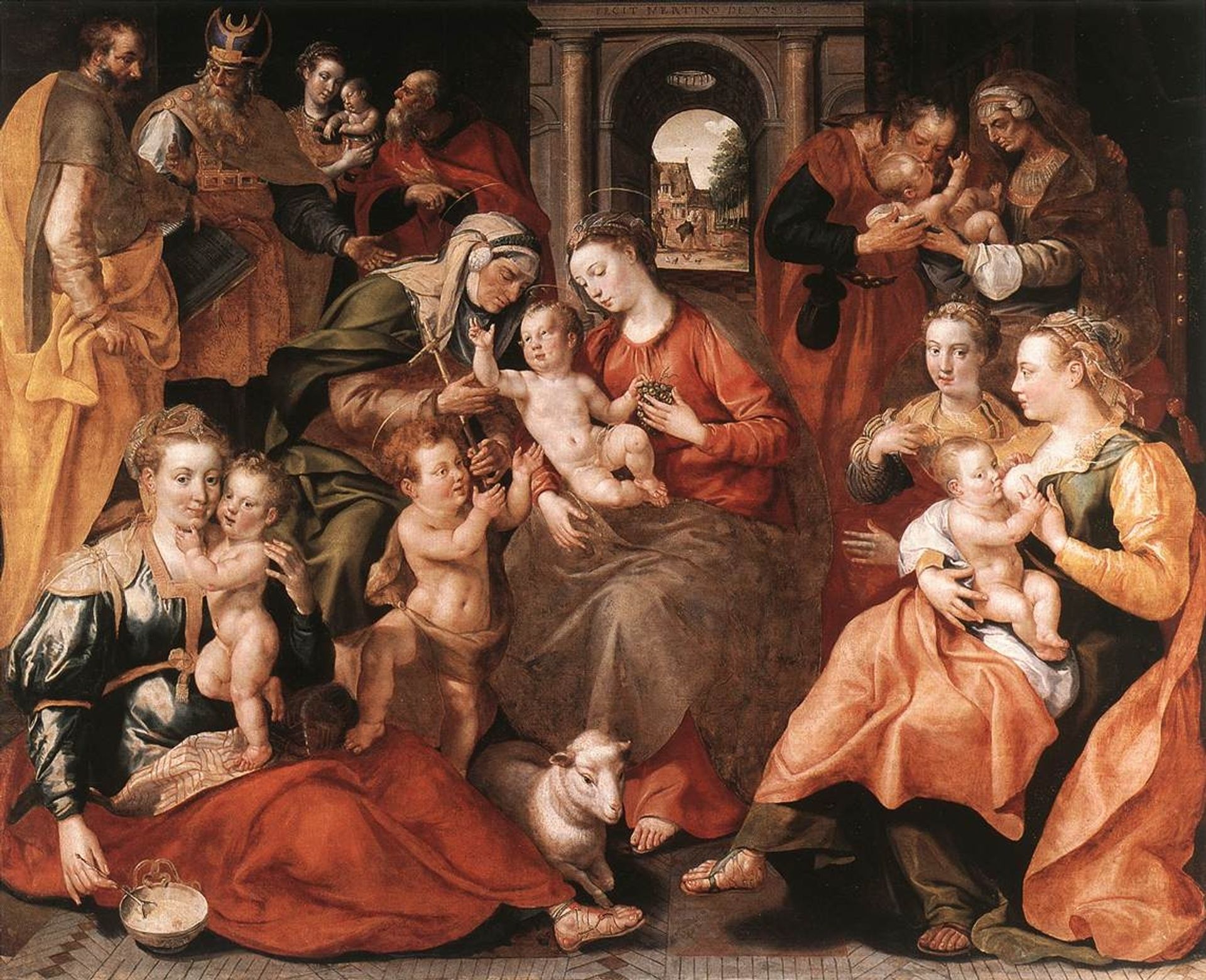
Maarten de Vos painted "The Family of St Anne" at an unknown date, now hanging in Ghent's Museum of Fine Arts. Immediately, the composition strikes one with its density, a multitude of figures interwoven with the familiar pyramidal arrangement. The colour scheme, dominated by rich reds and warm tones, lends an air of familiarity and intimacy, drawing the viewer into this sacred family gathering. De Vos’s approach to the subject matter, which is in line with post-Tridentine religious art, creates a sense of humanity and accessibility. The close-knit assemblage of generations serves not merely as a representation of a holy lineage, but as an assertion of familial values. The painting’s structure reflects its cultural context, using art to reinforce ideological foundations in Counter-Reformation Europe. The interplay of gazes and gestures suggests a network of relationships, underscoring the family as a cornerstone of society. Its enduring presence on the gallery wall signifies its continued relevance, inviting modern viewers to reflect on evolving notions of family, identity, and faith.
The Family of St Anne
1585

Maarten de Vos
1532 - 1603Location
Museum of Fine Arts, Ghent, BelgiumArtwork details
- Medium
- painting, oil-paint
- Location
- Museum of Fine Arts, Ghent, Belgium
- Copyright
- Public domain
Tags
Comments
Share your thoughts
About this artwork
Maarten de Vos painted "The Family of St Anne" at an unknown date, now hanging in Ghent's Museum of Fine Arts. Immediately, the composition strikes one with its density, a multitude of figures interwoven with the familiar pyramidal arrangement. The colour scheme, dominated by rich reds and warm tones, lends an air of familiarity and intimacy, drawing the viewer into this sacred family gathering. De Vos’s approach to the subject matter, which is in line with post-Tridentine religious art, creates a sense of humanity and accessibility. The close-knit assemblage of generations serves not merely as a representation of a holy lineage, but as an assertion of familial values. The painting’s structure reflects its cultural context, using art to reinforce ideological foundations in Counter-Reformation Europe. The interplay of gazes and gestures suggests a network of relationships, underscoring the family as a cornerstone of society. Its enduring presence on the gallery wall signifies its continued relevance, inviting modern viewers to reflect on evolving notions of family, identity, and faith.
Comments
Share your thoughts