About this artwork
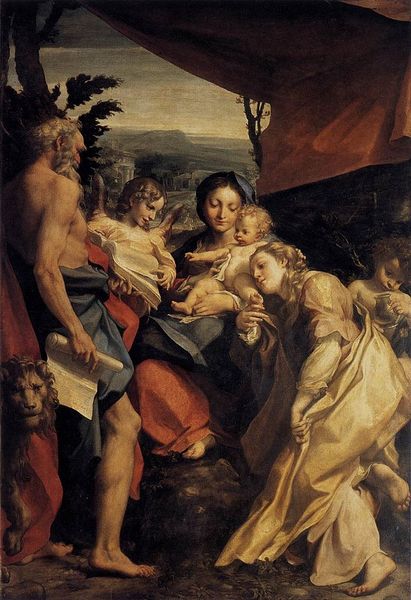
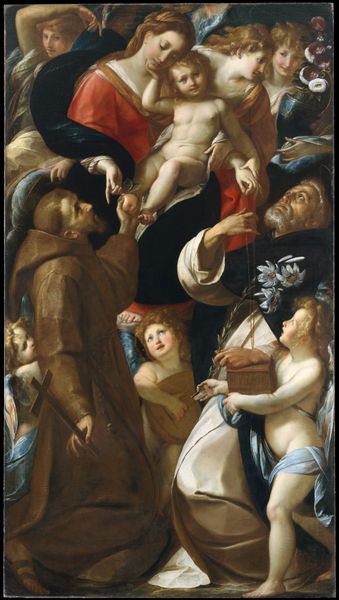
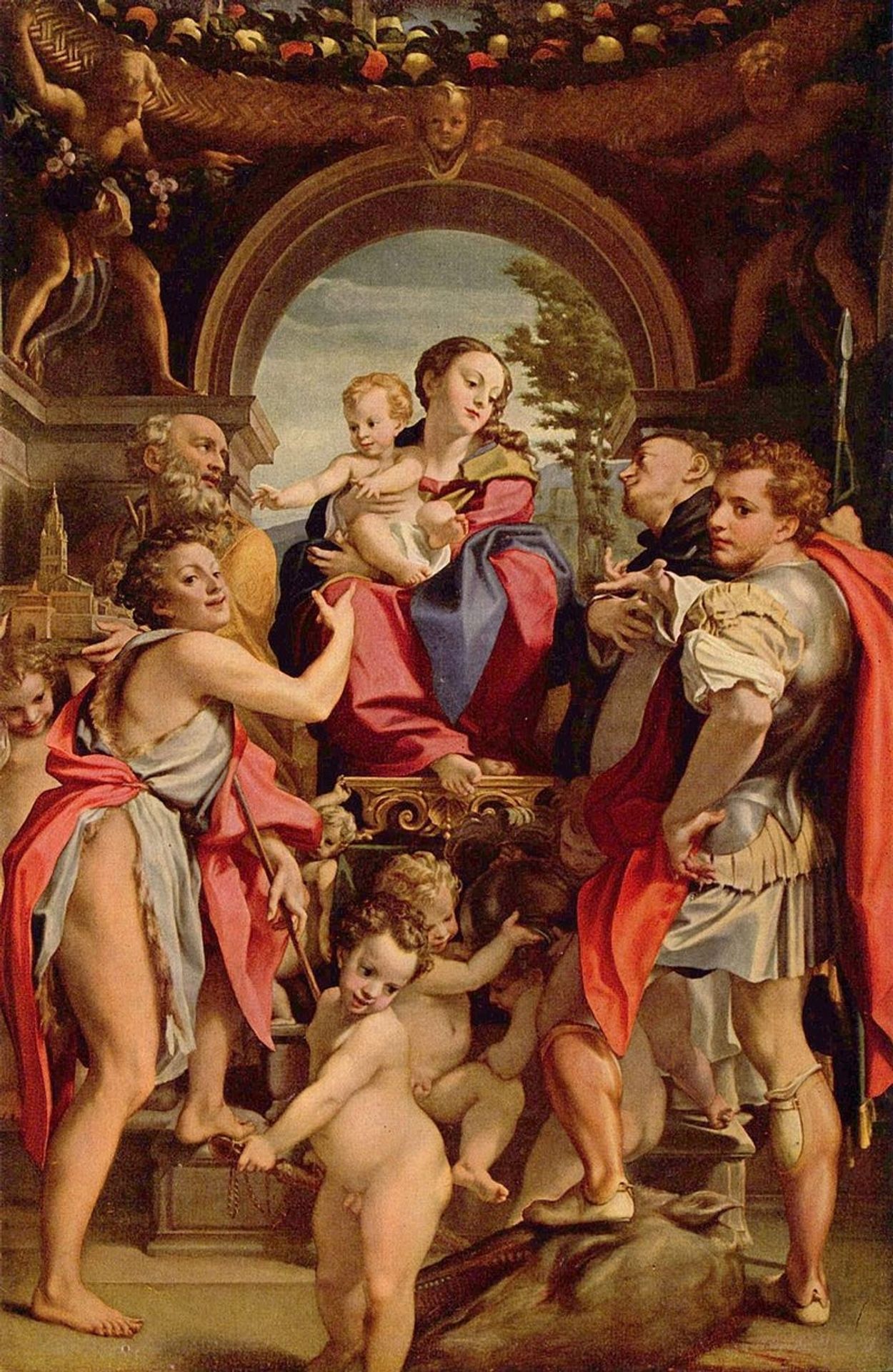
This is Correggio's "Madonna with St. George", an oil on panel painting of the early 16th century. It presents the Virgin Mary holding the infant Jesus, surrounded by saints and putti. The painting speaks to its time with its blend of religious themes and humanist ideals. Correggio was working in Parma, a city-state in present-day Italy, amidst the High Renaissance. The Catholic Church was a major patron of the arts, yet humanist thought was gaining prominence. Note the idealised forms and classical references, reflecting a renewed interest in ancient Greek and Roman culture. Saint George, for instance, is dressed in Roman military garb. Commissioned for a private chapel, the painting served both a devotional and a social function. The patrons, likely wealthy merchants, would have used it to display their piety and status. The social conditions that shaped this artwork can be further investigated through archival research, examining patronage records, and studying the intellectual history of the Italian Renaissance. The painting's meaning is thus contingent on its social and institutional context.
Madonna with St. George
1532

Correggio
1489 - 1534Location
Staatliche Kunstsammlungen Dresden, Dresden, GermanyArtwork details
- Medium
- painting, oil-paint
- Dimensions
- 285 x 190 cm
- Location
- Staatliche Kunstsammlungen Dresden, Dresden, Germany
- Copyright
- Public domain
Tags
Comments
Share your thoughts
About this artwork
This is Correggio's "Madonna with St. George", an oil on panel painting of the early 16th century. It presents the Virgin Mary holding the infant Jesus, surrounded by saints and putti. The painting speaks to its time with its blend of religious themes and humanist ideals. Correggio was working in Parma, a city-state in present-day Italy, amidst the High Renaissance. The Catholic Church was a major patron of the arts, yet humanist thought was gaining prominence. Note the idealised forms and classical references, reflecting a renewed interest in ancient Greek and Roman culture. Saint George, for instance, is dressed in Roman military garb. Commissioned for a private chapel, the painting served both a devotional and a social function. The patrons, likely wealthy merchants, would have used it to display their piety and status. The social conditions that shaped this artwork can be further investigated through archival research, examining patronage records, and studying the intellectual history of the Italian Renaissance. The painting's meaning is thus contingent on its social and institutional context.
Comments
Share your thoughts