About this artwork
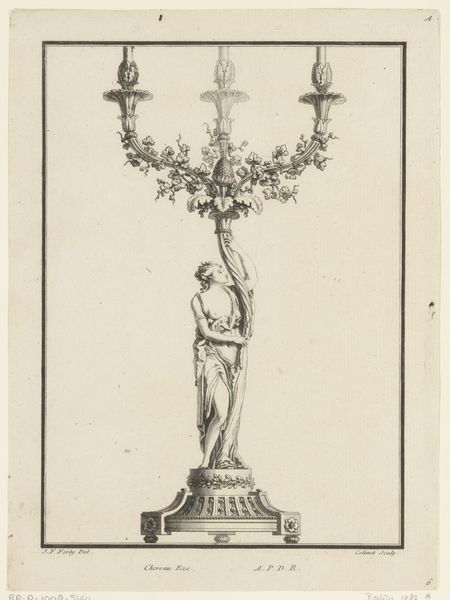
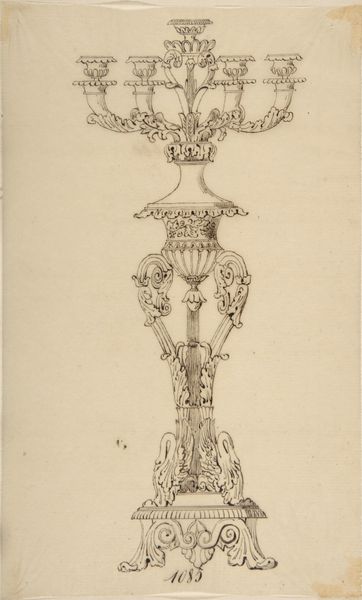
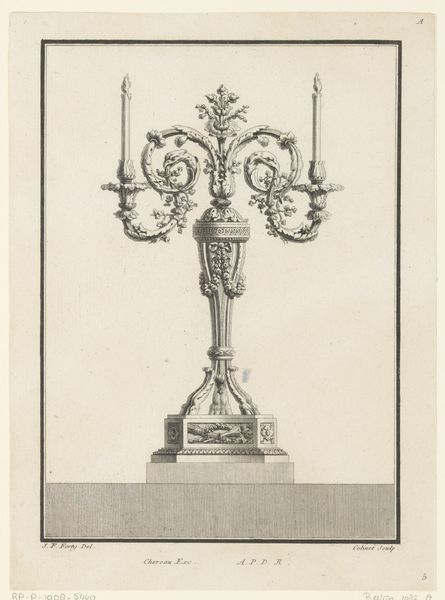
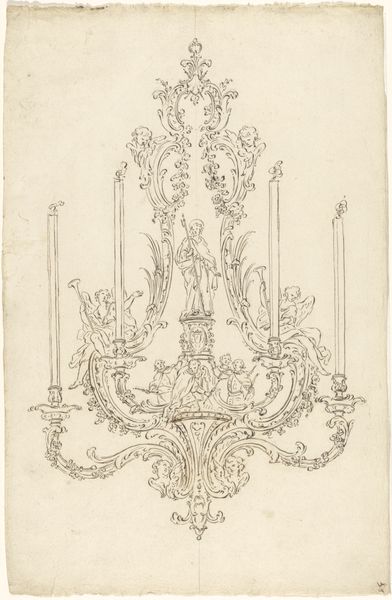
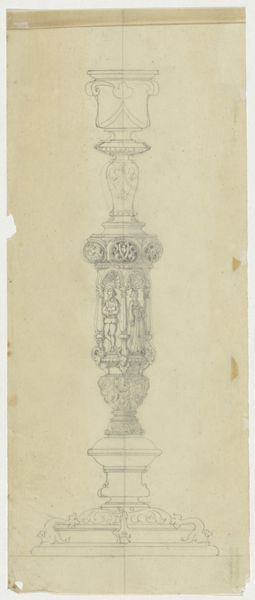
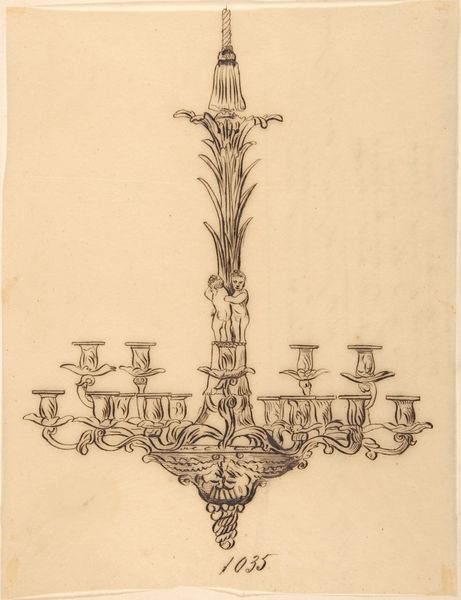
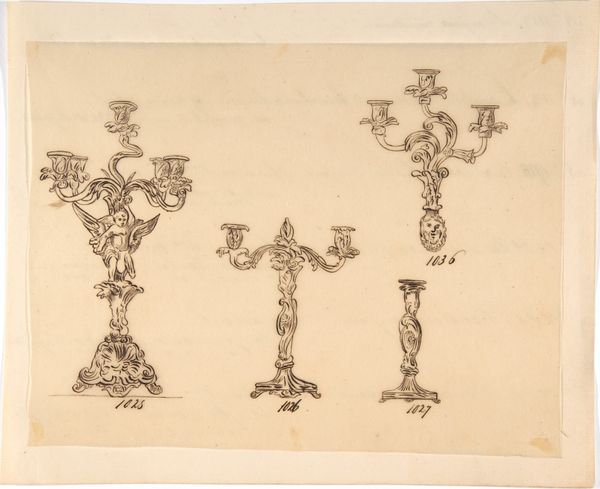
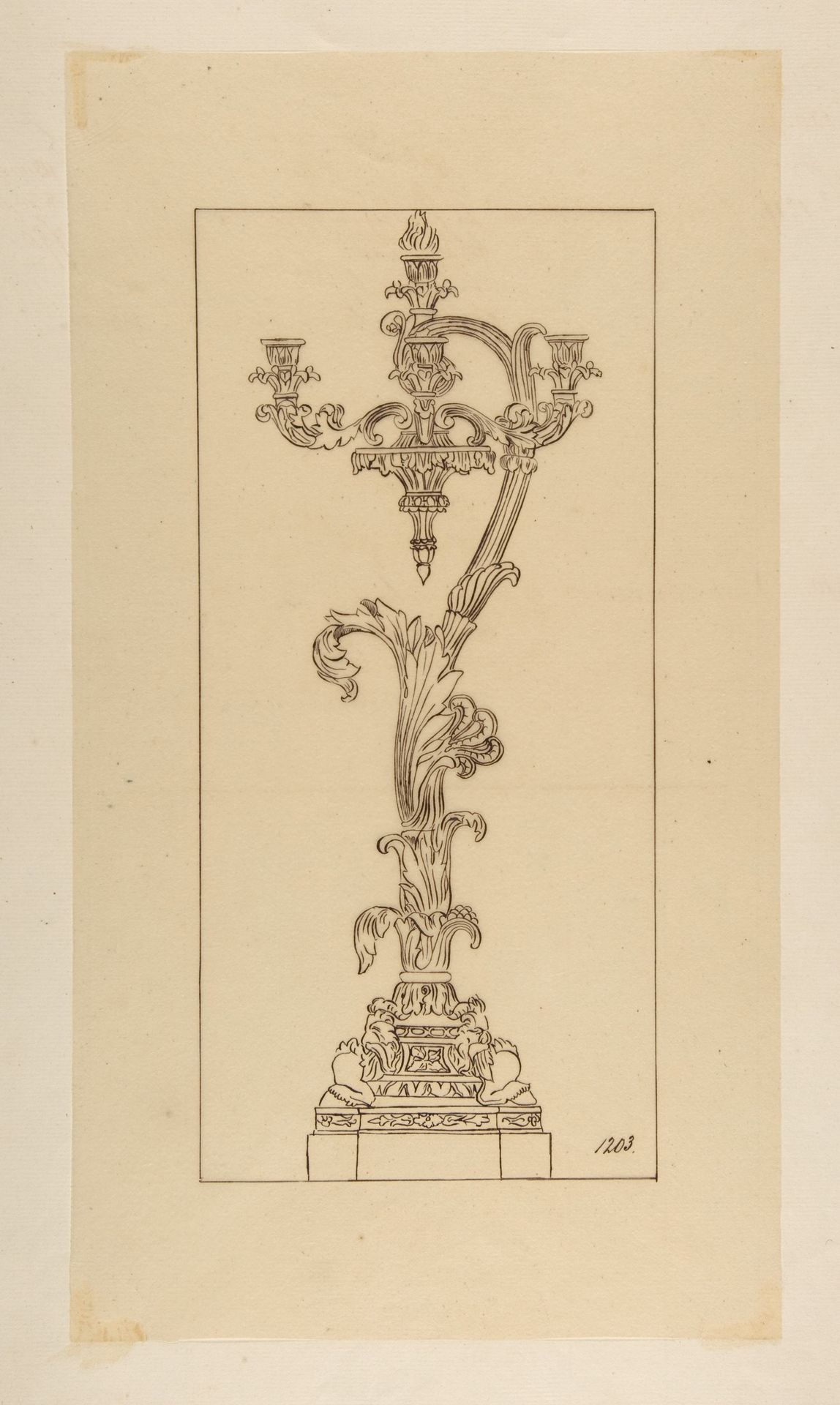
Curator: At first glance, I find it quite delicate, even frail. The starkness of the black lines on the aged paper lends it a somewhat haunting quality. Editor: Indeed. What we're observing here is a "Design for a Candelabra," a print from the 19th century, now residing at the Metropolitan Museum of Art. It is created anonymously. The artwork captures the aesthetic from the era and represents a very geometric form in decorative arts. Curator: Yes, those precise lines tracing what are ostensibly candle holders. To my eye, each tier seems to borrow from botanical forms—see the leaves gently unfurling? It almost evokes a strange, petrified plant reaching for light. Editor: The botanical elements are undeniable, but note how meticulously contained they are. The artist is harnessing those organic shapes, reigning them in through symmetry and precise geometry. Consider also that candelabras, throughout history, held a certain status. To have multiple light sources was power. Curator: The symmetry resonates, certainly a deliberate echo of formalized garden design of earlier eras, perhaps? Do you see the small figures or perhaps small statues around its base? They create another subtle tier within the whole symbolic framework. Editor: Excellent point, a further visual layer within its design. What stories or characters did these candelabras symbolize when they were actually in use? That may remain forever unrecorded but those representations offer so many symbolic possibilities to the thoughtful viewer. Curator: Exactly! A forgotten mythology shimmering behind those thin lines. Editor: Well said!
Design for a Candelabra
19th century


Artwork details
- Medium
- drawing, print
- Dimensions
- sheet: 13 7/8 x 7 11/16 in. (35.3 x 19.6 cm)
- Location
- Metropolitan Museum of Art, New York, NY
- Copyright
- Public Domain
Tags
drawing
geometric
decorative-art
Comments
Be the first to share your thoughts about this work.
About this artwork
Curator: At first glance, I find it quite delicate, even frail. The starkness of the black lines on the aged paper lends it a somewhat haunting quality. Editor: Indeed. What we're observing here is a "Design for a Candelabra," a print from the 19th century, now residing at the Metropolitan Museum of Art. It is created anonymously. The artwork captures the aesthetic from the era and represents a very geometric form in decorative arts. Curator: Yes, those precise lines tracing what are ostensibly candle holders. To my eye, each tier seems to borrow from botanical forms—see the leaves gently unfurling? It almost evokes a strange, petrified plant reaching for light. Editor: The botanical elements are undeniable, but note how meticulously contained they are. The artist is harnessing those organic shapes, reigning them in through symmetry and precise geometry. Consider also that candelabras, throughout history, held a certain status. To have multiple light sources was power. Curator: The symmetry resonates, certainly a deliberate echo of formalized garden design of earlier eras, perhaps? Do you see the small figures or perhaps small statues around its base? They create another subtle tier within the whole symbolic framework. Editor: Excellent point, a further visual layer within its design. What stories or characters did these candelabras symbolize when they were actually in use? That may remain forever unrecorded but those representations offer so many symbolic possibilities to the thoughtful viewer. Curator: Exactly! A forgotten mythology shimmering behind those thin lines. Editor: Well said!
Comments
Be the first to share your thoughts about this work.