About this artwork
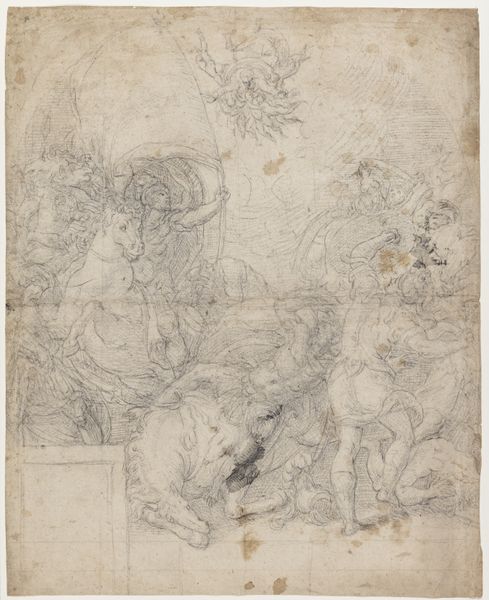
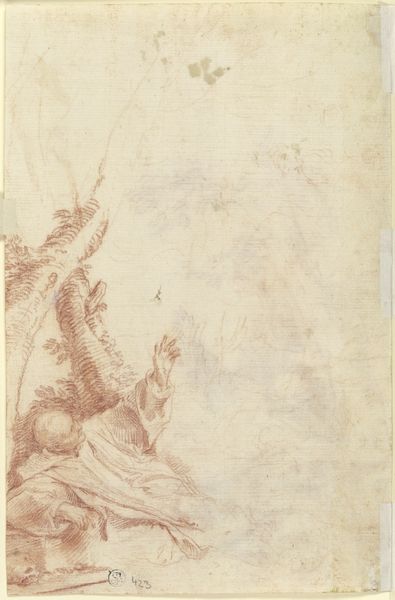
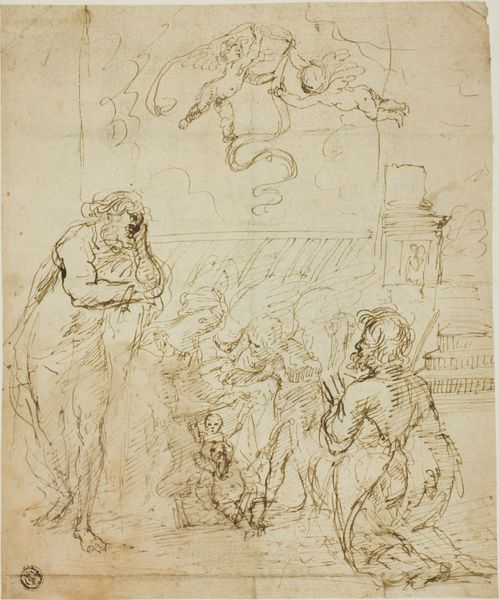
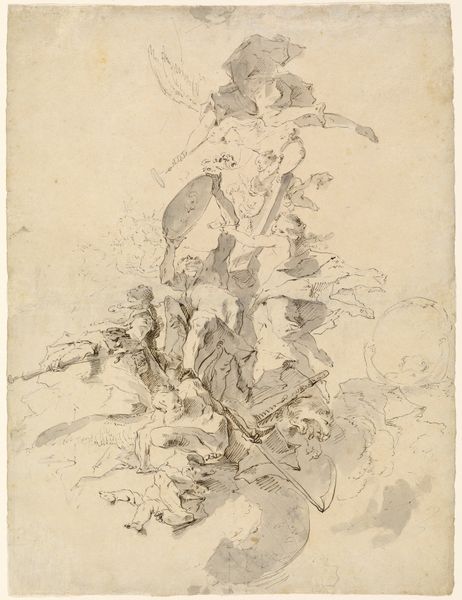
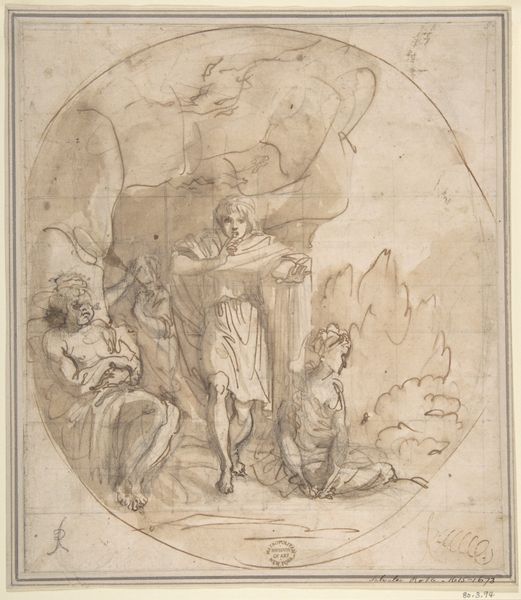
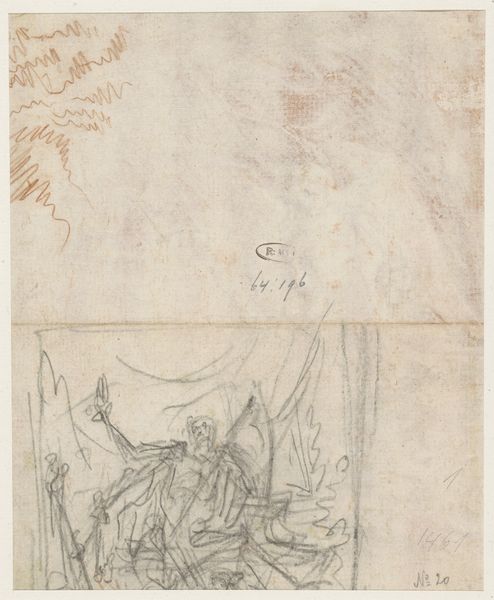
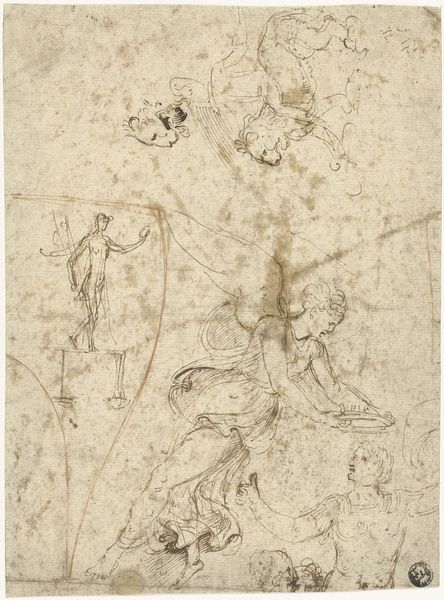
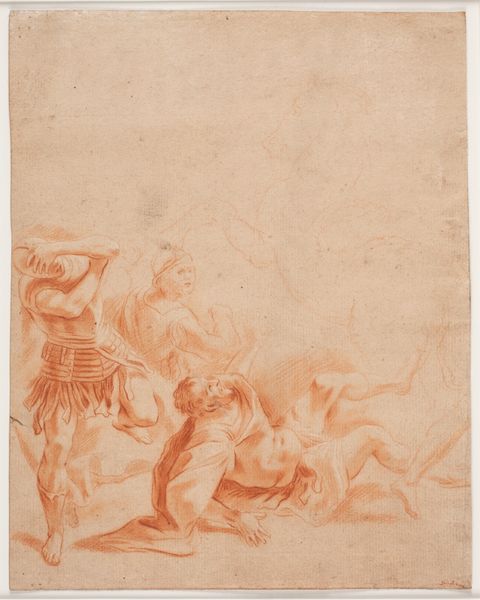
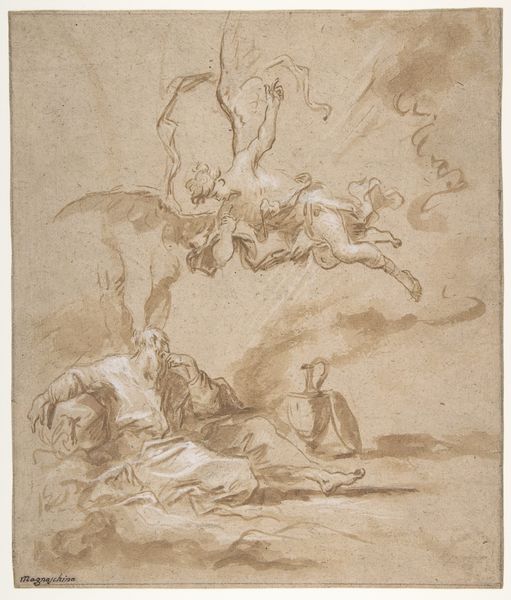
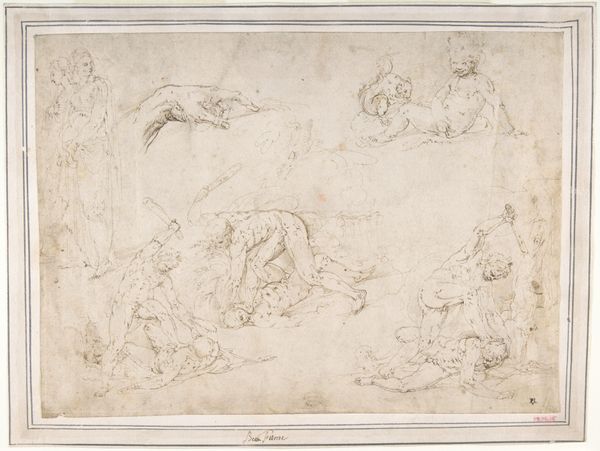
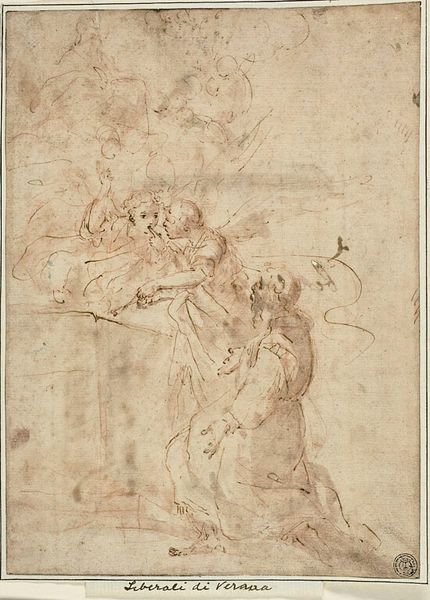
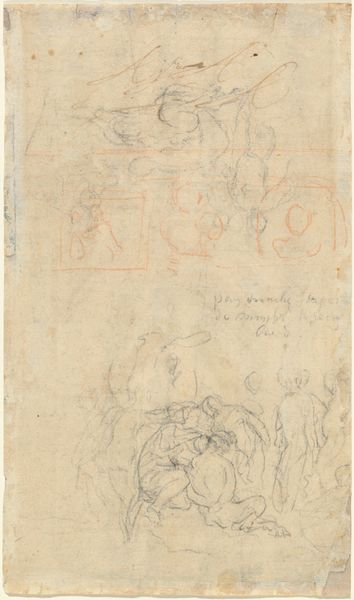
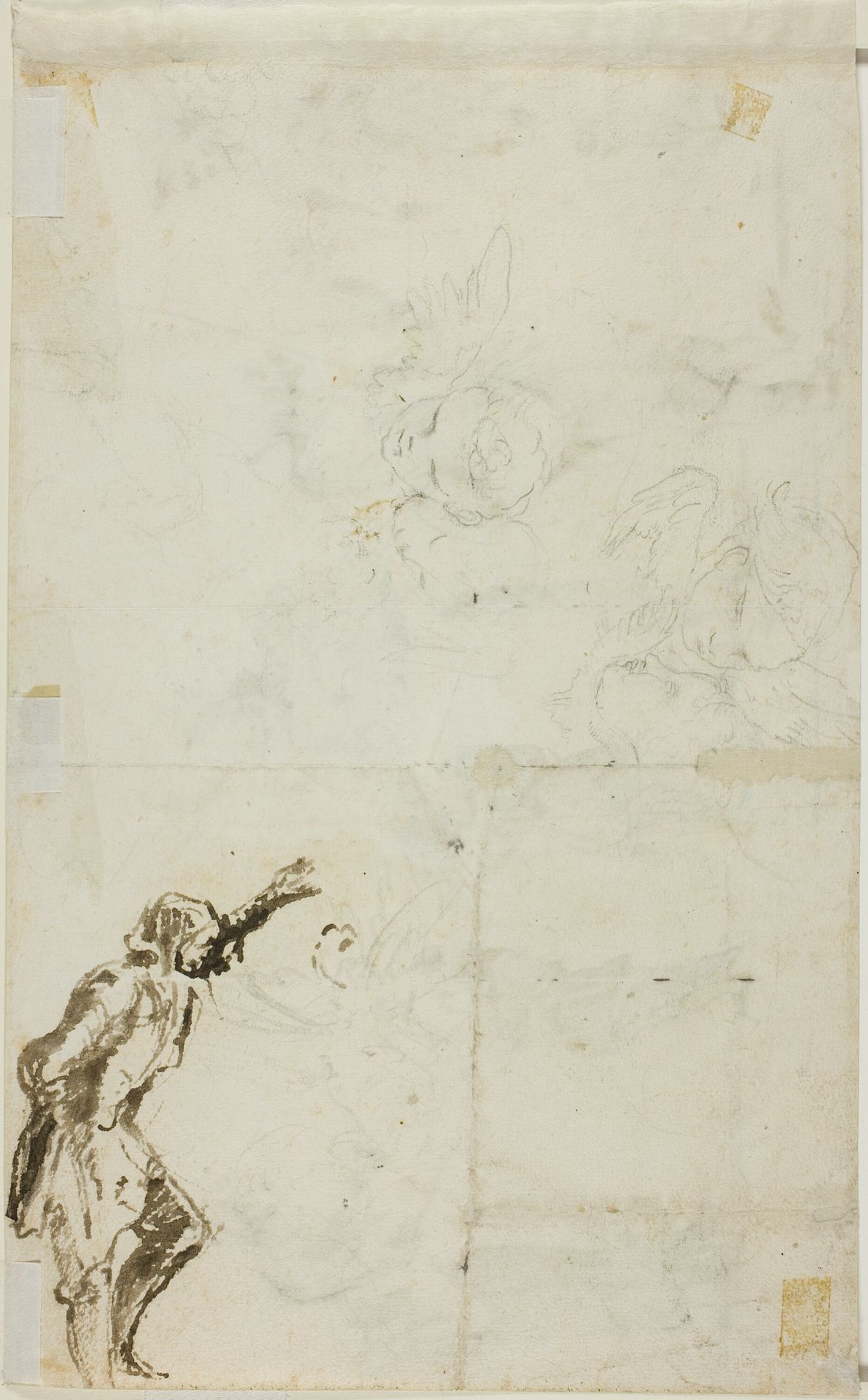
This is a sheet of sketches by Giovanni Battista Piranesi, made with pen and brown ink, over graphite on laid paper. Piranesi was an architect and a printmaker, and the materiality of paper and ink are central to his art. These were the raw materials for his visions. Note the artist's mastery over the pen, using line weights and hatching to create depth and volume. He deftly captures a figure in motion and hovering cherubs with just a few strokes. Drawing allowed him to explore imaginative possibilities, and to develop ideas that he would later translate into etchings or architectural designs. The layered, collaged appearance may be due to the economics of paper production at the time, when larger sheets were more expensive, so artists would often piece together smaller fragments. Piranesi's genius lay in his ability to bring these intangible visions into tangible form, using the humble materials of paper and ink as his tools. He blurs the boundary between drawing, design, and printmaking.
Sheet of Sketches: Standing Man with Raised Arm, Cherubim
1768 - 1778


Artwork details
- Medium
- drawing, print, paper, ink, chalk, charcoal
- Dimensions
- 231 × 365 mm
- Location
- The Art Institute of Chicago
- Copyright
- Public Domain
Tags
portrait
drawing
figuration
paper
ink
chalk
charcoal
history-painting
academic-art
italian-renaissance
italy
Comments
Be the first to share your thoughts about this work.
About this artwork
This is a sheet of sketches by Giovanni Battista Piranesi, made with pen and brown ink, over graphite on laid paper. Piranesi was an architect and a printmaker, and the materiality of paper and ink are central to his art. These were the raw materials for his visions. Note the artist's mastery over the pen, using line weights and hatching to create depth and volume. He deftly captures a figure in motion and hovering cherubs with just a few strokes. Drawing allowed him to explore imaginative possibilities, and to develop ideas that he would later translate into etchings or architectural designs. The layered, collaged appearance may be due to the economics of paper production at the time, when larger sheets were more expensive, so artists would often piece together smaller fragments. Piranesi's genius lay in his ability to bring these intangible visions into tangible form, using the humble materials of paper and ink as his tools. He blurs the boundary between drawing, design, and printmaking.
Comments
Be the first to share your thoughts about this work.