![Ziet, kinderen! wat nu is geschied, / Van de Wasscher met zijn Griet [(...)] by Philippus Jacobus Brepols](https://d2w8kbdekdi1gv.cloudfront.net/eyJidWNrZXQiOiAiYXJ0ZXJhLWltYWdlcy1idWNrZXQiLCAia2V5IjogImFydHdvcmtzLzI3YjM5NTY4LTMwMTMtNGUzOS1hMTc3LTY2YzAzM2MyM2ViYS8yN2IzOTU2OC0zMDEzLTRlMzktYTE3Ny02NmMwMzNjMjNlYmFfZnVsbC5qcGciLCAiZWRpdHMiOiB7InJlc2l6ZSI6IHsid2lkdGgiOiAxOTIwLCAiaGVpZ2h0IjogMTkyMCwgImZpdCI6ICJpbnNpZGUifX19)
About this artwork
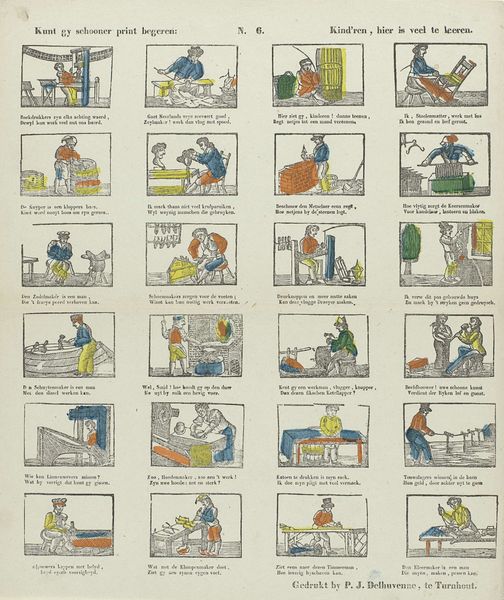
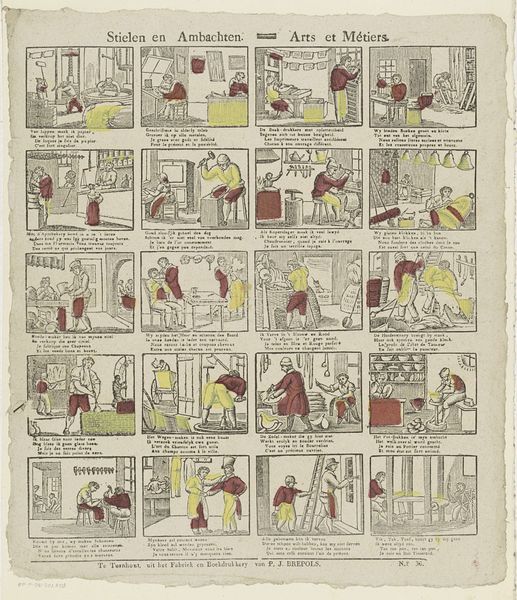
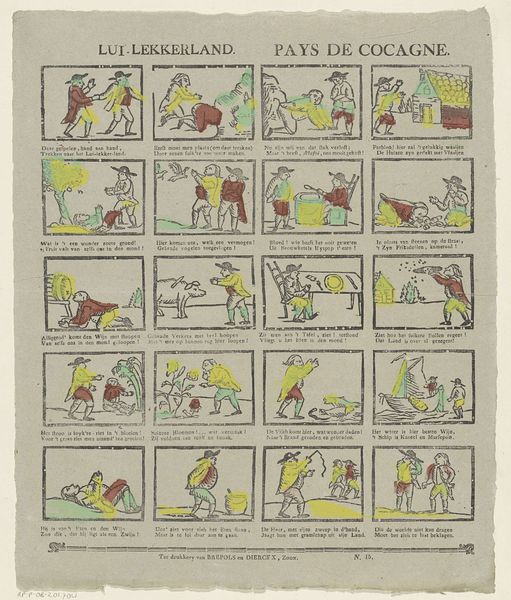
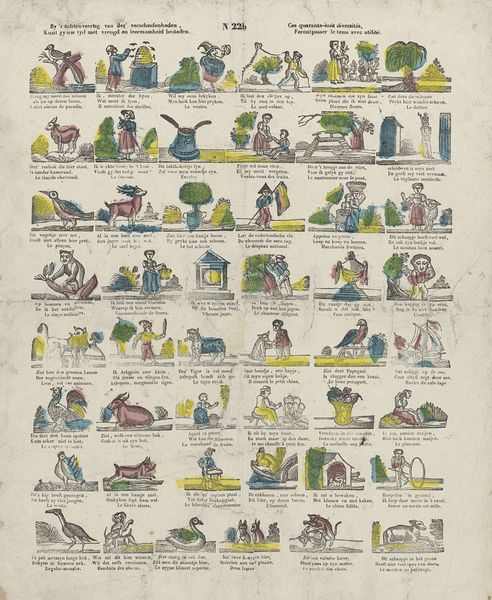
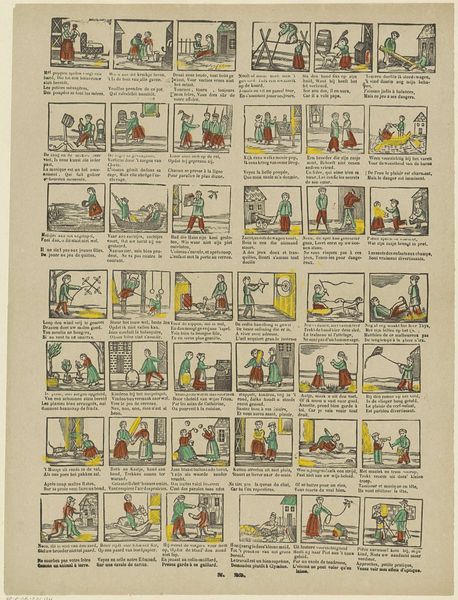
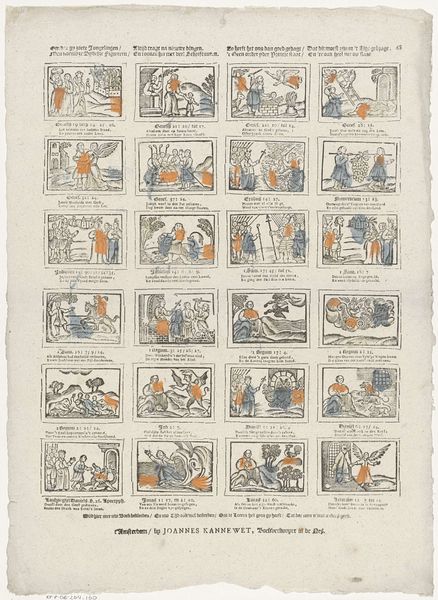
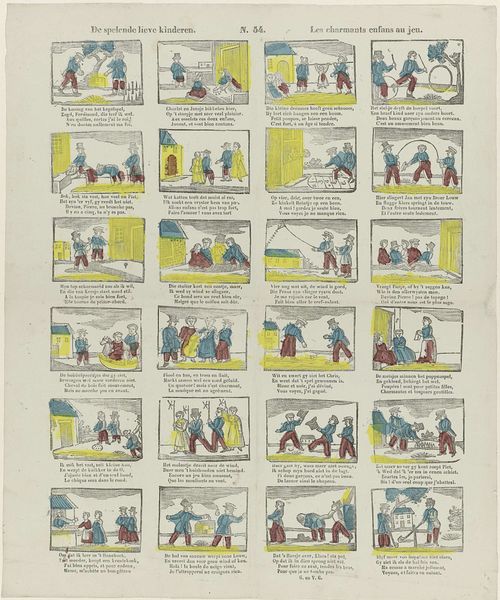
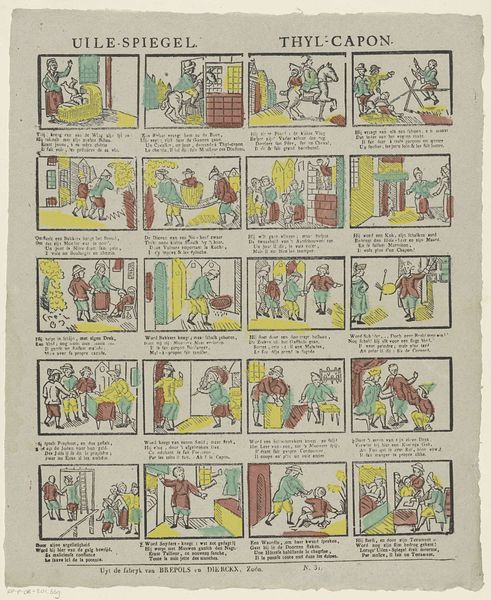
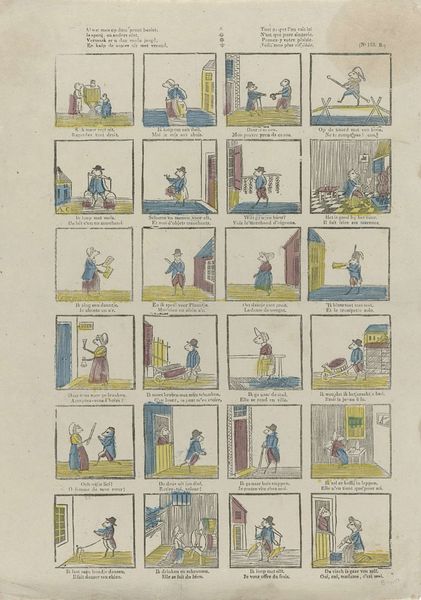
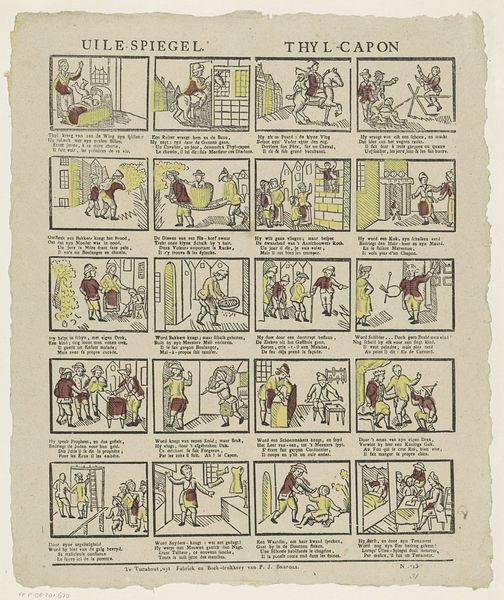
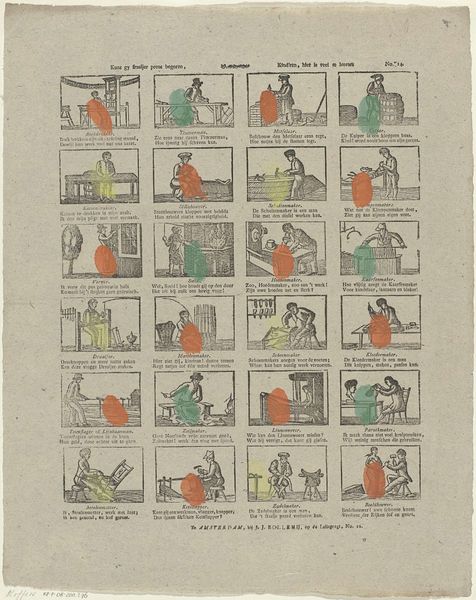
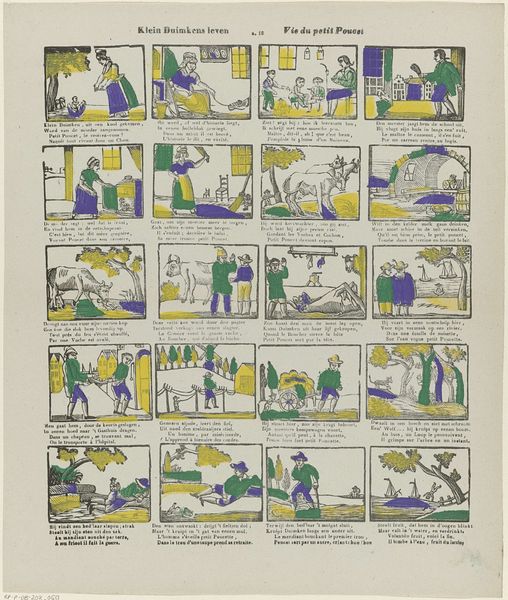
This print, "Ziet, kinderen! wat nu is geschied," by Philippus Jacobus Brepols, likely made in the early 19th century, presents us with a series of scenes rendered with simple lines and a muted palette of blues, reds, and yellows. The composition is arranged as a grid of vignettes, almost like a comic strip, each containing figures and objects carefully outlined. The structural arrangement here is key. Brepols divides the narrative into discrete units, creating a sense of order and control. This formal clarity, however, belies a more complex narrative. The figures, rendered as apes, introduce a destabilizing element, challenging our understanding of human representation. The choice of such a linear structure may reflect contemporary concerns about categorization and control. Brepols uses these formal elements to ask us to consider our own act of interpretation, drawing our attention to the constructed nature of meaning itself.
Ziet, kinderen! wat nu is geschied, / Van de Wasscher met zijn Griet [(...)]
1800 - 1833

Philippus Jacobus Brepols
1778 - 1845Location
RijksmuseumArtwork details
- Medium
- Dimensions
- height 415 mm, width 322 mm
- Location
- Rijksmuseum
- Copyright
- Rijks Museum: Open Domain
Tags
Comments
Share your thoughts
About this artwork
This print, "Ziet, kinderen! wat nu is geschied," by Philippus Jacobus Brepols, likely made in the early 19th century, presents us with a series of scenes rendered with simple lines and a muted palette of blues, reds, and yellows. The composition is arranged as a grid of vignettes, almost like a comic strip, each containing figures and objects carefully outlined. The structural arrangement here is key. Brepols divides the narrative into discrete units, creating a sense of order and control. This formal clarity, however, belies a more complex narrative. The figures, rendered as apes, introduce a destabilizing element, challenging our understanding of human representation. The choice of such a linear structure may reflect contemporary concerns about categorization and control. Brepols uses these formal elements to ask us to consider our own act of interpretation, drawing our attention to the constructed nature of meaning itself.
Comments
Share your thoughts